
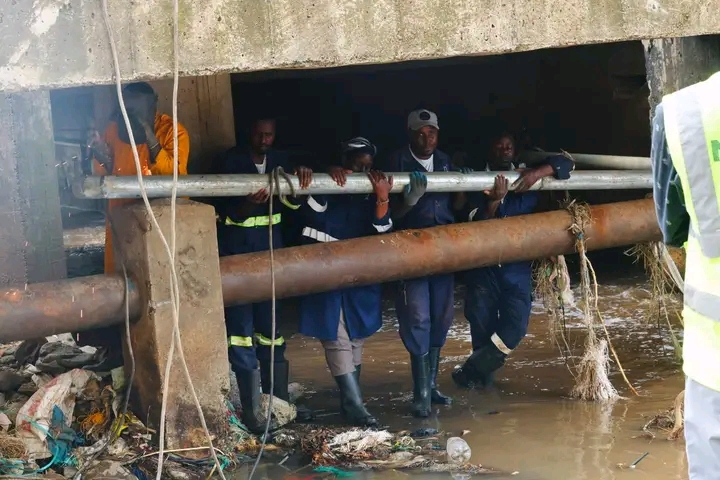
Nairobi Governor Johnson Sakaja has intensified efforts to unclog the city’s drainage and sewerage systems following widespread public outrage over flooding that has paralysed parts of the capital after days of heavy rainfall.
The intervention comes amid mounting pressure from residents, commuters, and business owners who have been grappling with impassable roads, overflowing drains, and contaminated water in several neighbourhoods.
Images and videos circulating online showed blocked culverts and stagnant water, sparking criticism of the county’s preparedness and maintenance of urban infrastructure.
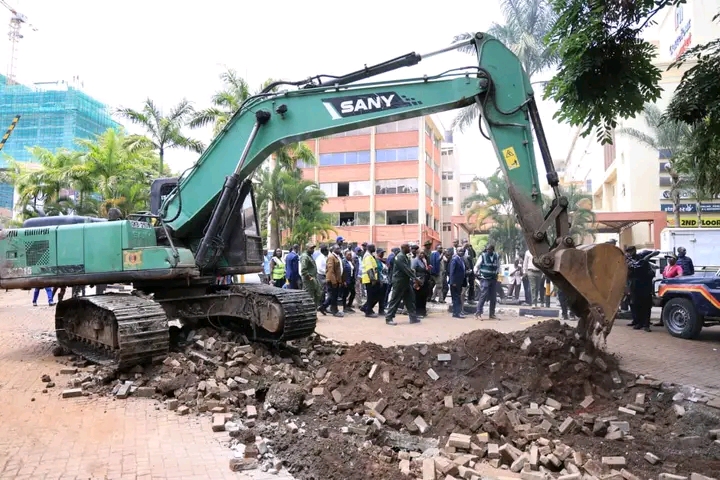
According to updates from county communications and recent public statements, the Nairobi County Government has deployed teams to clear debris, unblock drainage channels, and remove waste that has been clogging key sewer lines across the city.
The clean-up exercise is part of a broader emergency response strategy aimed at restoring normal flow in drainage systems and reducing further flooding risks.
The governor has also directed a multi-agency approach involving county workers, emergency responders, and national government support to accelerate the unclogging of drainage systems and improve flood management.
Authorities have acknowledged that poor waste disposal, illegal dumping, and long-term infrastructure challenges have contributed to the current crisis.
The flooding situation has been worsened by intense rainfall that has affected large parts of Nairobi and other regions across the country.
Overflowing rivers, blocked drainage, and rapid surface runoff have led to water accumulation on major roads, disrupting transport and daily economic activities.
In some areas, residents have been forced to wade through knee-deep water, while motorists have experienced prolonged delays and vehicle damage.
The crisis has also reignited debate about Nairobi’s aging drainage infrastructure, with experts and residents pointing to years of inadequate maintenance, urban congestion, and unplanned settlements along waterways as key contributing factors.
Nairobi’s vulnerability to flooding has been documented in past seasons, where heavy rains have repeatedly exposed weaknesses in stormwater management systems and sewer networks.
In response to the unfolding situation, Sakaja’s administration has indicated that it is working on both short-term and long-term interventions.
Immediate measures include clearing blocked drains, desilting sewer lines, and deploying rapid response teams to flood-prone areas.
Longer-term plans reportedly involve upgrading drainage infrastructure, improving waste management systems, and enhancing coordination with national agencies to prevent recurrence of similar incidents.
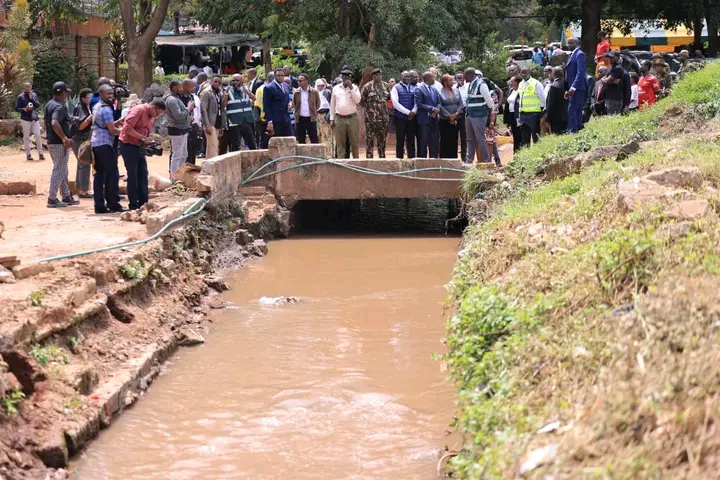
The governor had previously maintained that Nairobi’s flooding challenges are structural and require substantial investment and coordinated planning to resolve.
He has emphasised that the city’s infrastructure must be modernised to cope with rapid urbanisation and the increasing frequency of extreme weather events.
Meanwhile, residents continue to call for sustained action beyond emergency clean-up efforts, urging the county government to implement lasting solutions that will prevent future flooding, protect property, and safeguard lives during periods of heavy rainfall.
FOLLOW NAIROBI NEWS ON FACEBOOK
If you like our work, you can buy us a soda
Buy us a soda 🥤