

A fresh political storm is brewing after Cleophas Malala launched a scathing attack on Dennis Itumbi, questioning the legality of his position in government and accusing him of operating outside constitutional structures.
The outspoken politician made the remarks during an interview with Citizen TV on Wednesday, April 8, where he dismissed Itumbi’s role and authority in government matters.
Malala, who has recently been active in opposition politics, did not hold back in his criticism, raising concerns about accountability and legality.
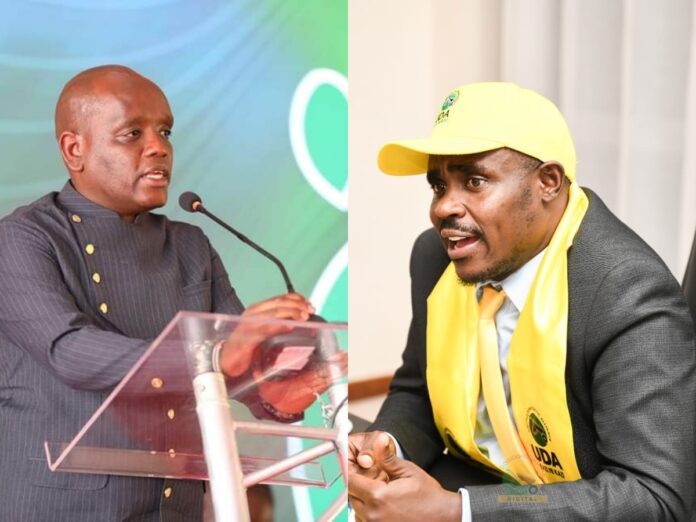
At the center of Malala’s argument is the claim that Itumbi’s office lacks constitutional grounding and formal oversight mechanisms.
Taking to Facebook, Malala posted:
“Mr. Itumbi should be reminded, his office is unconstitutional. He does not even have a vote head or an accounting officer. Guy operates like a miracle boy for briefcase evangelists who dupe people with fake miracles.”
The remarks have since sparked widespread debate across social media and political circles, with supporters and critics weighing in on the legitimacy of roles within President William Ruto’s administration.
Background Of The Dispute
Dennis Itumbi currently serves as a key figure in government communication and strategy, holding the influential role of Head of Presidential Special Projects and Creative Economy Coordination.
He has long been considered one of President Ruto’s closest digital strategists and played a central role in past election campaigns.
However, his position, and others similar to it, has previously come under scrutiny.
In 2023, courts in Kenya declared several government-appointed positions unconstitutional, raising questions about the structure and legality of certain offices within the executive.
It is within this broader context that Malala’s remarks appear to resonate, tapping into ongoing national conversations about governance, public spending, and constitutional adherence.
Malala’s Broader Political Stance
Cleophas Malala, a former Kakamega senator and now a key opposition figure, has increasingly positioned himself as a vocal critic of the current administration.
His latest comments reflect a growing push by opposition leaders to challenge what they term as “shadow offices” operating without clear legal frameworks.
Analysts say Malala’s choice of words, particularly his reference to “briefcase evangelists” and “fake miracles”, signals a strategy aimed at rallying public sentiment against perceived misuse of power and lack of transparency in government operations.
Mixed Reactions
The exchange has triggered mixed reactions online.
While some Kenyans have backed Malala, arguing that all public offices must be anchored in law and subject to accountability, others have defended Itumbi, citing his long-standing role in government communications and policy coordination.
Clips from the confrontation show Malala insisting that without a clear budget line or designated accounting officer, the office in question cannot be legitimately recognized within Kenya’s constitutional framework.

What Next?
The controversy is likely to fuel further political debate, especially as questions around governance and constitutional compliance continue to dominate Kenya’s political landscape.
Whether Malala’s claims will prompt legal or parliamentary scrutiny remains to be seen, but the public spat underscores deeper tensions within the country’s political class over power, legitimacy, and accountability.
FOLLOW NAIROBI NEWS ON FACEBOOK


