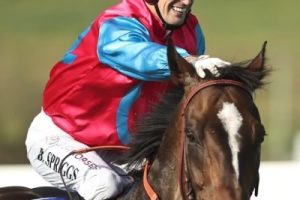

Bill Lawry net worth stems from his successful cricket career. He is an Australian former professional cricket player and commentator. He represented Victoria cricket team and Australia men’s national cricket team.
Bill Lawry net worth
The estimated Bill Lawry net worth is undisclosed. Nonetheless, his income sources include his former professional cricket career playing for Australia and Victoria, as well as his media career as a sports commentator.
Career highlights
Cricket
Bill Lawry debuted in the 1955/56 season for Victoria shortly before turning nineteen, but scored only three runs. During the following season he became a regular in the Victorian side, although his returns were modest.
His struggles led to his omission from the state team in 1957/58, and he spent much of the next season on the sidelines.
However, when recalled against the touring English side in 1958/59, he gradually rebuilt his career, finishing the season strongly with four fifties in his final five innings and averaging over 60.
The 1959/60 season brought further progress. With many Australian Test players absent on tour, he gained regular opportunities and produced his maiden first-class century, scoring 127 against Western Australia.
He accumulated 666 runs for the season and began establishing himself as a dependable opening batsman.
Although his form remained patchy early in 1960/61, he achieved a breakthrough innings of 266 against New South Wales, a performance that transformed his standing in Australian cricket.
Backed by further scores, he amassed 840 runs at 56.00 and earned selection for Australia’s 1961 Ashes tour of England.
Before the Test series he scored major centuries against Surrey, Cambridge University, and the MCC, compiling 720 runs at an average of 80 in the lead-up matches.
Test series
Bill Lawry’s Test debut at Edgbaston produced a composed 57, but it was his courageous 130 at Lord’s in the famous “Battle of the Ridge” that announced him as an international-class opener.
He produced a six-hour innings that helped Australia seize control of the match. He followed with another century at Old Trafford, playing a key role in Australia’s Ashes triumph.
By the end of the tour he had scored 2,019 first-class runs at 61.18. Most remarkably, he became one of Wisden’s Five Cricketers of the Year in 1962.
Bill Lawry became captain of Victoria in 1961/62. Although the team struggled initially, he remained prolific with the bat, scoring 832 runs and several centuries.
During the 1962/63 Ashes series in Australia, he narrowly missed a maiden home Test century with 98 at Brisbane. He helped Victoria capture the Sheffield Shield, ending the season with 990 runs.
Furthermore, he reached another level during the 1963/64 season against South Africa. He scored his first Test century on Australian soil with 157 at the Melbourne Cricket Ground and finished the series with 496 runs at 55.11.
His resilience against the fierce pace of Peter Pollock earned widespread admiration. Across all cricket that season he amassed 1,340 runs at an average of 67.00.
The 1964 tour of England reinforced his reputation as a reliable opener. After a slow start to the Test series, he played decisive innings of 106 at Old Trafford and 94 at The Oval, helping Australia retain the Ashes.
Later that season he excelled in domestic cricket, scoring heavily for Victoria, including a magnificent 246 against South Australia.
He also enjoyed success on Australia’s tour of the West Indies, where he produced a career-best Test score of 210 in Barbados as part of a monumental 382-run opening partnership with Bob Simpson.
His finest period as a batsman came during the 1965/66 Ashes series in Australia. He scored 592 runs at an exceptional average of 84.57, the highest Ashes aggregate by an Australian since Don Bradman’s feats two decades earlier.
Centuries in Brisbane, Adelaide, and Melbourne underlined his dominance. That season also featured one of the greatest innings in Victorian district cricket history when he carried Northcote Cricket Club to victory with an unbeaten 282 in a premiership final.
The 1966/67 tour of South Africa proved difficult as Australia lost the series 3-1. Nevertheless, he rebounded during the 1967/68 home series against India, scoring a century in Adelaide and a succession of fifties.
Following Bob Simpson’s retirement, Bill Lawry became Australia’s Test captain. His first major challenge was the 1968 Ashes tour of England. Australia retained the Ashes.
His peak as both captain and batsman arrived in the 1968/69 series against the West Indies. He amassed a career-best series aggregate of 667 runs at 83.38.
Australia won the series 3-1 and his performances were central to that success. The following year he led Australia to a historic 3-1 series victory in India. This feat was not be repeated by Australia for 35 years.
Immediately after India, Australia toured South Africa and suffered one of the heaviest defeats in its history. His side lost the four-Test series comprehensively, and tensions within the team increased.
The subsequent 1970/71 Ashes series against England became the final chapter of his international career. Criticized for defensive captaincy and poor batting returns, he was sensationally dropped midway through the series, becoming the first Australian captain removed during an ongoing Test season.
He learned of his dismissal through a radio broadcast rather than direct communication from selectors. This decision was widely condemned throughout cricket.
Although his Test career ended abruptly, he continued playing for Victoria until the conclusion of the 1971/72 season.
He remained productive domestically, scoring another century and several half-centuries, but was never recalled to the national team. After retiring from first-class cricket, he spent several years as a player-coach in Victorian district cricket before transitioning into broadcasting.
Post-retirement
He also served as cricket manager for the Victorian Cricket Association during the late 1980s and early 1990s
Media career
Bill Lawry’s second career as a commentator proved almost as influential as his playing days. Beginning in the late 1970s, he became one of Australia’s most recognizable cricket voices through long associations with Channel 7 and later Channel 9.
His energetic catchphrases became part of Australian sporting culture. His long-running partnership with former England captain Tony Greig lasted more than three decades and became one of cricket broadcasting’s most famous duos.
Later on, he gradually reduced his commentary commitments and finally retired from broadcasting in 2018.
Recognitions
Bill Lawry was inducted into The Sport Australia Hall of Fame in October 2014 as an Athlete Member for his contribution to the sport of cricket.
He is also a Member of the Order of Australia (AM).
Conclusion on Bill Lawry net worth
Bill Lawry has accumulated his wealth from multiple streams over several decades. The largest and most enduring source of income came from his long-term broadcasting career with major media networks. Overall, his net worth is derived primarily from cricket broadcasting and media work, supplemented by his playing career, coaching, administration, and related cricket activities.