
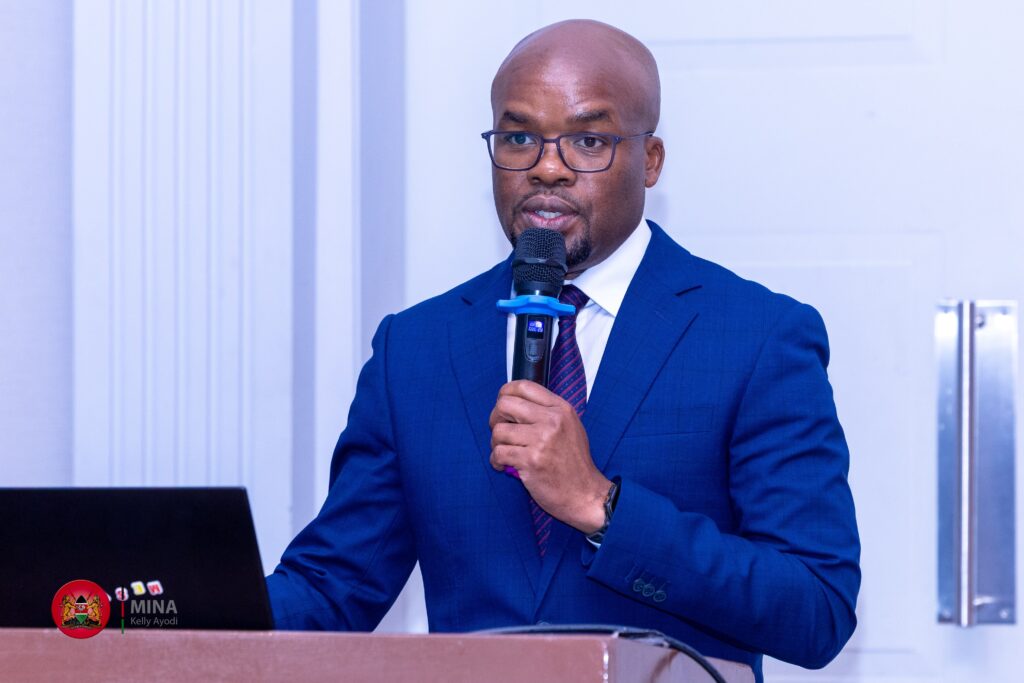
The government has launched a skills development and livelihood support programme targeting 450 vulnerable youth and women in five counties as part of efforts to strengthen community resilience and prevent violent extremism.
The initiative, unveiled during the Fifth Programme Steering Committee meeting of the Peacebuilding and Preventing Violent Extremism in East Africa Programme, will benefit residents of Nairobi, Kilifi, Kisumu, Isiolo and Samburu.
Implemented under the Building Resilience and Community Empowerment for Peace (BRACE4PEACE) Programme, the initiative brings together the Government of Kenya, the Republic of Korea through the Korea International Cooperation Agency (KOICA), the United Nations Development Programme (UNDP), technical and vocational education institutions and community-based peacebuilding partners.
In Kenya, the programme is led by the State Department for Internal Security and National Administration in partnership with the National Cohesion and Integration Commission (NCIC), the National Steering Committee on Peacebuilding and Conflict Management, the Inter-Religious Council of Kenya and other institutions.
Principal Secretary for Internal Security and National Administration Dr Raymond Omollo said sustainable peace could not be achieved through security measures alone, arguing that social and economic vulnerabilities that expose communities to crime and violent extremism must also be addressed.
“The focus is on strengthening community resilience, promoting social cohesion and expanding economic opportunities. These pillars must move together if we are to reduce the risks facing vulnerable communities,” Omollo said.
The first cohort comprises 90 participants from each of the five counties. Beneficiaries will receive practical, market-oriented training aimed at improving employability, entrepreneurship and household incomes.
Training will be tailored to the economic opportunities available in each county. Participants in Nairobi will receive training in digital solutions and ICT, while those in Kilifi will focus on coastal tourism.
In Kisumu, the programme will promote cage aquaculture, while beneficiaries in Isiolo and Samburu will be trained in beekeeping, beadwork and handicrafts.
Omollo said the government would work with county administrations to connect beneficiaries with existing public programmes and other services needed to turn their skills into sustainable businesses.
He said young entrepreneurs would require access to business licences, financing, mentorship, markets, digital platforms and enterprise development support.
The programme complements other government interventions, including the National Youth Opportunities Towards Advancement Programme, which seeks to equip young people with skills and promote entrepreneurship.
Omollo said communities across the country continued to face threats linked to socioeconomic marginalisation, competition over scarce resources, terrorism, environmental pressures and misuse of digital platforms.
He said prevention programmes must be designed around the circumstances of individual communities while allowing successful interventions to be replicated elsewhere.
“The reality is that those recruited into criminal and extremist networks are our people. In many cases, they are driven by a feeling of neglect, marginalisation or unresolved grievances. That is why community-based programmes are so important,” he said.
The PS also warned that competition over natural resources remained a source of conflict, with climate and environmental pressures worsening existing tensions.
He called for closer cooperation between national and county governments, the NCIC and other institutions involved in conflict prevention and peaceful coexistence.
With the October-December rainfall season approaching, Omollo also directed relevant agencies to strengthen disaster preparedness and coordinate with counties and communities to protect vulnerable populations and livelihoods.
He further raised concerns about the misuse of digital platforms, saying technology had created opportunities for learning, communication and economic participation while also exposing young people to misinformation, extremist narratives and other harmful content.
He called for greater investment in digital literacy and responsible use of technology among young people and community institutions.
Security strategy ahead of 2027 elections
Omollo said the development-focused approach would complement security measures as Kenya prepares for the 2027 General Election.
He disclosed that the government had developed a strategic plan to guide security deployment before, during and after the elections.
“We have an elaborate strategic plan that will guide our security deployment before, during and after the elections. Our objective is to ensure that Kenyans can participate in the electoral process peacefully and that every political contestant can present their ideas without intimidation or violence,” he said.
The Steering Committee reviewed interventions covering national cohesion, civic education, conflict prevention and public engagement.
The government and its partners are also reviving the Uwiano Platform for Peace, which has previously been used for conflict prevention, early warning, public engagement and peaceful electoral participation.
The platform is expected to facilitate dialogue with citizens, communities, political leaders and prospective candidates while improving coordination among institutions responsible for cohesion, electoral security and conflict prevention.
Omollo said the government was also taking measures to address hooliganism and politically linked criminal activity.
He warned political leaders against exploiting vulnerable young people for political violence, saying criminal conduct would not be excused because it occurred in the context of political competition.
“Any criminal act related to politics or political contestation will not be tolerated. Political leaders must not take advantage of the vulnerability of young people, and our youth should not allow themselves to be misused for selfish political interests,” he said.
The PS said security agencies had undertaken intelligence-led profiling of individuals and groups suspected of involvement in organised political violence and were addressing criminal networks.
He, however, stressed that enforcement must be accompanied by social and economic interventions that provide young people with alternatives to criminal activity and political exploitation.
Omollo urged political leaders to campaign responsibly and avoid inciting or recruiting young people into violence.
He also called on Kenyans to embrace political tolerance and respect divergent views, saying peaceful competition was essential to democracy.
“We must develop a culture of tolerance. People will have different opinions because that is what democracy allows. Everyone should be free to canvass their ideas without intimidation and without resorting to violence,” he said.
The meeting was attended by NCIC Chairperson Bishop Dr Kepha Nyamweya Omae, NCIC Vice Chairperson Irene Tulel, UNDP Kenya Deputy Resident Representative for Programmes Madelena Monoja, KOICA Deputy Country Director Jooyoung Baek and KOICA Programme Officer Ann Ndingo.