
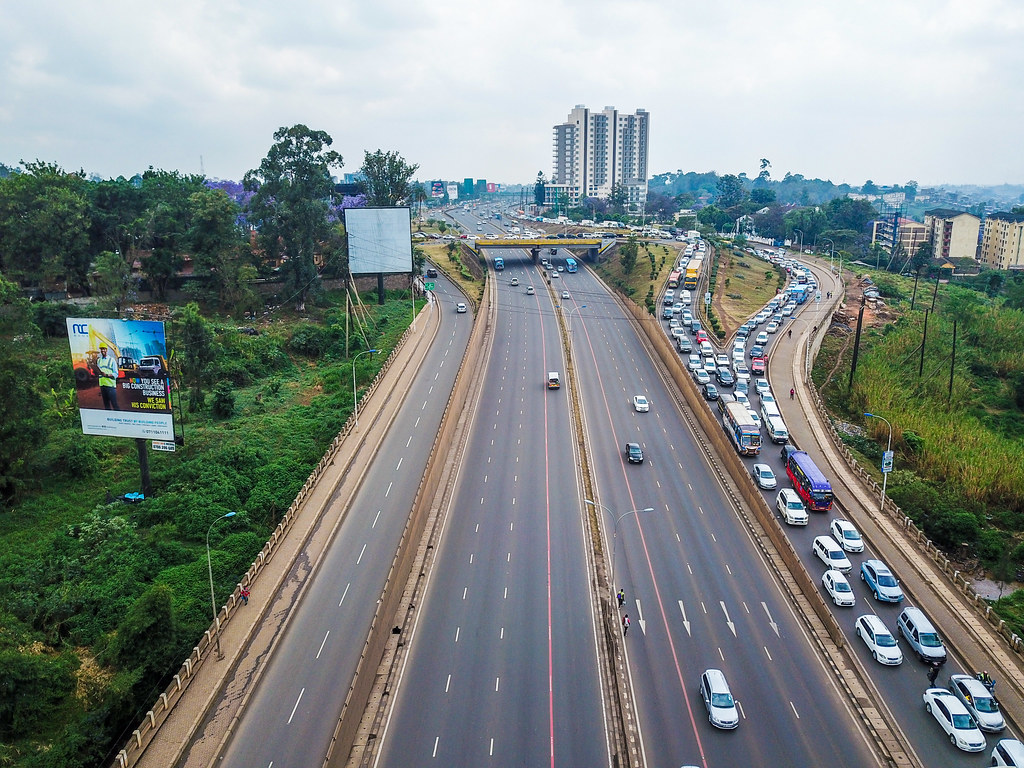
The Nairobi-Thika Highway is one of Kenya’s most critical road networks, serving as a major artery connecting the capital city, Nairobi, to Thika and other towns in the Mount Kenya region. The highway has transformed the transport sector by easing traffic congestion, improving trade, and enhancing economic growth. As one of the most significant road projects in Kenya’s history, it continues to play a vital role in the movement of people and goods across the country.
History of Nairobi-Thika Highway
The Nairobi-Thika Highway was originally a single-lane road that struggled to accommodate the increasing traffic flow between Nairobi and Thika. Due to rapid urbanization and the expansion of satellite towns along the route, congestion became a major issue, leading to the need for a wider and more efficient road. In the early 2000s, the Kenyan government, in partnership with international financiers such as the African Development Bank (AfDB) and the Chinese government, initiated the Nairobi-Thika Highway expansion project.
The construction, which began in 2009 and was completed in 2012, transformed the highway into an eight-lane dual carriageway, with additional service roads and interchanges. The project, which cost approximately KSh 31 billion, marked one of the largest infrastructural undertakings in East Africa, significantly improving road transport efficiency.
Route and Connectivity
The Nairobi-Thika Highway stretches approximately 50 kilometers, beginning from Nairobi’s Museum Hill interchange and extending to Thika Town. Along the way, the highway passes through key towns and residential areas, including Pangani, Muthaiga, Ruiru, Juja, and Kenyatta University. It also connects to various bypasses such as the Eastern and Northern Bypass, which link different parts of Nairobi, easing congestion in the city.
With well-designed interchanges such as those at Pangani, Muthaiga, and Ruiru, traffic movement has become smoother, reducing the travel time between Nairobi and Thika from over two hours to about 40 minutes during off-peak hours. This connectivity has boosted economic activities in towns along the corridor, making them more attractive for residential and commercial development.
Impact on Trade and Economy
The Nairobi-Thika Highway has significantly contributed to the economic growth of Nairobi and its neighboring towns. By improving road transport, the highway has enhanced the movement of goods and services, particularly between Nairobi and the agriculturally rich central Kenya region. Traders from areas like Nyeri, Murang’a, and Kirinyaga can now access Nairobi markets with greater ease, reducing transport costs and boosting business efficiency.
Also Read: Karen Country Club Nairobi: A Haven of Elegance and Exclusivity
The improved infrastructure has also led to a surge in real estate development along the corridor. Areas such as Ruiru, Juja, and Thika have experienced rapid urbanization, with residential estates, commercial complexes, and industrial parks emerging to accommodate the growing population. The highway has made it more feasible for people to live in these towns while commuting daily to Nairobi for work, leading to an expansion of the Nairobi Metropolitan Area.
Traffic Management and Challenges
Despite its improvements, the Nairobi-Thika Highway continues to experience challenges, particularly in managing traffic congestion. Over the years, the increased number of vehicles using the highway has led to periodic traffic snarl-ups, especially during peak hours. Key choke points include sections around Githurai, Ruiru, and Kasarani, where a high volume of pedestrians, public service vehicles, and private cars converge.
To address congestion, the government has implemented various measures, including the construction of footbridges, expansion of service lanes, and traffic management strategies. Plans for the introduction of a Bus Rapid Transit (BRT) system along the highway are also underway to provide an efficient and reliable public transport solution, further easing the pressure on road users.
Safety and Security on the Highway
Safety remains a crucial concern along the Nairobi-Thika Highway, with incidents of accidents and crime occasionally reported. Due to high-speed traffic and reckless driving, accidents have occurred at certain black spots, prompting authorities to introduce speed limits, traffic cameras, and road safety awareness campaigns.
Pedestrian safety has also been a major issue, especially in areas with high foot traffic, such as Githurai and Kahawa Wendani. The construction of footbridges has helped reduce pedestrian-related accidents, though some road users still risk crossing at undesignated points. Law enforcement agencies continue to monitor the highway to ensure compliance with traffic regulations and reduce criminal activities such as highway robberies and carjackings.