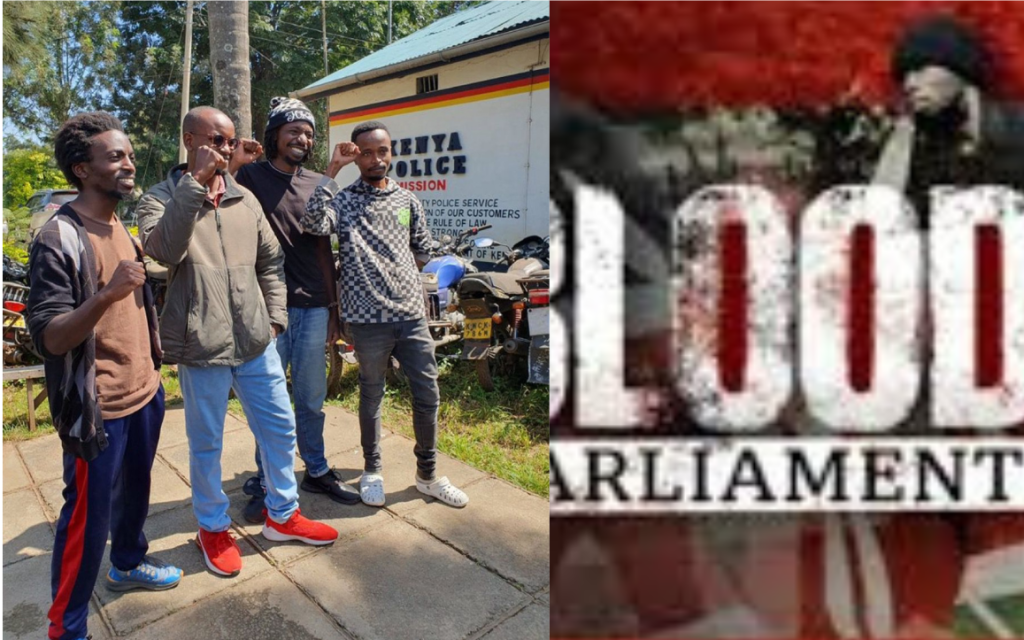
Fresh controversy has emerged over the arrest of four Kenyan filmmakers Brian Adagala, Nicholas Gichuki, MarkDenver Karubiu, and Chris Wamae who were initially reported to have been involved in the production of the BBC’s Blood Parliament documentary.
The film exposed security officers allegedly involved in the fatal shooting of protestors during the “Occupy Parliament” demonstrations in June 2024.
The four were arrested on Friday, May 2, and held overnight in police custody.
Karubiu and Wamae were detained at Muthaiga Police Station, while Gichuki and Adagala were held at Pangani Police Station.
They were released the following day on a free bond.
However, in a statement issued after their release, the BBC Press Office clarified that the arrested individuals were not part of the Africa Eye team behind Blood Parliament.
the BB“To confirm, they were not involved in any way in the making of BBC Africa Eye’s Blood Parliament documentary,” C told SABC News.
The filmmakers’ lawyer, Ian Mutiso, stated that the group was facing charges related to “false publication,” despite their lack of involvement in the documentary’s production.
Renowned investigative journalist John Allan Namu also confirmed that the filmmakers were forced to provide statements without legal representation and had their equipment confiscated.
“That this is happening on World Press Freedom Day raises serious concerns about the motives behind these arrests,” said Namu.
Human rights activist Boniface Mwangi echoed the alarm, revealing that the four were apprehended at their Karen Village office and that their filming equipment and hard drives were seized by police.
The incident comes shortly after Kenyan authorities reportedly blocked a planned public screening of the documentary.
According to the BBC, the event was “abruptly cancelled after government intervention.”
The arrests have triggered widespread condemnation from media freedom advocates, civil society, and legal institutions.
The Law Society of Kenya (LSK) President, Faith Odhiambo, strongly denounced the detentions, calling them legally baseless and a direct assault on press freedom.
“The arrest of the four filmmakers over alleged involvement in the Blood Parliament report is not only ill-advised, petulant, and malicious it is also legally impotent,” Odhiambo stated.
She emphasized that Article 34(2) of the Kenyan Constitution protects media freedom and prohibits state interference in journalistic work.
Odhiambo further vowed that the LSK would pursue all legal avenues to defend the constitutional rights of the filmmakers and resist what she described as “irrational acts of repression.”
Digital strategist and State House official Dennis Itumbi also weighed in, condemning the arrests and defending the filmmakers’ right to tell stories.
“The arrest of these creatives whose only so-called mistake was making a film is unnecessary,” Itumbi said.
“BBC told their story. If there’s an alternative version, make a new documentary. But don’t arrest journalists for doing their job.”
The Blood Parliament exposé, which has gained significant traction online, used visual forensics to identify security personnel allegedly responsible for the deaths of protestors.
The documentary has reignited national debate on police accountability, freedom of expression, and the independence of the press in Kenya.
Former Ugandan And UN Judge Lydia Mugambe Sentenced To Six Years In UK For Modern Slavery