Kenya’s aviation and tourism industry has called for urgent intervention to end the ongoing industrial action by the Kenya Aviation Workers Union (KAWU), warning that the disruption of air traffic services is threatening passenger safety, connectivity and the country’s reputation as a regional aviation hub.
The Kenya Association of Air Operators (KAAO), African Airlines Association (AFRAA) and Kenya Tourism Federation (KTF) said the strike, which began on Sunday, has affected operations at Jomo Kenyatta International Airport (JKIA) and other airports across the country.
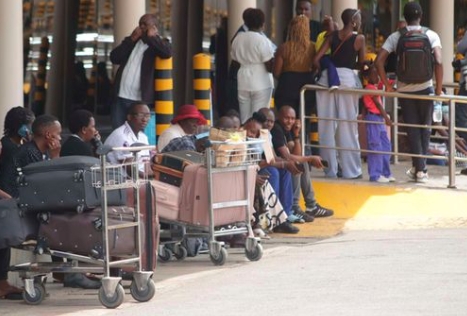
The disruption has resulted in flight delays, cancellations, diversions, rerouting and prolonged aircraft holding, with operators warning of serious consequences for passengers, crews, cargo and the wider air transport network.
The organisations acknowledged the right of workers and employers to resolve legitimate labour disputes through lawful negotiations but said industrial action involving safety-critical aviation services required robust contingency arrangements.
“Safety cannot be improvised. Operators, crews and passengers should not carry the burden of a foreseeable disruption when timely notices, tested contingency measures and coordinated airport response should have been in place,” said KAAO Chief Executive Officer Lit Aluvanze.
The aviation bodies cited Regulation 40 of the Kenya Civil Aviation (Air Traffic Services) Regulations, which requires the air traffic services authority to develop and promulgate contingency plans for actual or potential disruption of air traffic services and coordinate them with affected airspace users and neighbouring air traffic services authorities.
They said the disruption was foreseeable, particularly following similar industrial action in February, and therefore required a prepared, tested and properly communicated contingency response.
According to the organisations, operators were not adequately briefed on an activated contingency plan, while delays in issuing relevant notices further reduced the time available to airlines to adjust flight plans, fuel requirements, alternate airports, crew rosters and passenger arrangements.
They argued that the lack of timely contingency measures transferred avoidable operational and safety risks to airlines.
While the Kenya Civil Aviation Authority (KCAA) is responsible for air traffic services and aeronautical information, the organisations said the Kenya Airports Authority (KAA), as the airport operator, also has a critical role in ensuring airport-side safety, continuity and coordination during disruptions.
Airlines require regular updates on airport conditions, including available parking stands, gates, apron congestion, ground-handling capacity, aircraft diversions, parking arrangements, terminal conditions, cargo facilities and the expected recovery process, they said.
AFRAA Secretary General Abdérahmane Berthé said the consequences of disruption at JKIA extend beyond Kenya because of the airport’s role as a major continental aviation hub.
“Kenya’s role as a continental aviation hub means that disruptions here are felt well beyond its borders, affecting connectivity, trade and travellers across Africa’s aviation network,” Mr Berthé said.
He joined KAAO and KTF in calling for an urgent and amicable resolution of the dispute and effective contingency arrangements to protect the continent’s air transport system.
The organisations warned that repeated disruptions could damage Kenya’s tourism, trade and investment prospects while undermining confidence among passengers, airlines, exporters and international partners.
They said reliable air connectivity was essential to the Magical Kenya tourism brand, international trade, humanitarian and medical flights, time-sensitive exports and Kenya’s position as a gateway to East and Central Africa.
The groups cited the economic impact of the previous KAWU industrial action on February 16 and 17, 2026.
A preliminary KAAO assessment involving 16 operators recorded 150 flight cancellations and 382 delays, resulting in approximately $5.1 million in direct losses.
The estimate did not include losses arising from aircraft diversions, crew disruptions, network recovery costs and wider impacts on tourism, trade and medical operations.
KAAO, AFRAA and KTF said the latest disruption, coming within the same year, demonstrated the need for more resilient mechanisms to deal with industrial disputes affecting aviation.
They called on KCAA, KAA, KAWU, the Government and other aviation stakeholders to urgently resolve the underlying issues, protect safety-critical services and restore predictable air operations.
They also urged stakeholders to strengthen contingency planning and communication to safeguard Kenya’s position as a safe, reliable and globally connected aviation destination.
“Kenya’s ambition to remain a leading regional aviation gateway must be supported by an aviation system that is prepared, accountable and resilient,” the organisations said.

If you like our work, you can buy us a soda
Buy us a soda 🥤