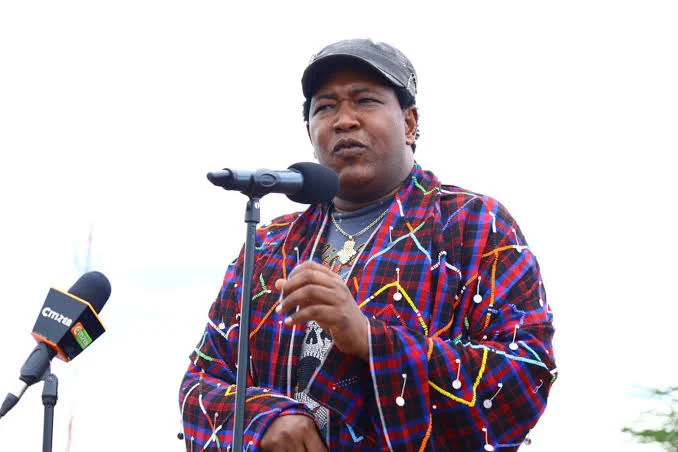
Narok Senator Ledama Olekina has declared his intention to contest the presidency in the 2032 General Election, signalling his ambitions to become Kenya’s next Head of State after President William Ruto completes his constitutionally allowed two terms.
The outspoken Orange Democratic Movement (ODM) politician made the announcement during a televised interview on Sunday, November 8, while discussing his political future, the 2027 General Election and the Maasai community’s place in Kenya’s national leadership.
Olekina revealed that although he would first seek re-election as Narok senator in 2027, his ultimate ambition was to occupy the country’s highest political office.
“I’m going to be seeking re-election for my seat as the Senator of Narok County, but it’s just a stepping stone to other bigger things,” he stated.
When asked whether he was serious about contesting the presidency, the senator left little room for doubt, insisting that Kenyans should expect to see his name on the ballot in 2032.
“You will see Ledama’s name on the ballot. Absolutely. I’m very serious,” he declared.
The announcement is likely to attract attention within ODM and the wider political landscape, particularly as prominent politicians begin positioning themselves for the succession battle expected after the 2027 elections.
Olekina also dismissed suggestions that he was interested in becoming the next Narok governor, arguing that his political ambitions went beyond county leadership.
“My ambitions are much bigger than just being chairman of a county council because that’s what I equate governors to be. I’m sorry to say that. I don’t want to be fighting with MCAs and all that stuff. I have a bigger agenda for this country,” he said.
A major part of Olekina’s presidential declaration centred on his belief that the Maasai community deserves an opportunity to produce Kenya’s president.
He argued that the community had historically played supporting roles in national political coalitions without getting an opportunity to occupy the country’s highest office.
“For decades, the Maasai have been playing fillers. I think it’s now high time that we borrow from the ODM ideology and make sure that the Maasai can be able to lead this country,” Olekina said.
When challenged on whether Kenyans would be willing to elect a Maasai president, the senator expressed confidence in his community’s leadership potential.
“Why not? The Maasai have been fillers. We are known for being loyal and fierce,” he added.
His remarks introduce another dimension to the growing debate about regional representation, political coalitions and succession politics ahead of the 2032 presidential contest.
Olekina’s declaration also comes at a time when ODM has been working with President William Ruto’s United Democratic Alliance (UDA) following the broad-based political arrangement initiated by the late former Prime Minister Raila Odinga.
The senator indicated that he supports Ruto completing his two terms in office, suggesting that the 2032 election would provide an opportunity for a new generation of political leaders to compete for the presidency.
“I am supporting William Ruto for him to finish his 10-year term. That’s the irony of our constitution you can only be president for 10 years,” he explained.
The arrangement between ODM and UDA has generated considerable political debate, particularly among opposition supporters who previously expected the Orange party to remain firmly against Ruto’s administration.
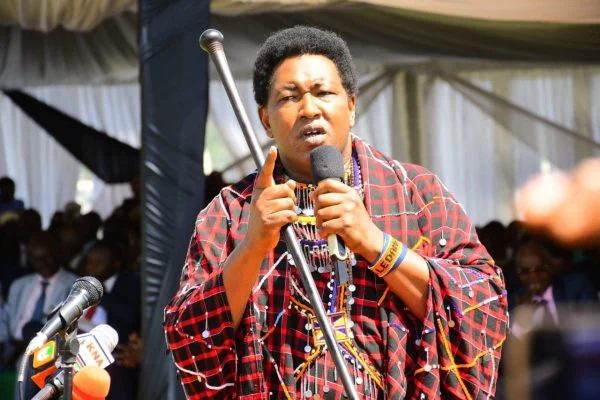
Olekina has previously defended Raila’s decision to cooperate with Ruto, arguing that the partnership was intended to secure development opportunities for communities that had traditionally felt politically marginalised.
He recalled how Raila consulted Maasai leaders before agreeing to work with the President, claiming that the arrangement had helped accelerate development projects in parts of Narok County, including road construction.
“Raila came to my home; he asked me to bring about 300 Maasai. He consulted with us, and he told us he wanted to work with Ruto so that we could come together,” Olekina said.
His presidential ambitions place him among several prominent politicians already being associated with the 2032 succession contest.
Among the leaders who have featured prominently in succession discussions are Mining Cabinet Secretary Hassan Joho, Prime Cabinet Secretary Musalia Mudavadi and Deputy President Kithure Kindiki.
Olekina also used his televised appearance to raise concerns about the alleged misuse of county resources by some governors to advance their political ambitions.
He claimed that some county chiefs were using public funds to finance political campaigns and establish political parties, warning that the practice needed to be addressed.
“There is a goonism that you don’t know about. The 47 governors that we have are using county money to campaign. We need to stop them from using that money to campaign. Some of them are using county money to start political parties; we need to stop them from doing that,” he alleged.
His comments are likely to reignite discussions about accountability, public resources and the influence of county governments in national politics.
For now, Olekina faces the immediate political test of defending his Narok Senate seat in the 2027 General Election before pursuing his bigger ambition.
His declaration has nevertheless placed him in the conversation about Kenya’s post-Ruto leadership and raised an important question about whether the Maasai community could eventually produce a presidential candidate capable of attracting support across the country.
As political realignments continue, the Narok senator appears determined to communicate one message to Kenyans: his ambitions do not end in Narok.
FOLLOW NAIROBI NEWS ON FACEBOOK

If you like our work, you can buy us a soda
Buy us a soda 🥤