
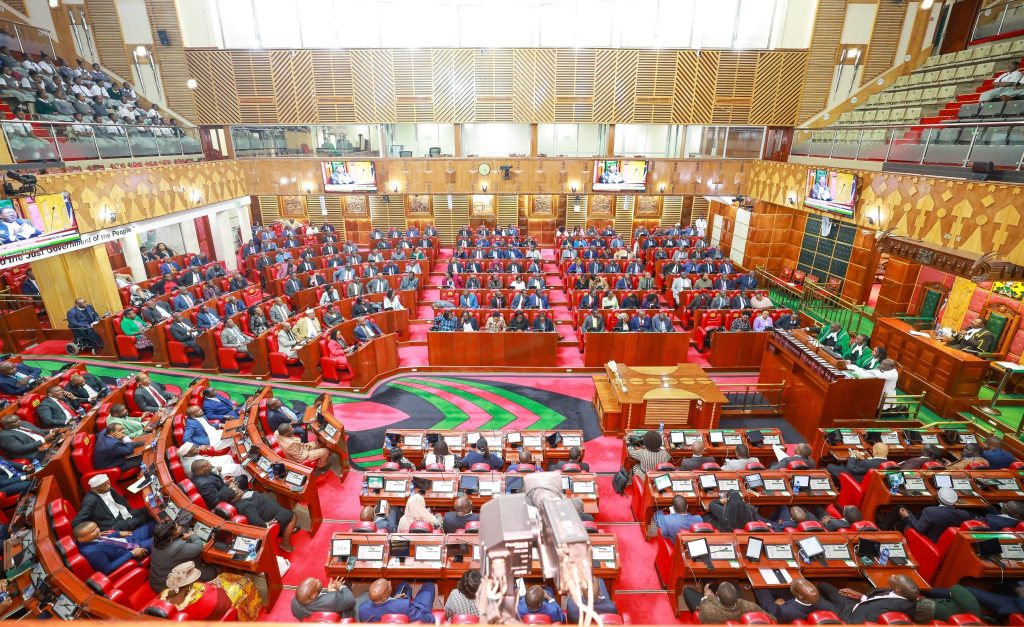
The National Assembly’s Committee on Delegated Legislation has approved proposed regulations aimed at opening up Kenya’s electricity market to competition and giving consumers more options for buying power.
The Energy (Electricity Market, Supply and Open Access) Regulations are expected to allow Independent Power Producers (IPPs) to sell electricity directly to large industrial consumers and retail buyers through existing transmission and distribution infrastructure.
The framework is also intended to attract private investment, improve efficiency in electricity supply and reduce power costs for consumers.
The committee, chaired by Ainabkoi MP Samuel Chepkonga, approved the proposed regulations following consultations with officials from the Energy and Petroleum Regulatory Authority (EPRA), led by Director General Edward Kinyua.
During the meeting, lawmakers and EPRA officials reviewed several provisions, focusing on strengthening the legal framework, clarifying technical definitions and ensuring the regulations comply with the Constitution and existing laws.
Chepkonga said subsidiary legislation must reflect Parliament’s legislative intentions and provide clear guidance to stakeholders.
Citing Article 94 of the Constitution, he emphasised that Parliament has the authority to make laws and that regulations must be properly anchored in the law.
He commended EPRA for developing the proposed framework and urged the authority to incorporate the committee’s recommendations to improve the regulations.
Under the proposed framework, electricity generators will be allowed to enter into direct supply agreements with consumers instead of relying exclusively on the existing electricity market arrangements.
However, generators using existing transmission and distribution infrastructure will be required to pay regulated wheeling charges.
Wheeling refers to the use of another entity’s electricity network to transport power from a generator to a consumer.
Kinyua said the reforms would introduce competition into a market that has operated under a largely monopolised structure.
“For a very long time, our market has been monopolised,” he said, explaining that the proposed regulations would facilitate direct contractual arrangements between electricity generators and consumers.
He added that opening up the market would create opportunities for investment and improve the sector’s operational efficiency.
The reforms are also expected to support Kenya’s industrialisation agenda by improving access to competitively priced electricity.
Kinyua said the changes would “create competition, drive operational efficiency, and lower power tariffs to make Kenya a competitive manufacturing hub.”
He explained that the electricity sector had gradually evolved since the unbundling of generation, transmission and distribution functions in 1997, creating an opportunity to transition towards a competitive market.
One of the key issues discussed during the meeting was Regulation 11, which provides for performance security.
Members sought clarification on how the requirement would apply to different categories of market participants, particularly end-user consumers.
Kinyua explained that performance security is intended to protect electricity buyers against possible failure by suppliers to deliver contracted power.
He welcomed the lawmakers’ observations and pledged to refine the provision to make its application clearer.
The committee also examined technical definitions, including electricity market, ancillary services and open access, to ensure consistency in the interpretation and implementation of the regulations.
Members further discussed Kenya’s participation in the East African Power Pool and the need to clearly define the geographical and operational scope of regional electricity trading arrangements.
The committee approved the electricity market regulations subject to EPRA incorporating its recommendations, including revisions to selected definitions and the performance security provisions.
The authority was also required to provide supporting documentation on public participation in line with constitutional requirements.
In a separate directive, the committee asked EPRA to submit seven forthcoming upstream energy regulations for pre-publication scrutiny.
The move is intended to allow Parliament to examine proposed regulations and provide early legal and technical input before their formal publication.
Chepkonga reaffirmed the committee’s commitment to ensuring that subsidiary legislation complies with constitutional and statutory requirements while supporting the implementation of government policy.
The proposed electricity market reforms are expected to create more opportunities for power suppliers, attract private investment and give large consumers alternative sources of electricity.
However, the regulations will need to be finalised in line with the committee’s recommendations and applicable legal requirements before implementation.

If you like our work, you can buy us a soda
Buy us a soda 🥤