

The High Court has dealt the Kenyan government a major legal setback after declaring the continued enforcement of the country’s shisha ban unlawful and unconstitutional, effectively lifting restrictions that had been in place for years.
The landmark ruling has reignited debate over public health, personal freedoms, and the regulation of tobacco products in Kenya.
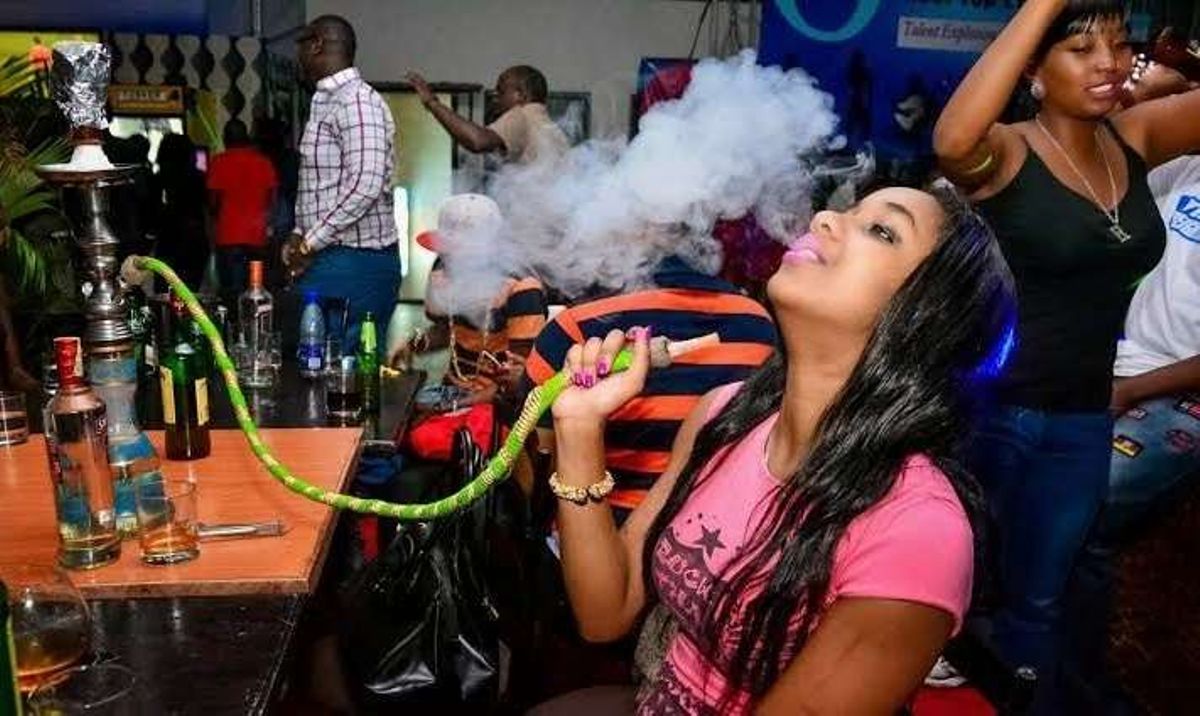
In a judgment delivered on Tuesday, July 28, Justice Bahati Mwamuye ruled that the Public Health (Control of Shisha Smoking) Rules, 2017 ceased to have legal effect after the government failed to regularize the regulations within the nine-month period granted by the High Court in an earlier ruling in 2018.
The court found that authorities had continued relying on expired regulations to enforce the ban, making subsequent crackdowns and government directives legally invalid.
Justice Mwamuye also declared unconstitutional a February 3, 2025 government press statement insisting that the shisha ban remained in force, as well as an April 14, 2025 directive ordering a crackdown on shisha outlets in Nairobi.
The judge barred government agencies from enforcing those directives against members of the Novel Tobacco Products Association.
The case was filed by the Novel Tobacco Products Association, which argued that the government was unlawfully targeting traders using regulations that had already expired.
The court agreed, holding that the association had the legal standing to challenge the continued enforcement of the ban.
How the dispute began
Kenya introduced a nationwide shisha ban in 2017 through the Ministry of Health, prohibiting the importation, manufacture, sale, advertising, promotion, distribution, and use of the product.
However, in 2018, the High Court found that the regulations establishing the ban had procedural defects, including failure to comply fully with the legal requirements governing statutory instruments.
Rather than immediately nullify the regulations, the court gave the government nine months to correct the defects.
According to Justice Mwamuye, the government failed to do so, meaning the regulations automatically ceased to have legal effect after the grace period expired.
Constitutional rights violated
The judge further held that the continued enforcement of the expired regulations violated constitutional rights guaranteed under Articles 27, 40, 47, and 50 of the Constitution, including equality before the law, protection of property, fair administrative action, and the right to a fair hearing.
The ruling also stated that tobacco products cannot be prohibited through subsidiary legislation that fails to comply with the Statutory Instruments Act, 2013, emphasizing that proper legislative procedures must always be followed.
What the ruling means
The judgment does not declare shisha harmless. Instead, it means the government currently lacks a lawful legal framework to continue enforcing the 2017 ban.
If authorities still wish to prohibit or regulate shisha, they must introduce fresh regulations that comply with constitutional and statutory requirements, including public participation and parliamentary oversight.
The decision is expected to provide relief to businesses in the hospitality industry, many of which had argued that the ban hurt legitimate businesses while encouraging an underground market.

Public health concerns remain
Despite the court victory for traders, health experts continue to warn about the dangers of shisha smoking.
The World Health Organization has consistently cautioned that shisha smoke contains toxic substances including carbon monoxide, heavy metals, and cancer-causing chemicals.
A typical hour-long shisha session can expose users to significantly more smoke than a single cigarette, increasing the risk of heart disease, lung disease, and several forms of cancer.
As celebrations erupt among some traders and consumers following Tuesday’s ruling, public health advocates are likely to push for Parliament and the Ministry of Health to develop a legally sound regulatory framework aimed at protecting public health while complying with the Constitution.
FOLLOW NAIROBI NEWS ON FACEBOOK