
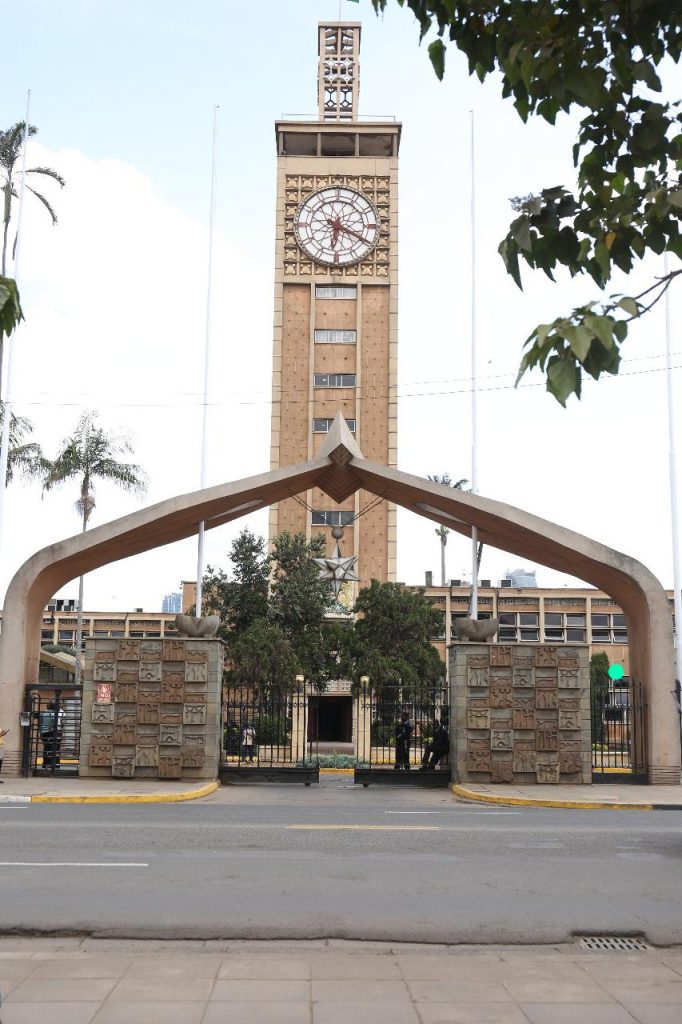
The Birth of Parliament
In the shadows of Kenyan empire, the seeds of democracy began to stir. Nairobi in the 1940s was a city under colonial rule where decisions were made by a privileged few, and the voices of many were silenced.
The Legislative Council (LegCo), established in 1907, was the colony’s supreme legislative body. However, it was exclusively reserved for settlers, with only white members occupying seats. Africans, who were the majority population, had no representation, no vote, no voice in governance. This silence was broken in 1944 when Eliud Mathu, a teacher and nationalist, became the first African appointed to the Legislative Council. Although just a single voice, Mathu’s appointment marked the beginning of a shift in power.
Following Mathu’s lead, a new generation of African leaders emerged, including Benaiah Ohanga, Tom Mboya, Ronald Ngala, and Jomo Kenyatta. These men, through churches, classrooms, and political rallies, demanded more than mere participation; they called for full independence. The road to independence was neither smooth nor easy. The 1950s witnessed bloodshed and bravery during the Mau Mau uprising, which shook the colonial regime and caught the attention of London. Behind closed doors, negotiations began, signaling a new dawn for Kenya.
By 1963, Kenya had achieved internal self-rule. A modern Parliament was born, modeled after the British Westminster system but infused with an African spirit. On June 1st, 1963—Madaraka Day—Kenya took control of its governance. Six months later, the Union Jack was lowered, and the Republic of Kenya was officially born. Inside the newly built Parliament building in Nairobi, the first true Kenyan Parliament convened as a bicameral system composed of a Senate and a House of Representatives, symbolizing hope and the country’s future.
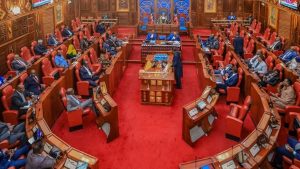
The founding members of this Parliament were diverse, representing different regions, tribes, and ideologies, yet united by a shared dream of a Kenya led by its own people. Notable leaders included Jomo Kenyatta (Prime Minister, later President), Oginga Odinga (Vice President), Ronald Ngala (Minister and Coast leader), Daniel arap Moi (early MP and future President), and Tom Mboya (visionary legislator and master planner). Their early debates inside Parliament tackled Kenya’s deepest wounds land injustices, educational inequality, and economic disparity. These discussions shaped the nation’s first laws, many of which remain relevant today.
However, independence did not immediately bring unity. Political power struggles soon surfaced. In 1966, the Senate was abolished, turning Parliament into a unicameral body. This change streamlined legislative processes but reduced representation. Despite its imperfections and challenges, the birth of Kenya’s Parliament marked the beginning of a political institution that would endure decades of turbulence and transformation.
As the sun set on the Parliament building, silhouetted against the sky, it symbolized Kenya’s journey from a council of colonists to a house of the people. While much had been achieved, the journey was only just beginning.
Generations Y & Z — From Ruled to Rulers
Kenya in the 1990s and 2000s was a land of contradictions. Booming cities stood side-by-side with broken systems; youthful energy was met with political stagnation. Generation Y and early Generation Z grew up in the shadows of tribal politics, economic inequality, and systemic corruption. During this period, elections were fraught with tension, protests were common, and post-election violence erupted in 2007–2008. Young people were often reduced to mere numbers on voting registers, not voices in decision-making, frequently told, “Politics si ya vijana” (politics is not for the youth). The youth suffered from unemployment and rigged elections, bearing the consequences of decisions over which they had no control.
The adoption of a new constitution in 2010 brought renewed hope, promising inclusion, decentralized power, and a more democratic future. Yet, frustration deepened as realities did not meet expectations. The campaigns of Uhuru Kenyatta and William Ruto in 2013 clashed with the lived experiences of many, while protests erupted against electoral bodies and corruption. Young leaders recognized that change would not come from outside they had to be the agents of change themselves. They turned to digital activism, with Twitter becoming a battleground, WhatsApp a tool of resistance, and TikTok a political classroom.
Unlike previous generations, Gen Z and Millennials grew up immersed in digital spaces. They didn’t wait for newspapers to make headlines; they created their own. Activists like Boniface Mwangi confronted Members of Parliament directly, while mass protests against legislation such as the Finance Bill of 2024 were organized online. TikTok videos explaining complex laws in Sheng (a local Kenyan slang) helped inform and engage young people politically. Digital strategists noted that power had shifted away from traditional suits and speeches toward storytelling and viral truth.
This digital revolution soon translated into real political power. By 2022, young people were no longer just protesters but policymakers. Elected representatives like John Paul Mwirigi, who entered Parliament at 23, and Linet Toto, the youngest female MP, signaled a new era. Gen Z activists also ran for county assembly seats, actively shaping governance. These young MPs recalled being dismissed as “small boys and girls,” but now they draft bills, chair committees, and hold the executive accountable.
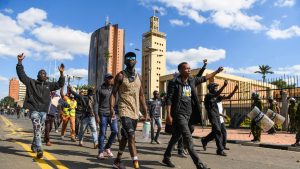
However, with new energy came new conflicts. Heated debates on youth unemployment, resistance to controversial bills, and demands for budget transparency and digital inclusion have made Parliament a battleground of ideologies. Political scientists observe a generational tension the old guard seeks stability, while the youth demand transformation.
Today, Kenya stands on the cusp of significant change. With an average national age of 19, but the average Member of Parliament over 50, the gap between generations is stark. Nonetheless, this gap is closing rapidly. Protests led by students in Nairobi in 2024, youth mobilization in rural areas like Garissa, Turkana, and Kisii, and diaspora youth spearheading civic campaigns underscore a growing political awakening. As one Gen Z activist put it, “This is no longer politics as usual. We’re not waiting our turn. We’re taking it.”
Prologue: The Parliament Takeover — 2027
The takeover began not inside Parliament, but on TikTok. A viral video by the anonymous creator @WaKenyaUhai captured the frustrations of the youth: “They tax our hustle, mock our struggle, and build gates to keep us out. If Parliament won’t listen, we’ll knock. If they still won’t listen, we’ll break the door.” Hashtags like #OccupyBunge, #GenerationSuffocation, and #OurCountryOurRules flooded social media timelines, mobilizing a generation.
On June 25 2024, thousands of primarily young people many dressed in black gathered peacefully outside the Kenyan Parliament to protest the Finance Bill 2024. The gates were locked, police lined the streets, and authorities responded with tear gas and water cannons. As frustration mounted, the crowd’s chant shifted from “Open the gates” to “If they won’t let us in, we’ll let ourselves in,” reflecting growing tensions and attempts by demonstrators to breach the barricades. By that afternoon, protesters had stormed the Parliament complex after the bill was passed, setting parts of the building on fire and prompting a heavy police and military response including the use of live ammunition in some cases. The crackdown resulted in at least 19 deaths in Nairobi alone, with many more injured and over 130 people arrested.
Under immense crowd pressure, barricades collapsed, police stepped aside, and youth flooded into the Parliament chambers, holding signs declaring, “This is OUR House!”, “We elected you. We can replace you,” and “We are not the future. We are the present.” A 23-year-old student leader, Akinyi Omollo, read a manifesto demanding the immediate repeal of Bill 78, a full audit of MP salaries and benefits, allocation of 25% of the national budget to youth employment and innovation, an end to police brutality against protesters, and the passage of the Digital Inclusion and Youth Governance Bill within 30 days. She declared, “We are not rebels. We are citizens. You work for us.”
For 48 hours, Parliament was under youth occupation. News reports covered presidential meetings, the suspension of Bill 78, and several cabinet resignations. Although many young lives were lost, a new independence was born, and the youth emerged victorious. A new political era had begun the myth of untouchable power was shattered, and Kenya’s political landscape was forever transformed.
Kelly Slater net worth as America’s greatest surfer of all time