
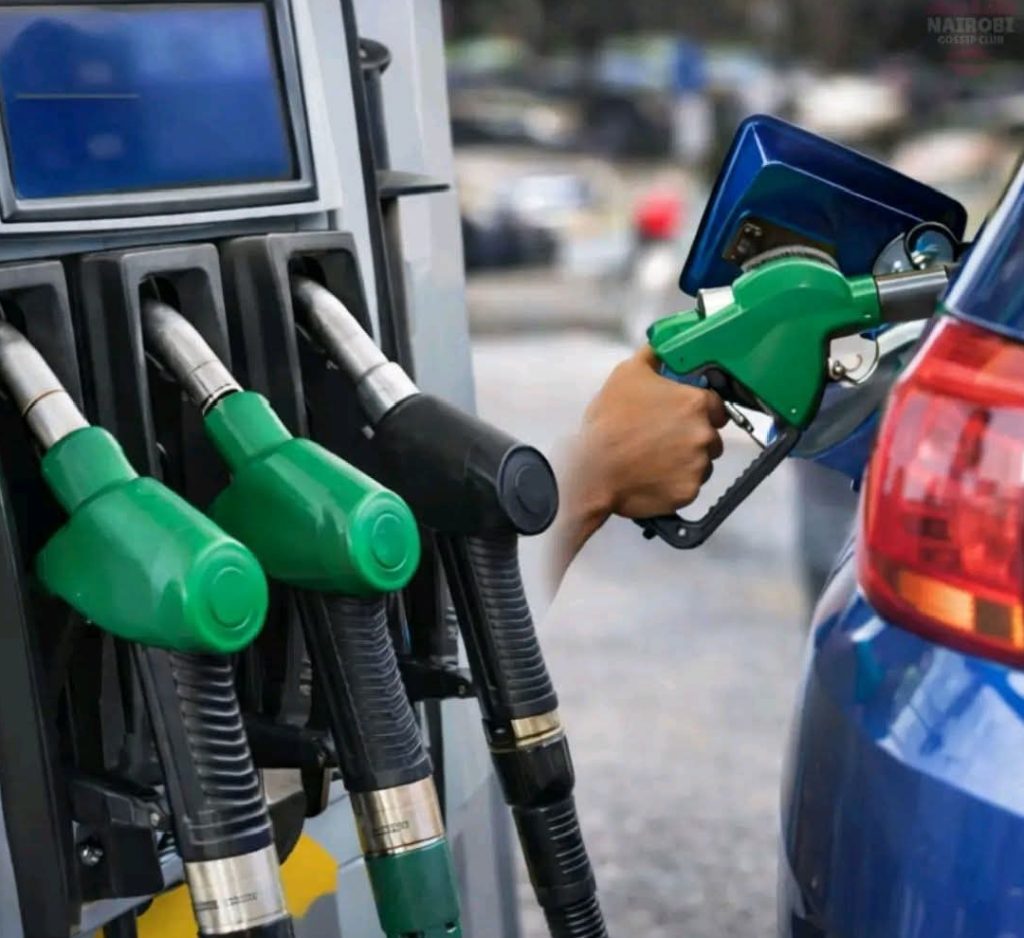
Motorists across the country are set to enjoy relief at the pump after the government lowered the Value Added Tax (VAT) on petroleum products, triggering a reduction in fuel prices for the next pricing cycle.
In a notice issued on Wednesday evening, the Cabinet Secretary for the National Treasury announced a revision of VAT from 13 percent to 8 percent through Legal Notice No. 70 dated April 15, 2026.
The move prompted the energy regulator Energy and Petroleum Regulatory Authority to recalculate the maximum retail pump prices for the period running from April 16 to May 14, 2026.
Following the adjustment, the price of Super Petrol in Nairobi dropped by Sh9.37 per litre, while Diesel decreased by Sh10.21 per litre. Kerosene prices, however, remained unchanged.
In the latest review, Super Petrol will retail at Sh197.60 per litre, Diesel at Sh196.63, and Kerosene at Sh152.78 in Nairobi.
Despite the tax reduction, kerosene consumers will not see a price decrease after the government simultaneously reduced the subsidy on the product.
The subsidy has been revised downward from Sh108.10 per litre to Sh96.56 per litre, effectively offsetting the impact of the VAT cut on retail prices.
The latest intervention is expected to ease the cost of living, particularly for transport and logistics sectors that rely heavily on petrol and diesel. However, the unchanged price of kerosene—widely used by low-income households—may raise concerns about equitable relief across different consumer groups.
The government has in recent months faced mounting pressure to address rising fuel costs, with critics calling for greater transparency in pricing and more sustainable measures to cushion consumers.
The new prices take effect at midnight April 15 and will remain in force until mid-May, when the next review is expected.
President William Ruto had said the directive to reduce VAT will be implemented for the next three months.
Other measures taken by the government, he said, include the release of Sh6.2 billion to further moderate prices and keeping the prices of kerosene unchanged.
He gave an undertaking that the government will continue monitoring the conflict in the Middle East – between the United States and Israel on the one hand, and Iran on the other – to ensure that the effects of fuel price increases are moderated.
Ruto explained that this will ensure Kenyans are not subjected to higher fuel prices as a result of the conflict that has disrupted global fuel supply and led to surging oil prices.
“We are going to make sure that we cushion the people of Kenya from high prices of fuel,” he said.
Ruto pointed out that the government has also ensured that the country has adequate supply of fuel, thanks to the Government-to-Government fuel arrangement.
He noted that many countries across the globe are currently facing fuel shortages coupled with high fuel prices.
“The G-to-G fuel arrangement has made Kenya a very competitive fuel destination,” he said.
He assured the country that the government will continue monitoring the situation to ensure the economy is not adversely affected by the global fuel challenge.