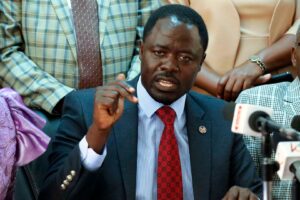
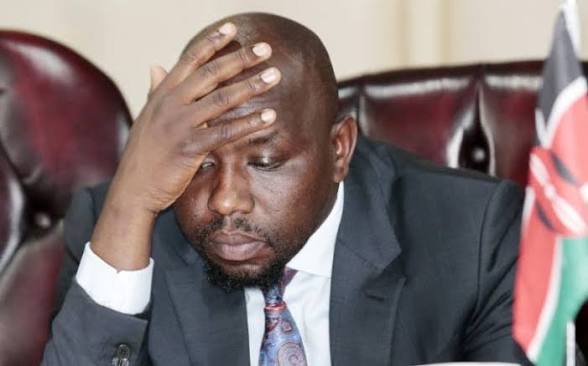
Interior Cabinet Secretary Kipchumba Murkomen has sparked debate after questioning why leaders in the matatu industry have become increasingly vocal against President William Ruto over fuel prices, yet remained relatively silent during the administration of former President Uhuru Kenyatta despite similar economic pressures.
Speaking amid growing public frustration over the rising cost of living and recent nationwide demonstrations linked to fuel prices, Murkomen defended the current administration while accusing some transport sector leaders of applying double standards in how they respond to government policies.
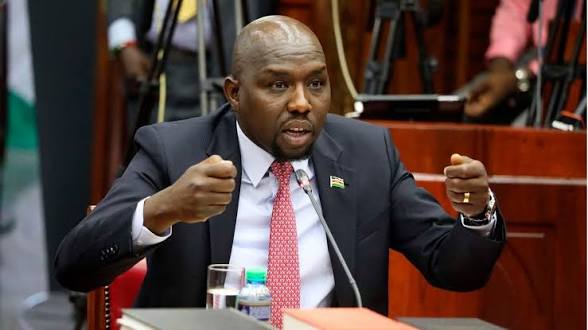
The Interior CS recalled his time in the Senate, saying he was among the fiercest critics of how fuel prices were managed during Uhuru Kenyatta’s tenure.
However, he maintained that despite the criticism, there were no violent protests or chaos witnessed at the level currently being experienced under President Ruto’s government.
“When I was in the Senate… I was a very serious critic of the way oil prices were being handled,” Murkomen stated. “No life was lost; we never organised a protest.”
Murkomen suggested that the current wave of demonstrations targeting Ruto’s administration may not be entirely about fuel prices alone.
According to him, there appears to be selective outrage directed specifically at the current Head of State.
He argued that matatu industry leaders tolerated high fuel prices and other economic hardships under Uhuru Kenyatta but are now mobilising protests against Ruto, raising questions about fairness and political bias.
“There must be a certain level of profiling that applies to William Ruto and not Uhuru Kenyatta,” Murkomen added.
His remarks come at a time when Kenya has been witnessing heightened tension over the cost of fuel, with transport operators and ordinary wananchi complaining that the rising prices are eating into household incomes and business profits.
The matatu sector, which heavily depends on fuel for daily operations, has been among the hardest hit by fluctuations in petroleum costs.
In recent weeks, demonstrations have erupted in several towns and urban centres, with protesters demanding government intervention to lower fuel prices and ease the burden on citizens struggling with the high cost of living.
Some protests have also turned chaotic, leading to clashes with police, destruction of property, and disruption of transport services.
Murkomen, however, defended the government’s handling of the situation, insisting that criticism should be done peacefully and within the law.
He further appeared to credit leaders from his political side for previously choosing dialogue and criticism through institutions instead of street protests.
His sentiments are likely to trigger mixed reactions across the political divide.
Supporters of the Kenya Kwanza administration may view his comments as a legitimate call for consistency in political activism, while critics are expected to argue that Kenyans have a constitutional right to protest whenever they feel burdened by government policies.

The debate over fuel prices continues to dominate national conversations as pressure mounts on the government to address the economic challenges affecting millions of Kenyans.
With the matatu industry serving as the backbone of public transport in the country, any prolonged standoff between operators and the government could have far-reaching economic and social consequences.
Murkomen’s remarks now add a fresh political angle to the already heated discussion, with many expected to weigh in on whether public reaction to fuel prices has indeed changed depending on who occupies State House.
FOLLOW NAIROBI NEWS ON FACEBOOK