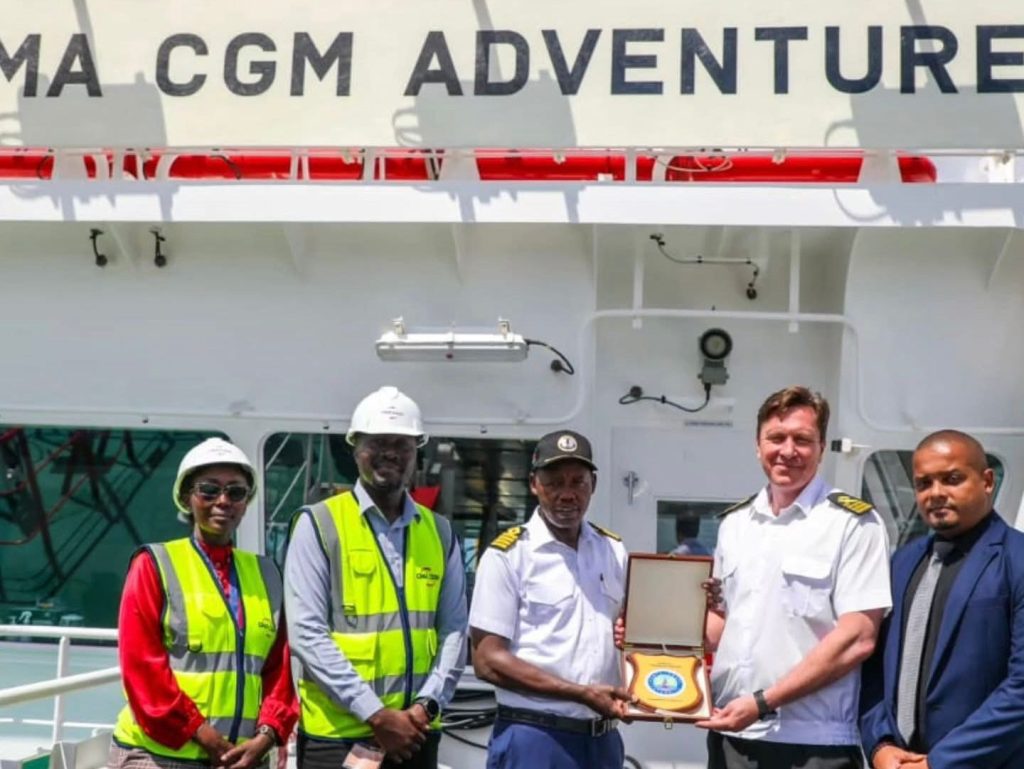
The arrival of the container vessel CMA CGM Adventure at the Port of Mombasa marked a major milestone in Kenya’s maritime history, becoming the first large gas-powered container ship to dock at the port.
The vessel, part of a new generation of environmentally friendly ships, operates primarily on Liquefied Natural Gas (LNG), signaling a bold shift toward cleaner and more sustainable global shipping.
Unlike traditional cargo vessels that rely on heavy fuel oil and release thick clouds of exhaust emissions, CMA CGM Adventure sails using chilled natural gas, significantly reducing carbon emissions and air pollution. Its maiden voyage to Mombasa was not merely ceremonial, but a powerful symbol of the transformation currently reshaping international maritime trade.
Speaking during the traditional Kenya Ports Authority reception for first-time vessel calls, KPA Chief Executive Officer Captain William Ruto described the docking as a clear indication that the future of shipping has arrived at the Kenyan coast.
“The arrival of CMA CGM Adventure is a strong statement that the Port of Mombasa is ready to embrace the future of green and sustainable maritime trade,” said Captain William Ruto.
“As global shipping moves toward cleaner energy and lower emissions, Kenya cannot afford to remain behind. KPA is positioning Mombasa as a modern, climate-smart port that meets international environmental standards,” he added.
Across the globe, shipping lines are increasingly shifting toward low-emission vessels as climate regulations tighten and international cargo owners demand cleaner supply chains. Ports are equally under pressure to evolve from conventional cargo gateways into environmentally responsible logistics hubs capable of supporting the next generation of maritime transport.
The Port of Mombasa appears determined to remain ahead of that transition. Even as LNG-powered vessels begin making calls at the port, KPA has already intensified implementation of its Green Ports Policy aimed at reducing the environmental footprint of port operations.
Solar energy installations are steadily expanding across port facilities, helping reduce reliance on conventional electricity sources and lowering operational carbon emissions. Hybrid cargo-handling equipment is also gradually replacing older fuel-intensive machinery, improving efficiency while minimizing pollution within port terminals.
KPA has further introduced shore power technology, an innovative system that allows docked vessels to switch off onboard engines and connect directly to electricity supplied from land. This significantly reduces fuel consumption, greenhouse gas emissions, and noise pollution while ships remain at berth.
Beyond port infrastructure, KPA has also intensified mangrove restoration projects along the Kenyan coast, recognizing the critical environmental role played by mangrove forests in protecting marine ecosystems and combating climate change.
The restoration of mangrove trees carries enormous environmental and economic benefits. Mangroves act as powerful natural carbon sinks by absorbing and storing large amounts of carbon dioxide from the atmosphere. They also help prevent coastal erosion, protect shorelines from storm surges, support fish breeding grounds, and preserve biodiversity within marine ecosystems.
In addition, healthy mangrove forests improve water quality, strengthen coastal resilience against climate change, and support livelihoods for local fishing communities that depend on stable marine habitats for survival.
The docking of CMA CGM Adventure therefore represents far more than the arrival of another cargo vessel. It reflects the beginning of a broader transition toward cleaner shipping, sustainable port operations, and environmentally conscious maritime trade at the Port of Mombasa.
CMA CGM Adventure Makes Historic Mombasa Call As KPA Pushes Green Maritime Revolution
The arrival of the container vessel CMA CGM Adventure at the Port of Mombasa marked a major milestone in Kenya’s maritime history, becoming the first large gas-powered container ship to dock at the port.
The vessel, part of a new generation of environmentally friendly ships, operates primarily on Liquefied Natural Gas (LNG), signaling a bold shift toward cleaner and more sustainable global shipping.
Unlike traditional cargo vessels that rely on heavy fuel oil and release thick clouds of exhaust emissions, CMA CGM Adventure sails using chilled natural gas, significantly reducing carbon emissions and air pollution. Its maiden voyage to Mombasa was not merely ceremonial, but a powerful symbol of the transformation currently reshaping international maritime trade.
Speaking during the traditional Kenya Ports Authority reception for first-time vessel calls, KPA Chief Executive Officer Captain William Ruto described the docking as a clear indication that the future of shipping has arrived at the Kenyan coast.
“The arrival of CMA CGM Adventure is a strong statement that the Port of Mombasa is ready to embrace the future of green and sustainable maritime trade,” said Captain William Ruto.
“As global shipping moves toward cleaner energy and lower emissions, Kenya cannot afford to remain behind. KPA is positioning Mombasa as a modern, climate-smart port that meets international environmental standards,” he added.
Across the globe, shipping lines are increasingly shifting toward low-emission vessels as climate regulations tighten and international cargo owners demand cleaner supply chains. Ports are equally under pressure to evolve from conventional cargo gateways into environmentally responsible logistics hubs capable of supporting the next generation of maritime transport.
The Port of Mombasa appears determined to remain ahead of that transition. Even as LNG-powered vessels begin making calls at the port, KPA has already intensified implementation of its Green Ports Policy aimed at reducing the environmental footprint of port operations.
Solar energy installations are steadily expanding across port facilities, helping reduce reliance on conventional electricity sources and lowering operational carbon emissions. Hybrid cargo-handling equipment is also gradually replacing older fuel-intensive machinery, improving efficiency while minimizing pollution within port terminals.
KPA has further introduced shore power technology, an innovative system that allows docked vessels to switch off onboard engines and connect directly to electricity supplied from land. This significantly reduces fuel consumption, greenhouse gas emissions, and noise pollution while ships remain at berth.
Beyond port infrastructure, KPA has also intensified mangrove restoration projects along the Kenyan coast, recognizing the critical environmental role played by mangrove forests in protecting marine ecosystems and combating climate change.
The restoration of mangrove trees carries enormous environmental and economic benefits. Mangroves act as powerful natural carbon sinks by absorbing and storing large amounts of carbon dioxide from the atmosphere. They also help prevent coastal erosion, protect shorelines from storm surges, support fish breeding grounds, and preserve biodiversity within marine ecosystems.
In addition, healthy mangrove forests improve water quality, strengthen coastal resilience against climate change, and support livelihoods for local fishing communities that depend on stable marine habitats for survival.
The docking of CMA CGM Adventure therefore represents far more than the arrival of another cargo vessel. It reflects the beginning of a broader transition toward cleaner shipping, sustainable port operations, and environmentally conscious maritime trade at the Port of Mombasa.

If you like our work, you can buy us a soda
Buy us a soda 🥤