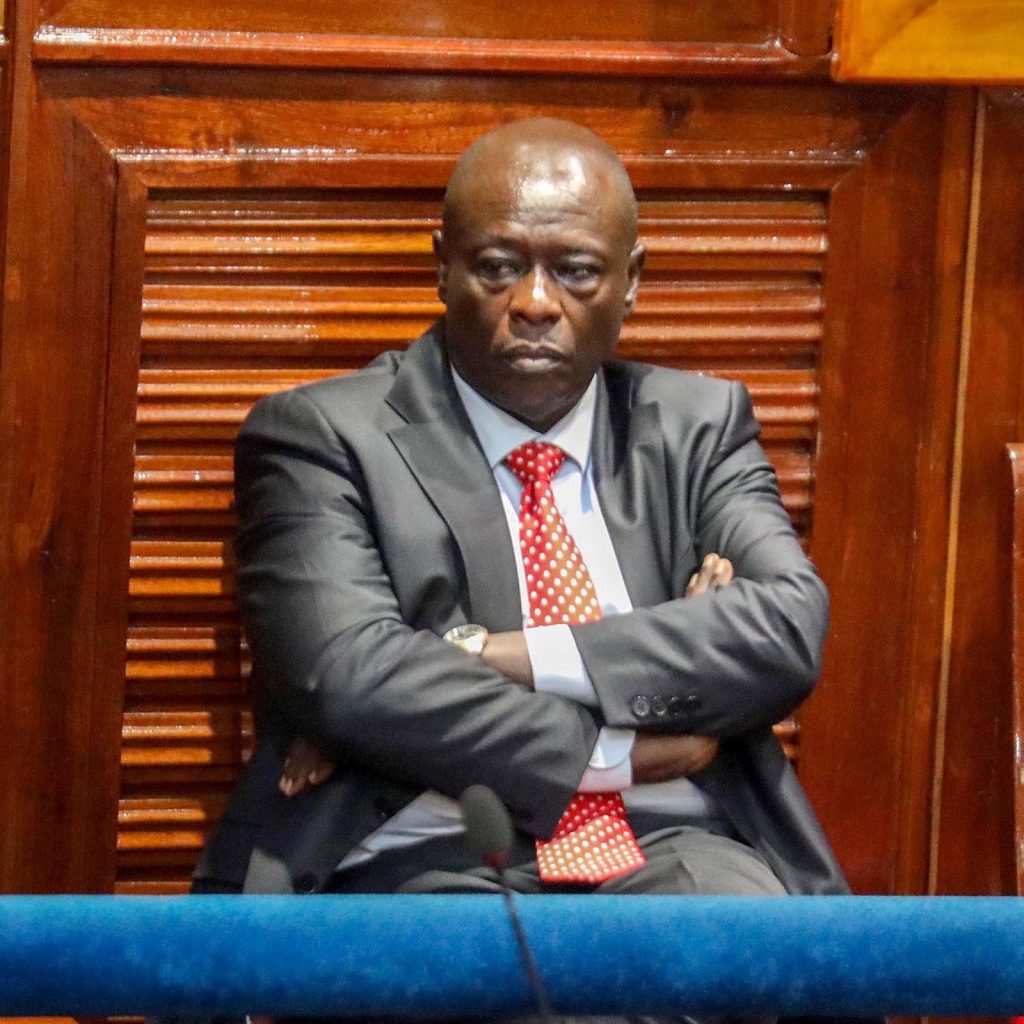
Former Deputy President Rigathi Gachagua suffered a legal setback after the High Court dismissed his petition challenging the impeachment that removed him from office in October 2024.
Justices Eric Ogolla, Anthony Mrima and Frida Mugambi rejected the key arguments advanced by Gachagua and upheld the impeachment process conducted by Parliament, dealing a significant blow to his bid to be reinstated as Deputy President.
The bench confirmed that the court had jurisdiction to hear and determine the matter before proceeding to address the substantive issues raised in the petition.
On allegations of bias against the Speaker of the National Assembly, the judges found that Gachagua had failed to provide sufficient evidence to support the claims, dismissing them as unsubstantiated.
The court also upheld the public participation process that preceded the impeachment, finding that Parliament had provided adequate notice through advertisements published in both English and Kiswahili newspapers and had offered citizens a genuine opportunity to submit their views.
“We are satisfied that the public participation conducted during the impeachment process met the constitutional threshold,” the bench held.
On the nomination and approval of Deputy President Kithure Kindiki, the court noted that the proceedings were televised and conducted transparently, and held that public participation was not constitutionally required for Parliament’s approval of Kindiki’s nomination.
The bench further declined to declare Standing Order No. 64 unconstitutional. The judges held that the central issue was not the seven-day timeline provided under the Standing Orders but rather how Parliament conducts its proceedings
They found the seven-day period to be constitutional while observing that Parliament remains free to review or amend its timelines if it considers it necessary.
On the broader question of the legal framework governing the removal of a Deputy President, the court acknowledged that Article 150 of the Constitution lacks a comprehensive statutory framework, a gap the bench said leaves fundamental procedural questions to be resolved by the courts and potentially undermines institutional certainty and public confidence.
The judges consequently urged Parliament to urgently enact legislation providing a clear and dedicated framework for the removal of a Deputy President under Article 150.
However, the court was emphatic that the absence of such legislation does not invalidate the impeachment proceedings already undertaken against Gachagua, noting that Parliament had relied on the constitutional provisions under Articles 144 and 145 to safeguard the former Deputy President’s rights during the process.
On the question of timelines, the bench found that while Standing Order 78(2) prescribes a 10-day period for investigations by a special committee, neither the Constitution nor the Senate Standing Orders provide a specific timeline for impeachment proceedings conducted in the Senate plenary.
The Senate’s decision to adopt a 10-day timeline for plenary proceedings was therefore a procedural choice and did not amount to a constitutional violation.
At the same time, the court ordered the Senate of Kenya to pay Gachagua Sh50 million in constitutional damages, finding that his right to a fair trial was violated during the impeachment proceedings that removed him from office in October 2024.
The three-judge bench delivered the order as part of its landmark ruling on Monday, marking the first judgment of its kind under Kenya’s 2010 Constitution.
The court issued a declaratory order finding that Gachagua’s fair trial rights were infringed when the Senate declined to grant an adjournment despite his absence from the proceedings.
The bench held that the award was necessary both as compensation and as a constitutional remedy.
“The court awards constitutional damages of Kenya Shillings 50 million to His Excellency Gachagua payable by the Senate to vindicate the Constitution, restore the dignity of the affected party, and deter future violations,” the bench stated in its ruling.
The judges noted that the compensation was aimed at restoring Gachagua’s dignity and at sending a clear signal to state organs against future breaches of fair trial protections.
The court further issued a declaratory order affirming the constitutional necessity for Parliament to enact a dedicated statutory framework governing the impeachment of a Deputy President under Article 150 of the Constitution.
On the question of pension and emoluments, the bench made no findings, stating that Gachagua was at liberty to pursue the matter before an appropriate forum.
Each party was directed to bear its own costs, given the public interest nature of the proceedings. The bench also clarified that any prayer not expressly allowed in the judgment was accordingly disallowed.