For years, the fields around Ramisi carried the look of a promise abandoned.
Cane struggled. Farmers waited.
Disputes over land dragged on.
And inside the KISCOL complex, a modern sugar mill built for much bigger things sat far below its potential.
Now, the silence is beginning to break.
Cane is returning to the fields. Replanting has begun.
Government officials are back at the table.
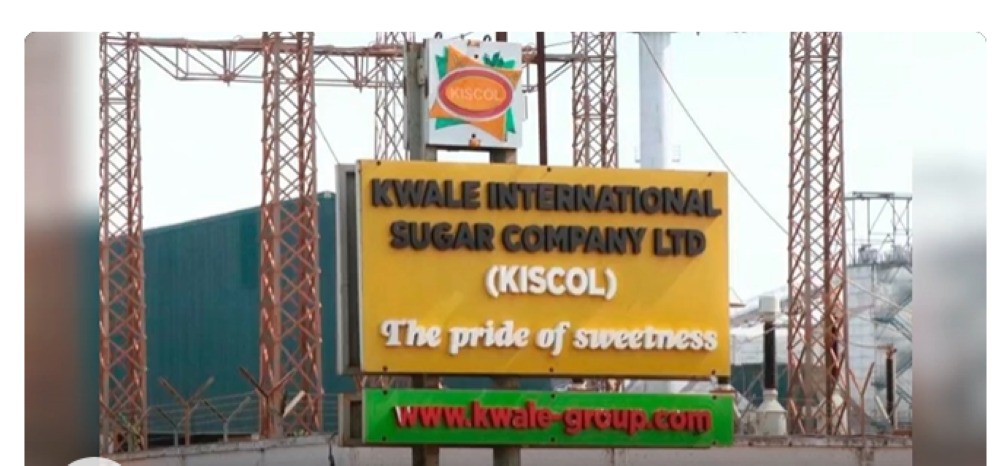
And the government is treating Kwale International Sugar Company Limited (KISCOL) with a new sense of urgency.
That matters because KISCOL was never meant to be just another sugar mill.
It was designed as an industrial engine for the coast.
The latest push gained momentum on July 30, when Agriculture Cabinet Secretary Mutahi Kagwe unveiled a government plan to revive KISCOL and the wider coastal sugar industry.
The message was clear: the mill cannot recover unless the problems around it are tackled too; land, cane supply, security, vandalism, and farmer livelihoods.
That is the real breakthrough.
Government Steps In
For years, KISCOL’s troubles were treated largely as a private-sector problem.
Now, the government is stepping in.
A revival committee has been established to coordinate solutions, particularly around the long-running land dispute.
The move follows a major court development.
The High Court awarded KISCOL about Sh24 billion after finding that the government had breached obligations tied to the company’s leased land.
But money alone cannot restart a sugar economy. Cane can.

Cane Returns
KISCOL has begun large-scale cane replanting after regaining access to parts of its nucleus estate, according to recent reporting.
That changes the picture.
The mill was designed to crush about 3,300 tonnes of cane a day.
Its wider model included roughly 5,500 hectares of cane, sophisticated drip irrigation and an 18MW bagasse-fired power plant.
Its irrigation system once produced yields of about 84 tonnes per hectare, far above comparable non-irrigated and rain-fed plots.
Those are not just agricultural statistics.
They are jobs.
A hectare of cane means work for farmers, tractor operators, harvesters, truckers, mechanics, and suppliers.
A working mill means money moving through shops, transport yards, and homes.
The factory is an economic heartbeat.
More Than Sugar
And then comes the bigger opportunity.
KISCOL was designed to turn cane into more than sugar.
Bagasse could generate electricity. Molasses could feed ethanol production.
Irrigation could stabilise farming.
Processing could anchor industries around the factory.
That model fits Kenya’s current push to squeeze more value from every tonne of cane.
KISCOL therefore offers something rare: infrastructure built for the future, waiting for the conditions to catch up.
The question is whether Kenya can now provide those conditions.
Land Is Key
That brings the revival back to its hardest test: land.
Kagwe has urged Kwale County to accelerate efforts to resolve occupation of parts of the KISCOL estate, with reports putting the affected population at about 15,000.
There can be no durable revival without land certainty.
But there can be no solution without protecting legitimate community interests.
Kenya needs both.
The settlement must be lawful, transparent, and humane.
If it is, the pieces begin to fit.
The cane is returning. Farmers are coming back. The government is engaged.
The infrastructure remains.
KISCOL is roaring back after years of standing still.
And in Kwale, that movement may be the beginning of a second life.
FOLLOW NAIROBI NEWS ON FACEBOOK