
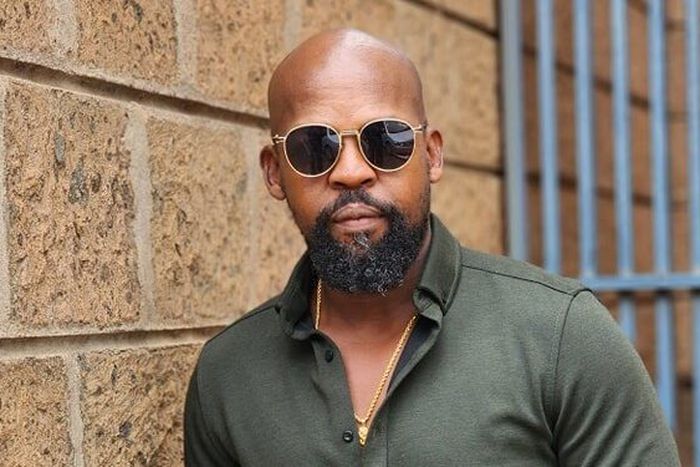
For more than two decades, Alex Mwakideu built his career around sound.
Behind the microphone, his voice became familiar to thousands of Kenyan listeners.
But away from the studio, the veteran broadcaster was quietly facing a deeply personal challenge, struggling to hear the very people closest to him.
Mwakideu has now opened up about his battle with progressive hearing loss, revealing how the condition gradually began interfering with ordinary moments at home, at work and in social settings.
The revelation is particularly poignant because broadcasting has been at the centre of his life for about 22 years.
His career has taken him through several radio stations and environments where sound is an essential part of the job.
A difficult reality at home
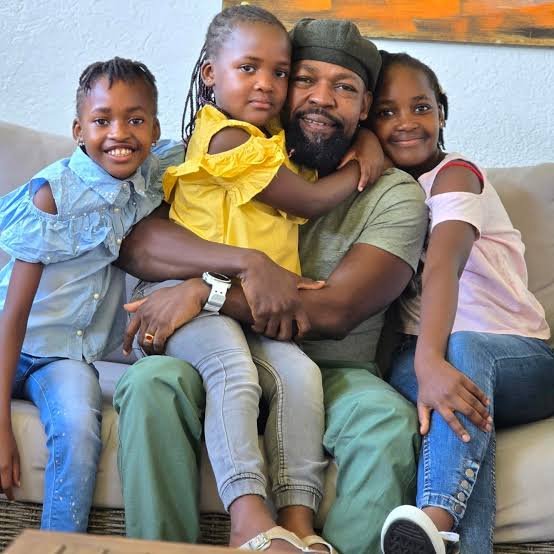
According to Alex Mwakideu, the problem became increasingly obvious during conversations with his wife, Mariam Mwemba, and their children.
Simple family interactions could suddenly become difficult, especially when there was background noise.
Alex Mwakideu recalled having to stop whatever he was doing to concentrate on conversations.
Even moments that would ordinarily pass unnoticed, such as eating dinner or brushing his teeth, became situations where he needed to pause and focus on what was being said.
His family also noticed that he frequently asked people to repeat themselves and sometimes needed the television volume turned up.
The situation was not confined to his home.
At work, some colleagues reportedly interpreted his difficulty responding as though he was deliberately ignoring them.
For someone whose profession depends heavily on listening, understanding speech and communicating quickly, the challenge was particularly significant.
The medical discovery
Initially, Alex Mwakideu wondered whether something as simple as earwax might have been responsible for the problem.
After seeking medical attention, however, he was referred for further assessment.
In June 2025, an ENT specialist at Avenue Hospital referred him for an audiological evaluation.
Tests subsequently showed that he had mild-to-moderate sensorineural hearing loss affecting the cochlea.
The assessment also indicated that the hearing loss was more pronounced in his left ear, where he had reportedly lost approximately 45% to 50% of hearing.
Unlike some forms of hearing difficulty that can be addressed through medication or surgery, his condition required a different approach.
Mwakideu eventually acquired personalised hearing aids, reportedly spending about Sh430,000 on the devices.
The technology helped him communicate more easily, but the experience had already changed the way he interacted with people.
When hearing loss became isolating
One of the most difficult aspects of Mwakideu’s experience was not simply struggling to hear — it was what the struggle did to his social life.
He explained that before getting hearing aids, he sometimes withdrew from gatherings and kept to himself during meetings because following conversations had become increasingly difficult.
That experience reflects a broader issue surrounding hearing loss.
The World Health Organization says more than 1.5 billion people globally live with some degree of hearing loss, while about 430 million have disabling hearing loss requiring rehabilitation.
The organisation projects that the number of people with disabling hearing loss could exceed 700 million by 2050.
The consequences can extend beyond difficulty hearing.
Untreated hearing loss can affect communication, education, employment and social participation, while adults may experience isolation and loneliness.
For Mwakideu, those consequences became personal.
A man accustomed to being surrounded by colleagues, guests, listeners and conversations found himself sometimes choosing silence simply because following what people were saying had become exhausting.
A career built around sound
Mwakideu’s story carries an unusual irony.
He has spent roughly 22 years working in an industry where sound is everything.
His broadcasting journey began at Baraka FM in Mombasa before he went on to work at Radio Maisha and Milele FM.
At Milele FM, he served as Head of Radio between 2010 and 2018.
He later continued his broadcasting career and eventually joined Radio 47, where he became one of the voices associated with the station’s Breakfast Show.
Across those years, microphones, headphones, studios, interviews and conversations formed the foundation of his professional life.
That makes his recent revelation more than a story about a medical diagnosis.
It is also the story of a broadcaster learning to adapt to a new relationship with the very sense that shaped his career.
‘I would still choose broadcasting’
Despite everything, Mwakideu does not appear to view his hearing loss as something that erases the meaning of his career.
Instead, he has embraced the reality and maintained that broadcasting remains the profession he would choose.
He reflected that if he were given the opportunity to return to the beginning and make the decision again, he would still choose radio.
His outlook offers a powerful perspective: a physical challenge may change how someone performs their work, but it does not necessarily take away the passion, memories or identity built over years.
For Mwakideu, the microphone remains part of his story.
A wider lesson about protecting hearing
His experience also arrives at a time when health experts are increasingly warning about preventable hearing damage.
The WHO says exposure to loud sounds and noise is among factors that can contribute to hearing loss, while many common causes of hearing problems can be prevented or treated when detected early.
The organisation estimates that around 40 million people in Africa live with hearing loss, with the figure potentially rising to 54 million by 2030 without stronger interventions.
It also says access to hearing-care specialists and hearing aids remains a major challenge across the continent.
For a continent where access to specialised ear and hearing care can be limited, stories such as Mwakideu’s can help bring greater attention to the importance of seeking professional assessment when hearing difficulties emerge.
Finding a new normal
Mwakideu’s journey is ultimately a reminder that life can change quietly before the change becomes impossible to ignore.
For him, it began with asking people to repeat themselves, struggling with conversations amid background noise and increasing the television volume.
Eventually, the problem became impossible to dismiss.
Today, hearing aids have become part of his new routine, allowing him to continue communicating and pursuing the profession he has dedicated much of his adult life to.
And perhaps the most striking part of his story is that, after spending years giving his voice to Kenyan audiences, Mwakideu has found himself learning to listen differently.
His hearing may no longer be what it once was, but his passion for broadcasting remains.
For a man who chose sound, the challenge now is not simply hearing every sound around him, it is continuing to make his own voice heard.
FOLLOW NAIROBI NEWS ON FACEBOOK

If you like our work, you can buy us a soda
Buy us a soda 🥤