

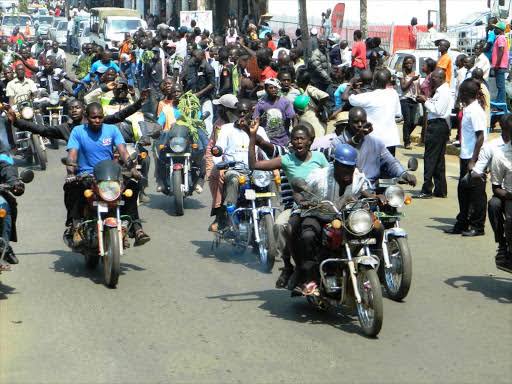
Kenyan boda boda riders have taken their battle over motorcycle financing to Parliament, accusing lender Mogo Auto Limited of imposing expensive loan terms, repossessing bikes and leaving some borrowers without ownership documents even after making substantial repayments.
The concerns have now attracted the attention of the National Assembly, which has opened the door for a parliamentary investigation into the lending practices affecting motorcycle operators across the country.
The petition was presented on Wednesday, August 19, 2026, by Charles Gishira, the National Executive Chairperson of the Kenya Bodaboda Riders and Owners Association, representing riders, motorcycle owners, operators and other stakeholders in the sector.
National Assembly Speaker Moses Wetangula read the petition before committing it to the Public Petitions Committee for consideration.
Wetangula told the House that his office had received a petition from Gishira seeking parliamentary intervention over complaints raised against Mogo Auto Limited, a company involved in asset financing and lending services in Kenya.
“The petitioner seeks the intervention of the National Assembly regarding persistent complaints and grievances,” Wetangula said while presenting the matter to Parliament.
Riders raise concerns over loan costs
At the heart of the petition are complaints about the cost of acquiring motorcycles through credit.
According to the association, some riders have been subjected to what they consider excessively high interest rates and additional charges, making it difficult for them to clear their loans despite relying on the motorcycles as their main source of income.
The riders also claim that some borrowers were not given adequate information about the full cost of their loans, repayment obligations and other charges before entering into financing agreements.
The association argues that such practices could undermine consumer protection rights guaranteed under Article 46 of the Constitution.
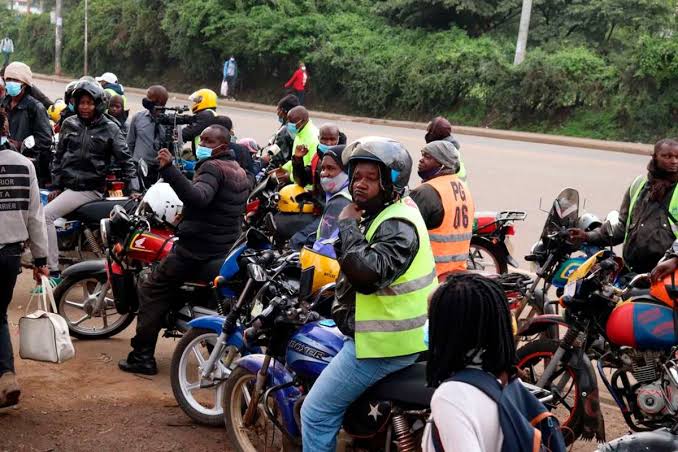
The issue is particularly significant because many boda boda operators depend on daily earnings to meet loan instalments, fuel costs, maintenance expenses, household needs and other financial obligations.
For a rider who has financed a motorcycle, a disruption in business caused by illness, an accident, theft or reduced customer demand can quickly translate into missed payments and the risk of losing the asset.
Dispute over motorcycle ownership
The petition also raises questions about ownership of motorcycles after borrowers have made substantial repayments.
The association alleges that some members have paid amounts that, in certain cases, exceed the original value of the motorcycles but still struggle to obtain logbooks or formal recognition as owners of the assets.
Another concern involves motorcycle repossessions.
The riders allege that bikes can be repossessed soon after a borrower defaults, leaving operators who depend on the motorcycles for their livelihoods without their main source of income.
The association has further complained about motorcycles fitted with tracking devices being stolen and allegedly not recovered, while borrowers may continue facing repayment demands.
The petition claims that in some cases insurance compensation may have been paid following theft, yet borrowers still face loan-related consequences, including adverse credit listings.
These allegations are among the issues Parliament is expected to examine as it considers the petition.
Personal data also enters the dispute
The riders’ complaints go beyond interest rates and repossession.
The association has also raised concerns about how customers’ personal information is collected, processed, stored and shared, alleging possible breaches of data protection requirements.
If substantiated, such allegations could widen the investigation from the cost of motorcycle financing to the broader relationship between lenders and vulnerable borrowers.
The Public Petitions Committee will therefore have to examine the complaints and establish whether the financing arrangements comply with Kenya’s legal and regulatory framework.
Parliament has investigated motorcycle lenders before
The latest petition is not the first time Parliament has turned its attention to the motorcycle-financing industry.
In May 2024, the National Assembly Departmental Committee on Finance and National Planning summoned five companies involved in motorcycle financing after allegations of exploitative lending practices were raised.
The companies included Watu Credit Limited, Mogo Motorcycles Kenya, JoyInc Group, 15 Minutes and My Boda.
The earlier parliamentary inquiry was also linked to complaints from boda boda operators concerning high charges, motorcycle repossessions and other problems surrounding credit-financed bikes.
This history gives the latest petition added significance, as it suggests that concerns surrounding motorcycle financing have persisted despite previous parliamentary scrutiny.
Why motorcycle loans remain important to riders
Motorcycle financing has become an important route into self-employment for thousands of Kenyans who cannot afford to purchase a bike outright.
Financing companies allow prospective riders to pay a deposit and settle the remaining amount through daily, weekly or monthly instalments.
For example, Mogo currently advertises motorcycle financing with down payments from 22%, with repayment periods that can extend to between 52 and 104 weeks depending on the product.
The company also lists requirements including identification, a KRA PIN, an M-Pesa statement and proof of ability to qualify for financing.
Mogo also offers logbook-backed boda boda loans, advertising amounts ranging from Sh40,000 to Sh90,000 for qualifying motorcycles.
Such financing can make motorcycle ownership accessible to people who would otherwise struggle to raise the full purchase price.
However, the arrangement also means riders must carefully consider the total amount they will pay over the entire repayment period rather than focusing only on the daily or weekly instalment.
Banks offer another financing route
Commercial banks also provide asset-financing products for motorcycle operators.
KCB, for instance, offers a boda boda and tuk-tuk loan for motorcycle purchases, with financing of up to Sh1 million for motorcycles.
Its requirements include a valid driving licence, identification documents, KRA PIN, proof of the asset being purchased and evidence of repayment ability.
The availability of different financing options highlights the importance of comparing the total cost of credit, fees, insurance, tracking charges, deposit requirements and repayment periods before signing a loan agreement.
Motorcycle market rebounds
The financing dispute comes at a time when Kenya’s motorcycle market is showing renewed activity.
Recent industry data reported by Nation indicated that motorcycle sales more than doubled in 2025 to 241,763 units, with lower fuel prices and declining borrowing costs among the factors supporting demand.
The figures underline the economic importance of motorcycles in Kenya, where they are used not only for passenger transport but also for deliveries, small-scale businesses and movement of goods in areas where conventional public transport is limited.
For many young Kenyans, buying a motorcycle on credit is therefore viewed as an investment rather than simply acquiring a personal asset.
What happens next?
With the petition now before Parliament, the Public Petitions Committee is expected to examine the allegations and seek responses from the parties involved.
The committee is required to consider the petition and report its findings to the National Assembly and the petitioner in accordance with parliamentary procedure.
The investigation could potentially examine loan agreements, interest and additional charges, repossession procedures, ownership and logbook transfers, insurance arrangements, tracking systems, credit reporting and the handling of borrowers’ personal information.
For boda boda riders, the outcome could have far-reaching consequences.
If Parliament finds that some lending practices are unfair or insufficiently regulated, lawmakers could recommend changes aimed at improving transparency, regulating charges and strengthening protections for borrowers.
For lenders, the probe could also provide an opportunity to explain how their financing models work and respond to allegations made by the riders’ association.
For now, the complaints remain allegations and have yet to be conclusively determined by the parliamentary process.
The unfolding parliamentary inquiry could ultimately determine whether the current motorcycle-financing model is providing a genuine pathway to ownership, or leaving some riders trapped in expensive credit arrangements.
FOLLOW NAIROBI NEWS ON FACEBOOK

If you like our work, you can buy us a soda
Buy us a soda 🥤