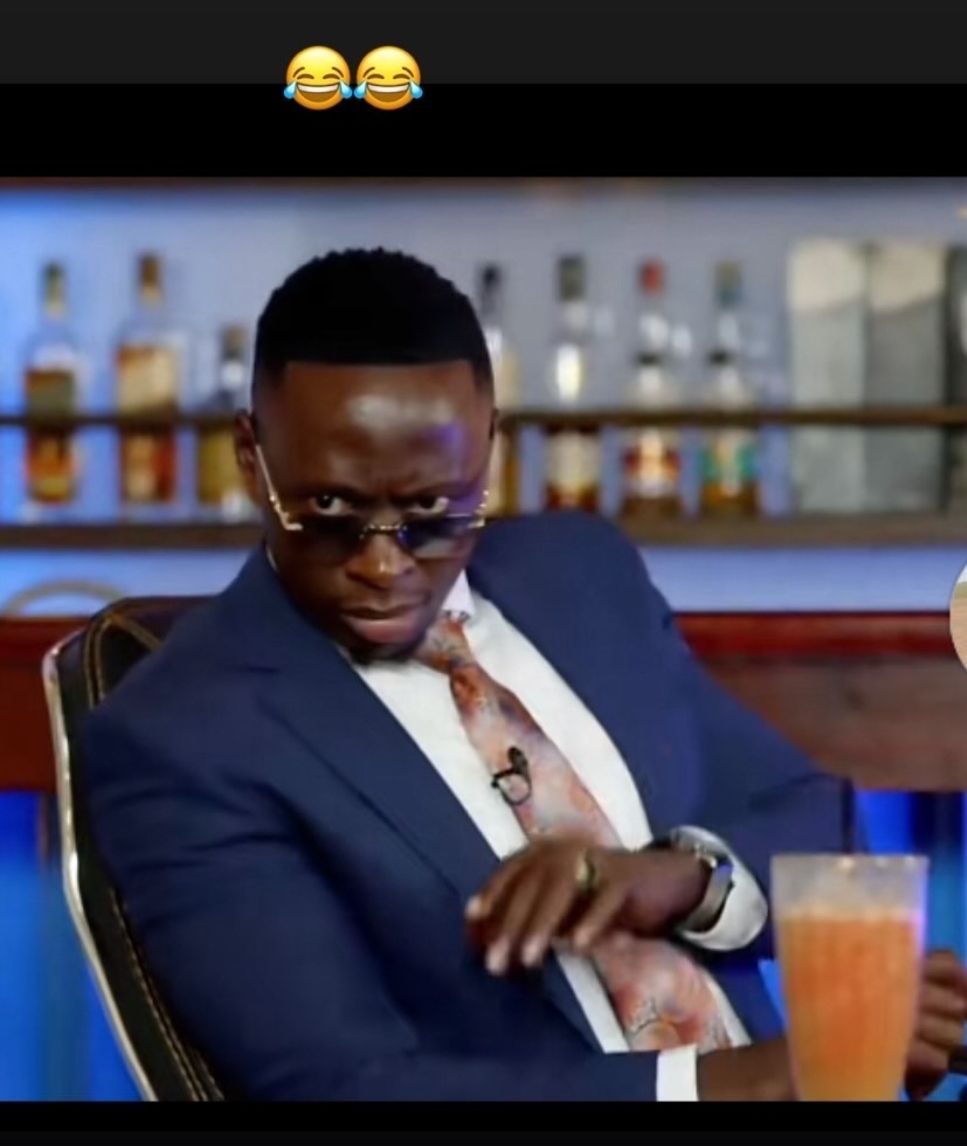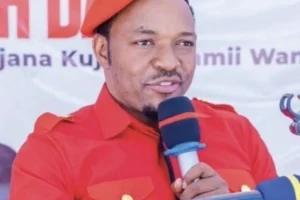
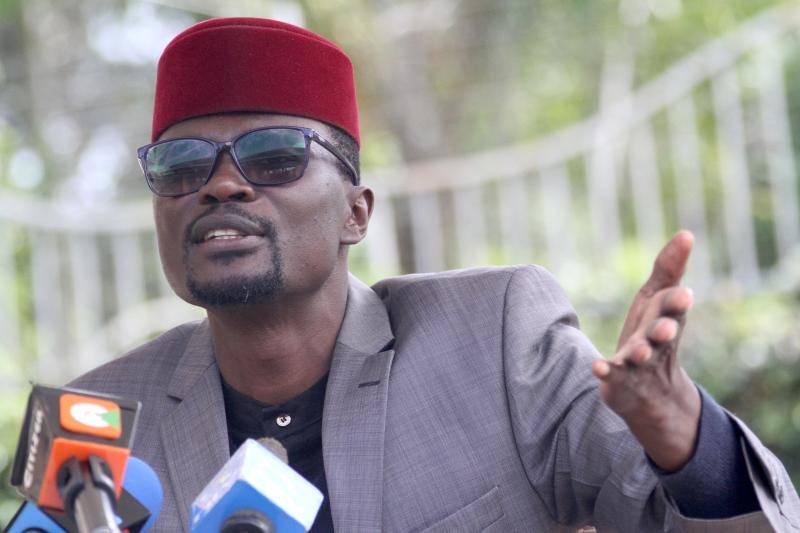
Kimilili MP Didmus Barasa has announced a major political realignment ahead of the 2027 General Election, declaring that he no longer supports the political direction of National Assembly Speaker Moses Wetang’ula in Bungoma County.
The outspoken legislator says his decision follows what he describes as conflicting political loyalties within Ford Kenya, accusing the party leadership of struggling to reconcile its national cooperation with President William Ruto’s administration and its local political interests in Bungoma.
In a strongly worded statement, Barasa said he had reached the decision after careful reflection and wide consultation, arguing that the county needed a different leadership approach as politicians position themselves for the next general election.
The lawmaker, who is eyeing the Bungoma gubernatorial seat on a United Democratic Alliance (UDA) ticket, maintained that his decision was not motivated by personal animosity towards Wetang’ula but by disagreements over the county’s political future, leadership succession and development priorities.
“Today, I sleep a free man,” Barasa declared, suggesting that distancing himself from Wetang’ula would allow him to campaign more freely against his political competitors.
His announcement adds another dramatic chapter to the unfolding contest to succeed Governor Kenneth Lusaka, whose second term is expected to end after the 2027 elections.
Barasa Accuses Wetang’ula of Political Double Allegiance
At the centre of Barasa’s disagreement with Wetang’ula is the latter’s relationship with his younger brother, Westlands MP Tim Wanyonyi, who has expressed interest in the Bungoma governorship.
Barasa argued that Wetang’ula’s position as a senior figure in the broad-based government, alongside his family ties and the political activities of sections of Ford Kenya, had created what he considers a contradiction in the party’s local and national political direction.
He claimed that some Ford Kenya leaders, including Members of County Assembly and other party officials, were displaying divided loyalties through their political activities.
“The growing perception that Rt. Hon. Wetang’ula is tacitly supporting his brother, Hon. Tim Wanyonyi, and the opposition formation to which he is aligned, while publicly standing with the President at the national level, constitutes a serious conflict of interest and a case of dual political allegiance,” Barasa stated.
These are Barasa’s allegations and interpretation of the political situation; Wetang’ula’s response to the claims was not included in the statement.
The Kimilili MP further argued that a political party working with the national government should have a clear and consistent local political strategy.
He maintained that his political relationship with Wetang’ula had become difficult because their national interests appeared to converge around President Ruto, while their ambitions and preferred leadership arrangements for Bungoma remained different.
“We must part ways, not because the national vision divided us, but because the local vision did. Not out of bitterness, but out of principle, doctrinal consistency, and clarity of purpose,” he said.
Tim Wanyonyi’s Governorship Ambitions at the Centre of Dispute
Barasa’s statement places Tim Wanyonyi’s gubernatorial ambitions at the heart of the growing political differences in Bungoma.
The Westlands MP has been positioning himself for the county’s top seat, setting up a potential contest with Barasa and other aspirants seeking to succeed Lusaka.
Wanyonyi’s family connection to Wetang’ula has become an important part of the political debate, with Barasa questioning whether the Speaker can maintain his national political partnerships while supporting a local arrangement that could conflict with the ambitions of other leaders.
Barasa insisted that he had no objection to family relationships but argued that personal ties should not determine who receives political endorsements or gets an opportunity to compete for elective office.
“I fully appreciate that his relationship with his brother transcends the realm of politics. Blood is thicker than water. Family solidarity takes precedence, and that is both human and understandable,” he said.
However, he maintained that Bungoma’s political future should be determined by voters rather than endorsements based on family connections.
“Bungoma is not a Monarchy. It is a democracy premised on merit, competition, and the sovereign will of the people, not hereditary succession,” Barasa declared.
His remarks are likely to intensify the debate over political endorsements, family influence and the role of established political parties in determining candidates ahead of the 2027 elections.
At the same time, Wetang’ula’s relationship with his brother does not, on its own, establish that he has acted improperly.
The central issue raised by Barasa is whether the competing political interests can coexist within the same political arrangement.
Barasa Revisits His Earlier Disagreement With Wetang’ula
The latest declaration also follows earlier public differences between Barasa and the Ford Kenya leadership over who should receive support for the Bungoma governorship.
In September 2025, Barasa warned that he could return to UDA if Ford Kenya leader Wetang’ula failed to support his gubernatorial ambitions.
At the time, Barasa said he felt sidelined as some Ford Kenya leaders rallied behind Wanyonyi.
He maintained that he was waiting for Wetang’ula to clarify his position on the race.
Several media entities reported on his earlier warning.
By April 2026, Barasa had publicly declared his intention to contest the Bungoma governorship on a UDA ticket, placing him in direct competition with Wanyonyi and other aspirants.
The latest statement therefore marks a further escalation of a disagreement that has been developing for months, rather than an entirely new political dispute.
Barasa now appears determined to build his campaign around UDA, grassroots mobilisation and alliances with leaders who share his preferred approach to Bungoma’s political future.
Didmus Questions How Ford Kenya Distributed Its Political Influence
Beyond the disagreement over Wanyonyi, Barasa also raised questions about the distribution of political opportunities and resources under an arrangement he said involved a memorandum of understanding.
In his statement, he claimed that Wetang’ula had been entrusted with safeguarding a 30 per cent allocation under the agreement but alleged that the benefits were predominantly distributed to close family associates, with the remainder going to other parts of the country.
Barasa criticised what he described as the mismanagement of the arrangement, arguing that the distribution did not reflect the interests of the people he believes should have benefited.
“While he was the custodian of the 30% in line with the MOU he signed, he appropriated and distributed it predominantly to his close family members, and the remainder to other parts of the country under the disguise that his party was national,” he stated.
The allegation was not accompanied in the statement by supporting financial records or a detailed breakdown of the distribution.
Wetang’ula’s response was also not included.
The claim raises questions about the specific memorandum of understanding Barasa was referring to, the nature of the 30 per cent allocation and the criteria used to distribute it.
Those details would need to be independently established before the allegation could be treated as a verified account of how the arrangement was implemented.
Nevertheless, the accusation adds another dimension to the political dispute, shifting the debate beyond personalities and succession to questions of representation, resource allocation and accountability within political coalitions.
Barasa Says Wetang’ula Disapproved of His Criticism of Tim
In another pointed section of his statement, Barasa claimed that Wetang’ula would reprimand him whenever he subjected Wanyonyi to political scrutiny.
According to the Kimilili MP, the Speaker appeared to interpret his criticism of Wanyonyi as a personal attack on the family rather than normal political competition between aspirants.
Barasa rejected that interpretation, insisting that his engagement with Wanyonyi was based on their competing ambitions for the Bungoma governorship.
“Let it be categorically clear: my engagement with his brother is not in his capacity as his brother, but in his capacity as my political opponent,” he said.
The statement reflects the increasingly personal dimension of the political contest, even as Barasa insists that his decision is based on principle rather than bitterness.
His argument is that political leaders should be free to question the ambitions, policies and records of their competitors without such criticism being interpreted as an attack on their families.
Whether Wetang’ula agrees with that account remains unclear from the information contained in Barasa’s statement.
Several Leaders Have Already Shifted Towards Barasa
Barasa’s announcement comes against a backdrop of changing political alliances in Bungoma.
In September 2026, The Standard reported that Bungoma Senator Wafula Wakoli, Woman Representative Catherine Wambilianga, Mt Elgon MP Fred Kapondi and Webuye West MP Dan Wanyama had shifted their support from Wanyonyi’s gubernatorial camp towards Barasa.
The newspaper also reported that Webuye East MP Martin Pepela had previously broken ranks with leaders backing Wanyonyi to endorse Barasa. The Standard detailed the changes in political alliances.
The developments indicate that the contest is no longer simply a question of which individual has the backing of senior party figures.
It is also becoming a test of how aspirants can assemble support across constituencies, political parties and local communities.
However, endorsements by elected leaders do not automatically determine the outcome of an election.
Party nominations, campaign organisation, policy proposals and the decisions of voters will all be important as the contest progresses.
For Barasa, the emerging alliances offer an opportunity to broaden his political network beyond his Kimilili constituency.
For Wanyonyi, the challenge will be to maintain and expand his support as competing camps seek to attract leaders who could influence the countywide contest.
Barasa Reaffirms Support for President William Ruto
Despite his break with Wetang’ula’s political direction in Bungoma, Barasa insisted that he remained committed to President William Ruto and the broad-based government agenda.
“I remain firmly and unequivocally committed to H.E. President William Ruto and the Broad-Based Government agenda,” he stated.
The declaration suggests that Barasa intends to distinguish his national political alignment from his disagreements with Wetang’ula over local leadership and succession.
He said his immediate priorities would be consolidating UDA, establishing stronger grassroots structures and forging alliances with elected leaders, residents and members of other political parties who share his vision.
Barasa also indicated that he would be willing to work with members of Ford Kenya who disagree with the political direction he attributes to the party leadership.
His message appears to leave room for political cooperation across party lines, even as he distances himself from Wetang’ula personally and politically.
The strategy will be tested as parties and aspirants negotiate alliances ahead of the next election.
A Bigger Battle Over Bungoma’s Political Future
The dispute exposes a broader question facing Bungoma politics: should senior party leaders play a decisive role in determining who succeeds the current governor, or should aspirants compete without expectations of endorsement from established political figures?
Barasa has made his position clear, arguing that no individual or family should have a privileged claim to political leadership.
His critics, however, could argue that political endorsements and alliances are ordinary features of democratic competition, provided voters ultimately retain the power to choose their leaders.
The debate is likely to grow as the 2027 General Election approaches, particularly because the Bungoma governorship contest involves several aspirants with different political networks and ambitions.
Wetang’ula remains a senior national political figure, while Wanyonyi is seeking to establish his own political base in the county.
Barasa, meanwhile, is positioning himself as a UDA-backed candidate seeking to consolidate support through grassroots mobilisation and alliances.
Whether the current disagreements lead to a lasting political split or further negotiations remains to be seen.
For now, Barasa’s message is unmistakable: he intends to pursue his gubernatorial ambition without relying on Wetang’ula’s political backing, while maintaining his stated support for President Ruto.
As the race to succeed Lusaka gathers momentum, the central question will be whether the competing camps can turn their endorsements and political declarations into a convincing case on development, service delivery and accountability for the people of Bungoma.
FOLLOW NAIROBI NEWS ON FACEBOOK

If you like our work, you can buy us a soda
Buy us a soda 🥤