
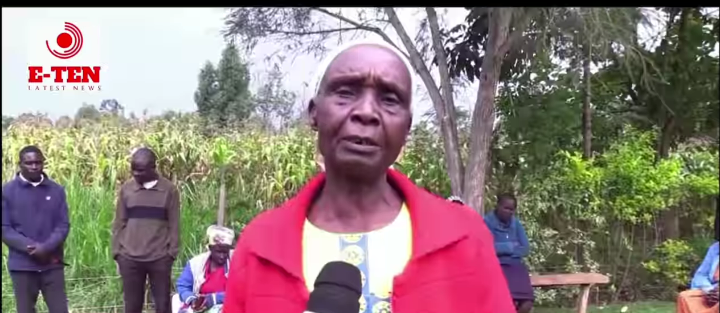
A family in Kakamega County is mourning the death of a Form Three student who was allegedly attacked by his Form Four schoolmate following a dispute reportedly linked to a girl.
The two teenagers were students at Friends School Kongoni in Likuyani, where they were also said to be friends before the disagreement turned fatal.
According to a report shared by E-TEN on Tuesday, August 18, 2026, the Form Four student allegedly lured his younger schoolmate away from his home in Makokha Village before taking him towards Marakaru Village.
It was there, according to the account, that the suspect allegedly attacked the Form Three student with a machete, leaving him fatally wounded.
Teen reportedly spoke about girl before his death
The circumstances surrounding the teenager’s final moments have deepened the family’s grief.
The deceased’s grandmother reportedly recalled that the boy spoke about the reason behind the confrontation shortly before he died.
According to her account, the teenager indicated that he was dying because of a girl.
The claim suggests that a disagreement over romantic feelings may have escalated into a violent confrontation between the two students.
However, the circumstances and motive remain allegations, and the full details surrounding the incident would have to be established through investigations.
For the victim’s family, the tragedy has been made even more painful by the fact that the alleged attacker was not a stranger but a fellow student and someone the deceased reportedly considered a friend.
The teenager’s death reportedly triggered an angry reaction in the surrounding community.
Residents allegedly descended on the suspect’s family home and set it ablaze, with property also reportedly destroyed.
The retaliatory action has added another troubling dimension to the incident, as the death of one teenager was followed by destruction of property belonging to another family.
While the anger may have been fuelled by shock and grief, retaliatory violence can further complicate an already sensitive situation and potentially create additional victims.
The incident has consequently left the Likuyani community grappling with questions about how disagreements involving young people can be identified and addressed before they escalate into serious violence.
Questions raised over student conflicts
The Kakamega tragedy also comes against a broader conversation in Kenya about the need to strengthen guidance and counselling services in schools.
In March 2026, MPs called for guidance and counselling to be made mandatory in schools and urged the Ministry of Education to provide adequate resources to support counselling programmes.
Such interventions can be particularly important for adolescents, who may face challenges involving friendships, relationships, peer pressure, bullying and disagreements but may not always have the skills or confidence to seek help before conflicts escalate.
UNICEF has similarly highlighted the dangers of violence affecting children in and around schools, noting that peer violence can affect children’s safety, wellbeing and education.
Kenya’s national framework on violence against children has also emphasised the importance of counselling and psychosocial support for child survivors of violence and children in conflict with the law, alongside stronger coordination among schools, communities, health workers, police and child-protection agencies.
A warning beyond the Kakamega tragedy
The incident serves as a painful reminder that conflicts among teenagers can have consequences far beyond the original disagreement.
What may begin as an argument over friendship, relationships or perceived competition can quickly become dangerous when emotions are allowed to escalate into physical confrontation.
For parents and guardians, the tragedy underscores the importance of paying attention to changes in children’s behaviour, friendships and emotional wellbeing.
Schools also have an important role to play in creating environments where students can safely report threats, bullying or serious disagreements and receive appropriate guidance before disputes turn violent.
UNICEF notes that violence against children can occur in places where they are expected to be protected, including homes, schools and communities, sometimes involving people they trust.
As investigations into the Kakamega incident continue, the focus is likely to remain on establishing exactly what happened between the two students, while the bereaved family prepares to come to terms with the loss of a young life.
The tragedy has also left the wider Likuyani community reflecting on the devastating consequences that can follow when disagreements among young people are allowed to spiral into violence.
FOLLOW NAIROBI NEWS ON FACEBOOK

If you like our work, you can buy us a soda
Buy us a soda 🥤