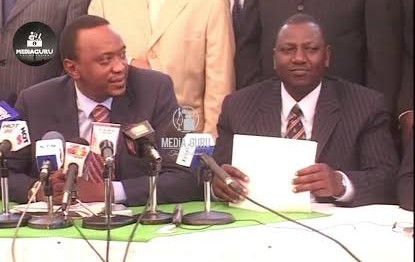
A resurfaced video from November 29, 2006, has reignited discussions about one of the most dramatic political battles in Kenya’s recent history, when then KANU Chairman Uhuru Kenyatta and Secretary General William Ruto rushed to the Registrar of Political Parties’ offices to stop a leadership takeover within the party.
At the time, KANU was facing intense internal wrangles as political temperatures rose ahead of the 2007 General Election.
The battle centered on efforts to remove Uhuru from the party’s top seat and replace him with veteran politician Nicholas Biwott, a move that threatened to reshape the country’s political landscape.
Political observers at the time linked the attempted leadership change to the growing realignments following the 2005 constitutional referendum.
Uhuru had worked closely with opposition leaders in campaigning against the government-backed draft constitution, helping secure a major defeat for President Mwai Kibaki’s administration.
As the 2007 elections approached, there was mounting pressure on Uhuru to align himself with Kibaki’s camp.
However, his perceived closeness to opposition figures who would later form the Orange Democratic Movement (ODM) made him a target of political maneuvering.
The situation was further complicated by William Ruto’s declaration in January 2006 that he intended to run for president.
The announcement reportedly unsettled influential figures within KANU, including retired President Daniel arap Moi, who was still regarded as the party’s political kingmaker.
According to accounts from the period, some party veterans felt that Ruto’s ambitions were growing too rapidly and believed Uhuru was failing to maintain control over the party’s direction.
This fueled support for Nicholas Biwott, a longtime Moi ally, to take over the KANU chairmanship.
The struggle culminated in a fierce legal and political battle.
LISTEN TO DEM WA UPTOWN BY TWELVE14 HERE
While Uhuru was initially removed from the chairman’s position, he successfully challenged the decision in court and secured a temporary reinstatement the following month.
The dispute dragged on for several months before the High Court fully restored Uhuru to the party leadership on June 28, 2007.
The court’s decision came after allegations that he was secretly working with ODM failed to hold.
Ironically, despite concerns over his links to the opposition, Uhuru would eventually sign a cooperation agreement with President Kibaki’s Party of National Unity (PNU), effectively throwing his support behind Kibaki’s re-election bid.
Ruto emerged from the KANU leadership war with his position as Secretary General intact.
However, he would later chart his own political path. On October 6, 2007, he formally resigned from KANU and joined ODM, becoming one of the key figures in the party’s influential Pentagon leadership team.
The events of 2006 and 2007 marked a turning point in Kenya’s politics, setting the stage for alliances, rivalries and political realignments that would shape the country’s future for years to come.
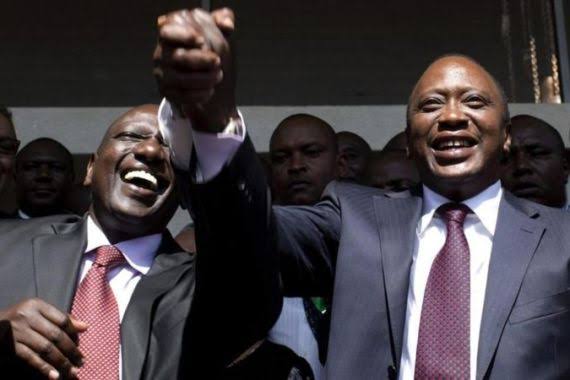
Nearly two decades later, the footage serves as a reminder of the fierce battles that once defined KANU and the political journeys of two men who would later rise to become Kenya’s President and Deputy President before eventually finding themselves on opposing sides of the political divide.
FOLLOW NAIROBI NEWS ON FACEBOOK

If you like our work, you can buy us a soda
Buy us a soda 🥤