
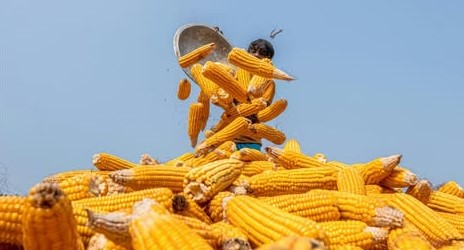
The government is preparing to import maize to address an anticipated shortage that could leave Kenya with a deficit of nearly 25 million bags, Agriculture and Livestock Development Cabinet Secretary Mutahi Kagwe has said.
Speaking on August 19, Kagwe assured the public that preparations for the imports were already underway and said the government was taking steps to ensure the country maintains adequate food supplies.
“We will import maize. We have already made arrangements for that. We will manage the country. The country is not going to go hungry,” Kagwe said.
Kenya consumes an estimated 75 million bags of maize each year. However, poor production in several major agricultural areas is expected to significantly reduce available stocks, creating the projected shortfall.
The government says bringing in additional maize will help bridge the gap, stabilize the market and prevent a sharp increase in prices for consumers.
Kagwe, however, said imports would only provide a short-term response as the government works on measures aimed at increasing domestic production. Among the measures being pursued is the expansion of irrigation infrastructure to reduce reliance on rainfall.
The Galana Kulalu irrigation project is one of the initiatives expected to contribute to increased food production while improving the agricultural sector’s ability to withstand prolonged drought and other climate-related challenges.
The Ministry also plans to engage the National Treasury on tax and administrative challenges affecting farmers and agribusinesses. The discussions are aimed at creating a more favourable environment for investment and improving the profitability of agriculture.
Kagwe made the remarks during the Fifth Joint Consultative Meeting of County Executive Committee Members, where consultations for the proposed AgriConnect Compact Programme were launched.
The programme is expected to promote youth employment by creating opportunities across the agricultural value chain as the government seeks to transform farming into a technology-driven and commercially oriented sector.
The meeting brought together officials from national and county governments alongside representatives of the World Bank Group. Participants reviewed progress under the Food Systems Resilience Program and the National Agricultural Value Chain Development Project, which are expected to transition into the AgriConnect Compact Programme.
The planned maize imports come amid continued pressure on household budgets caused by elevated food prices.
Data from the Kenya National Bureau of Statistics shows that the average retail price of a two-kilogramme packet of sifted maize flour declined from KSh159.78 in June to KSh157.15 in July, representing a 1.6 per cent monthly drop.
Despite the decline in maize flour prices, food and non-alcoholic beverages inflation remained high at 9.0 per cent in July, contributing significantly to the country’s overall inflation rate of 6.5 per cent.
KNBS reported that consumers continued to face higher costs for several other food products, including potatoes and fruits.
The government says the maize import programme, combined with irrigation expansion and agricultural reforms, is intended to prevent a food crisis while laying the groundwork for greater long-term food security.
Former Parliamentary staffer losses Over Sh.1.4 million savings to a Forex scammer

If you like our work, you can buy us a soda
Buy us a soda 🥤