
Kenya and the World Health Organization (WHO) have reviewed the country’s response to the imported Bundibugyo Ebola Virus Disease outbreak as the country records three consecutive weeks without a new confirmed case.
In a statement on Monday, November 9, 2026, the Ministry of Health said sustained surveillance, strengthened response capacity and international cooperation remain critical to containing the outbreak and preventing further transmission.
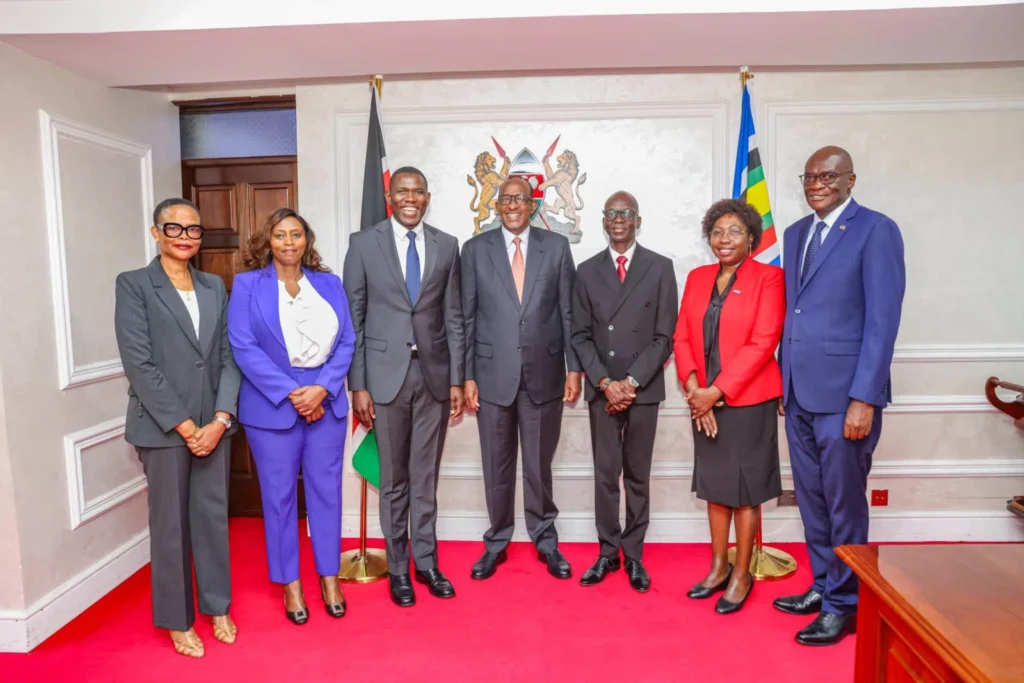
Health Cabinet Secretary Aden Duale held bilateral talks with a WHO delegation led by the organisation’s Regional Director for Africa, Prof. Yakub Janabi, to assess progress in the national response and strengthen cooperation on health security and broader health sector priorities.
Duale acknowledged WHO’s technical and operational support, including the provision of essential response supplies, personal protective equipment and validation of Kenya’s Filovirus Surveillance Standard Operating Procedures.
He also welcomed WHO’s donation of 12 portable polymerase chain reaction (PCR) systems and a 28-bed Ebola Treatment Unit, which are expected to strengthen the country’s diagnostic, isolation and treatment capacity.
Kenya has recorded nine cases linked to a single transmission cluster, with no evidence of community transmission. Six patients have recovered and been discharged, two have died, while one remains under treatment.
The Ministry said more than 772,000 travellers had been screened at 28 points of entry, while 736 samples had been tested across five designated laboratories. More than 7,300 healthcare workers have also received training.
With the 42-day countdown expected to begin after the discharge of the last patient, Duale emphasised the need to maintain vigilance through active surveillance, rapid investigation of alerts and continued screening at points of entry.
He requested additional WHO support for diagnostic supplies, technical training, isolation and treatment infrastructure in high-risk counties, as well as frontline response operations.
The discussions also covered joint monitoring of the countdown, an After-Action Review and a coordinated declaration of the end of the outbreak once the required public health criteria have been met.
The Cabinet Secretary also raised concerns over blanket travel bans and visa restrictions imposed by some countries in response to the outbreak.
He called on WHO to engage relevant countries to ensure that public health measures are guided by scientific evidence and the International Health Regulations.
Duale said countries that transparently report health emergencies should receive international solidarity and support rather than punitive restrictions.
The meeting also reviewed cooperation in other areas of Kenya’s health sector, including the implementation of Universal Health Coverage through the Social Health Authority.
Other priorities discussed included strengthening the Kenya National Public Health Institute and the country’s International Health Regulations core capacities, local manufacturing of health products, sustainable health financing and digital health transformation.
The meeting concluded with an agreement to develop a joint Kenya–WHO action plan.
The plan will cover the operationalisation of donated diagnostic equipment, technical capacity building, support for the remaining phase of the Ebola response and cooperation on broader health sector priorities.
The Ministry said continued collaboration with WHO would be important in sustaining the country’s response capacity and strengthening preparedness for future public health emergencies.

If you like our work, you can buy us a soda
Buy us a soda 🥤


