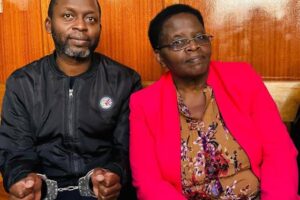
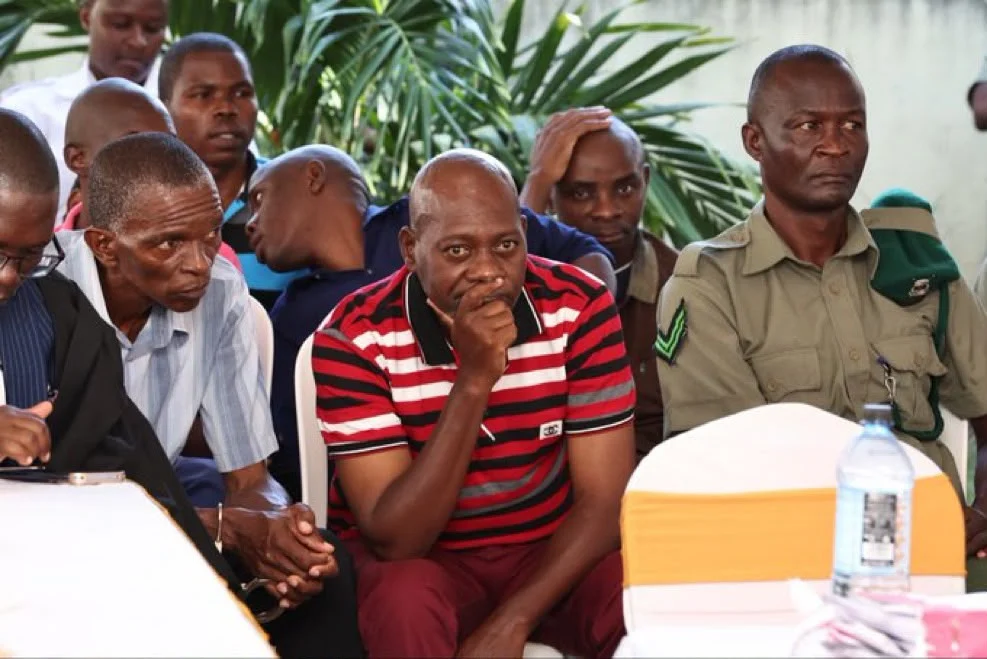
Controversial preacher Paul Nthenge Mackenzie and 28 co-accused have been convicted of murdering 191 people, including 190 children, in the Shakahola massacre in Kilifi County.
The convictions were secured by the Office of the Director of Public Prosecutions (ODPP), led by DPP Renson Ingonga, following a trial at the Mombasa High Court.
Delivering the judgment, Lady Justice Diana Kavedza found the 29 accused guilty of all 191 murder counts arising from deaths recorded between January 2021 and September 2023 at Shakahola in Malindi Sub-County.
The court found that the deaths resulted from an organised system in which religious teachings, a structured hierarchy and coordinated enforcement mechanisms were used to direct followers to fast to death.
“The evidence before me establishes precisely such a development. Mackenzie’s followers were first whipped through an established religious and communications network. They were subsequently directed to relocate. Once at the settlement, they were directed to fast,” Justice Kavedza ruled.
The court heard that instructions to fast were communicated through village elders and reinforced during regular meetings. The practice was implemented in stages, beginning with children, while guards restricted movement and prevented followers from escaping.
Justice Kavedza further found that Good News International Church, established by Mackenzie in 2010, operated as a cult.
Evidence presented during the trial showed that Mackenzie preached the imminent end of the world, discouraged modern medicine and formal education, isolated followers from outsiders and promoted fasting as a pathway to heaven.
Prosecution witnesses also testified that children were restrained, denied food and punished when they attempted to eat or escape. Some witnesses recounted witnessing the suffering and deaths of their siblings and other minors.
Forensic Evidence Linked Accused to Mass Deaths
The prosecution presented evidence from 123 witnesses, including child victims and adult accomplice witnesses. Their testimony was supported by digital recordings, social media content, medical and forensic reports, DNA analysis, physical exhibits, journals recovered from deceased persons and expert testimony.
Crime-scene investigations established that bodies had been exhumed from graves across several homesteads and mass burial sites. The evidence included a mass grave containing 12 bodies and another site with several graves holding 63 bodies.
Prosecution witness Dr Njoroge presented 190 postmortem samples relating to deceased minors.
Medical findings attributed 76 deaths to starvation, while 112 were classified as having unascertained causes. One death resulted from a traumatic head injury, another from manual neck compression, and one from asphyxia with features of starvation.
The court also considered evidence that burial rites were conducted at unusual hours to evade detection.
Investigators established that the settlement had been divided into 12 villages, a structure the prosecution said facilitated administration and enforcement of the fasting directives.
Two Accused Died During Trial
Those convicted include Mackenzie, his deputy pastor Smart Deri Mwakalama, Stephen Sanga Muye and 26 others.
Two additional accused persons, Kelvin Saudi Asena and Edison Safari Mnyambo, died during the trial, prompting the prosecution to withdraw the murder charges against them.
The prosecution team was led by DPP Ingonga and included Peter Kiprop, Head of the Coast Region; Jami Yamina; Victor Owiti; Ngina Mutua; Betty Rubia; and Yassir Mohammed.
The convictions represent a major development in the prosecution of the Shakahola massacre, one of Kenya’s most devastating cases involving deaths linked to religious extremism.
The case has highlighted the role of testimonial, medical, digital and forensic evidence in establishing criminal responsibility in complex mass-death investigations.

If you like our work, you can buy us a soda
Buy us a soda 🥤