In a major boost to environmental sustainability ahead of the upcoming Nairobi City Marathon on June 7, 2026, a high-level coalition of sports, science, and infrastructure leaders gathered at the Haile Selassie Expressway terminal to launch a dual-pronged climate initiative.
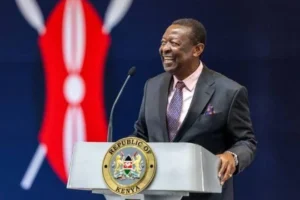
Led by Athletics Kenya (AK) President Lt. Gen. (Rtd) Jackson Tuwei, the delegation participated in a symbolic tree-planting ceremony to mark an expanding partnership aimed at tackling urban air pollution and accelerating Nairobi’s green canopy goals.
The ceremony joined together key global and local leaders, including Dr. Philip Osano (Chief Operating Officer of CIFOR-ICRAF), Yu Fukai (Chief Executive Officer of Moja Expressway Limited), and Niall O’Connor (Centre Director of the Stockholm Environment Institute (SEI) Africa).
The cornerstone of this year’s sustainability drive is the strategic installation of four specialized air quality control sensors directly along the Nairobi Expressway infrastructure, which serves as the competitive backbone of the marathon route.
Deployed by SEI Africa in partnership with Moja Expressway and Athletics Kenya, these sensors are positioned at critical zones including Jomo Kenyatta International Airport (JKIA), Uhuru Park, ABC Place in Westlands, and Museum Road.
Lauding the partnership for delivering unprecedented, data-driven insights into urban athletics, Gen. Tuwei emphasized the borderless nature of climate advocacy:
A good and clean environment has no boundaries, and we must work together as a team to achieve common good on climate change and clean air,” Tuwei stated.
The tree-planting initiative represents the event’s permanent legacy. The exercise directly supports the Nairobi City Marathon’s ambitious environmental target to plant 5,000 trees annually, transforming the sporting event into a year-round catalyst for urban forestry.
“Greening of sporting venues is key, and we are also glad to help the Nairobi City Marathon in realizing their dream of planting 5,000 trees annually,” said Dr. Osano.
O’Connor reaffirmed that data transparency is vital to protecting both elite runners and everyday citizens:
We are happy to always assist Athletics Kenya in providing and installing the air quality sensors and helping in analyzing the data,” O’Connor noted.
Interior Cabinet Secretary Kipchumba Murkomen has said that effective public order management and the protection of businesses and critical infrastructure will be key pillars of the planned Nairobi Metropolitan Police Unit (NMPU).
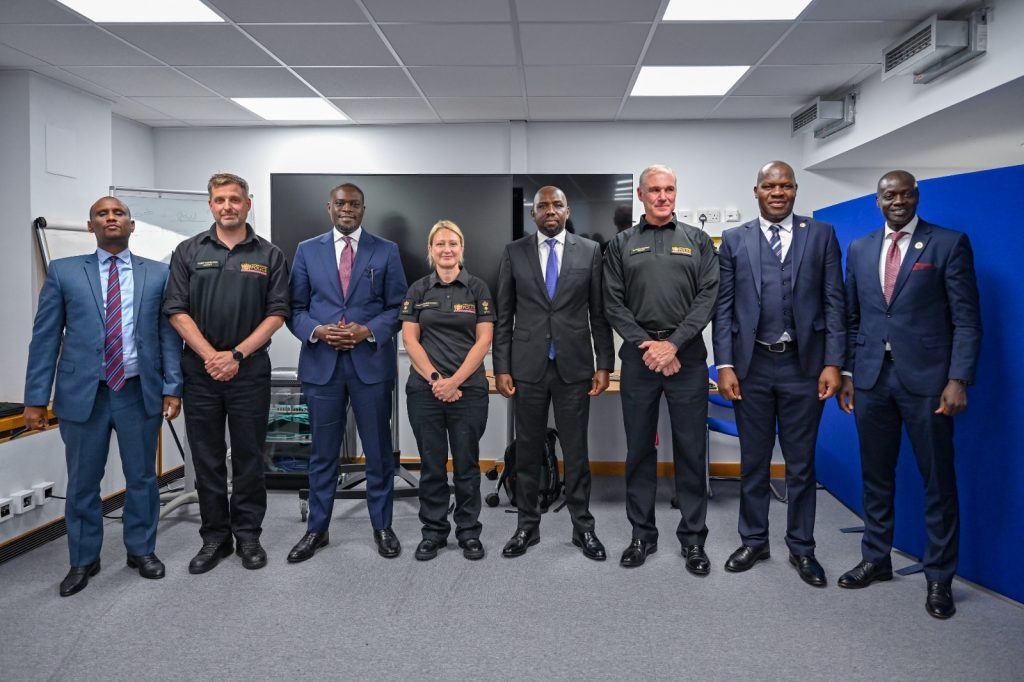
Speaking during a benchmarking visit to the City of London Police in the United Kingdom, Murkomen said the Kenyan delegation sought to understand how London’s specialized urban police service manages public order while safeguarding commercial districts and strategic installations.
“We sought to learn the systems put in place to manage public order and protect businesses and critical installations,” Murkomen said.
According to the CS, lessons drawn from London’s policing model will help shape the Nairobi Metropolitan Police Unit into a modern, professional, and effective security formation capable of addressing the unique challenges of a major metropolitan area.
The London visit comes as the government intensifies efforts to operationalize the NMPU, a specialized unit envisioned to strengthen security, improve rapid response capabilities, combat emerging criminal threats, and enhance coordination among security agencies in Nairobi and its satellite towns.
Earlier, Murkomen and his delegation met the UK’s Home Secretary, Shabana Mahmood, where discussions focused on cooperation in establishing the Nairobi Metropolitan Police Unit and broader Kenya–UK security collaboration under the two countries’ strategic partnership framework.
The CS was accompanied by Johnson Sakaja, National Government Coordination Principal Secretary Ahmed Ibrahim, Kenya’s High Commissioner to the UK Maurice Makoloo, and Deputy Inspector General of Police Gilbert Masengeli.
The government has been conducting international benchmarking missions in cities such as New York and London as it develops the framework, operating procedures, and command structure for the new unit, which is expected to serve as a model for similar metropolitan police formations in other major Kenyan cities.

If you like our work, you can buy us a soda
Buy us a soda 🥤