

The construction of the Green Park underpass at the bustling intersection of Uhuru Highway and Haile Selassie Avenue is now 88% complete, with the landmark project poised to reshape urban mobility in Nairobi.
Designed to ease pedestrian movement and streamline vehicular traffic into the Central Business District (CBD), the underpass is part of a broader modernization agenda championed by the national government.
It is being implemented by the Kenya National Highways Authority (KeNHA) in partnership with the China Road and Bridge Corporation.
“This Green Park underpass is not just any construction project it is the embodiment of a vision to modernize Nairobi’s urban landscape,” said Eliud Owalo, Deputy Chief of Staff for Performance and Delivery Management, during an inspection tour on Thursday.
“We’re creating an experience, not just a crossing.”
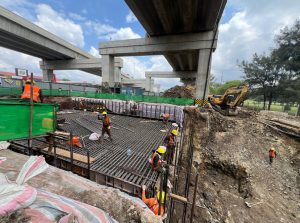
Strategically located near Uhuru Park, Haile Selassie Avenue, and the Nairobi Railways Station, the underpass will allow pedestrians to move safely beneath the often-congested Uhuru Highway, eliminating the need to cross chaotic traffic lanes and enhancing connectivity to key city points.
With a sh 2 billion investment, the project takes inspiration from global urban design successes such as London’s famed pedestrian tunnels.
Once complete, the Green Park underpass will feature well-lit corridors, CCTV surveillance, retail outlets, and modern amenities transforming what would traditionally be a utilitarian structure into a vibrant, multi-use public space.
Pedestrians can expect a clean, secure, and engaging walkway more akin to a city plaza than a tunnel with access to coffee shops, kiosks, newsstands, and other conveniences.
This design approach mirrors successful models in cities like Amsterdam, Hong Kong, and London, where underpasses serve as both transit points and social spaces.
The underpass is expected to significantly reduce pedestrian-vehicle conflict, boost commuter safety, and ease traffic congestion at the high-pressure Haile Selassie-Uhuru Highway junction a move toward proactive, design-led traffic management rather than reactive measures.
Government officials and city planners see the project as a key step toward Nairobi’s vision of becoming a “green city in the sun,” promoting sustainability, efficiency, and urban dignity.
With final works underway, Nairobians can look forward to a safer, more organized commuting experience that seamlessly blends infrastructure with lifestyle.
The underpass is expected to open to the public later this year.

If you like our work, you can buy us a soda
Buy us a soda 🥤