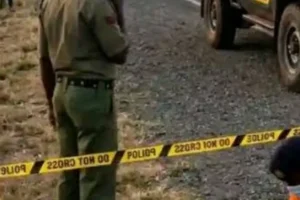
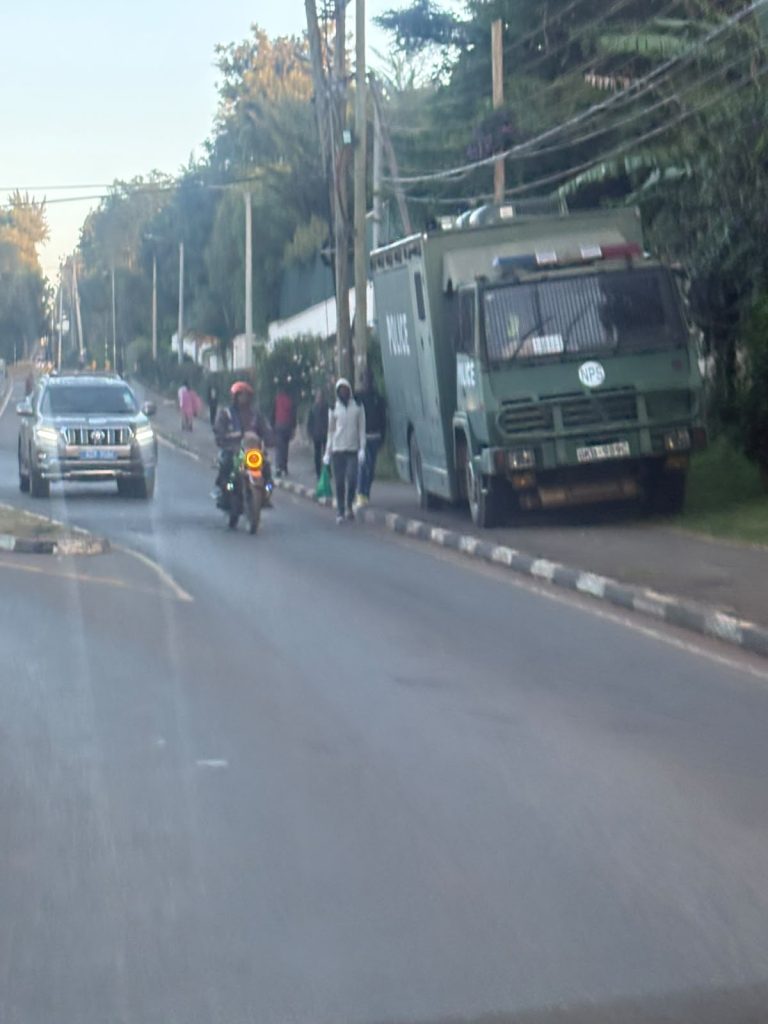
Several security checkpoints were mounted on major roads in and around Nairobi as part of measures to maintain law and order during the annual Saba Saba commemoration.
Police explained they took the moves to tame what they termed as suspected criminals who planned to misuse the day and disrupt businesses.
The most affected roads are those leading to the Nairobi city centre, around Parliament and State House.
Police stopped and checked motor vehicles, motorcycles and pedestrians.
This forced some schools to postpone in person learning. The institutions sent messages to parents announcing there will be no in person learning due to the checks on the roads which had affected flow of traffic.
There were few vehicles on major streets in Nairobi.
Motorists using Jogoo Road said they were blocked at City Stadium. There were more roadblocks near State House which were erected from 7 am.
There were more personnel on patrols. Some road users complained of harassment.
The National Police Service (NPS) had Monday announced that it will set up enhanced security checkpoints on major roads across Nairobi on Tuesday, July 7, as part of measures to maintain law and order during the annual Saba Saba commemoration.
Police Spokesperson Michael Muchiri said the heightened security measures were informed by past experiences in which some demonstrations turned violent, leading to breaches of the peace and disruption of normal business activities.
“The National Police Service wishes to inform all members of the public that, in light of past experience during the Saba Saba commemoration, some members of the public have caused breaches of the peace, thereby interfering with the normal conduct of business for those not participating in the demonstrations,” the statement said.
Muchiri said the checkpoints would be used to regulate both pedestrian and vehicular movement within the city as police seek to prevent disorder and safeguard public safety.
There will be more police on the streets and major towns like Kitengela, Mlolongo, Rongai, Githurai and other places.
Some places in the city center will be no go zones. These include Parliament where more police officers were seen.
Muchiri urged members of the public to cooperate with police officers and comply with security directives to help ensure peace and order prevail throughout the day.
The police also warned that anyone found engaging in unlawful acts would face legal action.
The annual Saba Saba commemoration, observed every year on July 7, has historically been marked by demonstrations calling for political and governance reforms, with authorities often deploying additional security personnel in anticipation of large crowds.
Nairobi Regional Police Commander Issa Mohamud has said no one has formally notified police of any planned protests in the capital on Tuesday, July 7, warning that any gathering held without the required notification will be treated as illegal.
Speaking after a meeting with top police commanders in Nairobi, Mohamud assured residents that security remains under control and urged the public to go about their normal activities.
“Tomorrow is a normal working day and public transport will not be affected, although there will be screening of vehicles entering the city. Of course we must do screening,” he said.
He added that there was no cause for alarm, saying, “There will be no problem at all. The day will be a normal working day.”
His remarks come amid heightened attention over planned Saba Saba demonstrations scheduled for Tuesday.
However, a Nairobi-based lobby group, the Grassroots Economic Justice Movement, says it has already served a formal notice to Inspector General of Police Douglas Kanja, the Nairobi Regional Police Commander and the Officer Commanding Central Police Station, informing them of its intention to hold peaceful protests.
According to the notice, between 1,000 and 3,000 participants are expected to march from Jeevanjee Gardens to Parliament Buildings, where they plan to present a petition demanding parliamentary intervention on alleged extrajudicial killings, enforced disappearances and the excessive use of force by security agencies.
The organisation said the procession will be peaceful and that volunteer marshals will be deployed to help manage the crowd.
On July 7, 1990, veteran politicians and pro-democracy leaders like Kenneth Matiba and Charles Rubia organized a rally at Kamukunji Grounds in Nairobi to demand an end to the one-party dictatorship and call for free elections.
Despite the arrest of key organizers and heavy police crackdowns that left several people dead and hundreds arrested, the protests became a pivotal moment in Kenya’s democratic journey. This pressure forced the government to repeal Section 2A of the Constitution in 1991, successfully restoring multi-party politics.
The day has been marked annually despite bans by the government.

If you like our work, you can buy us a soda
Buy us a soda 🥤