
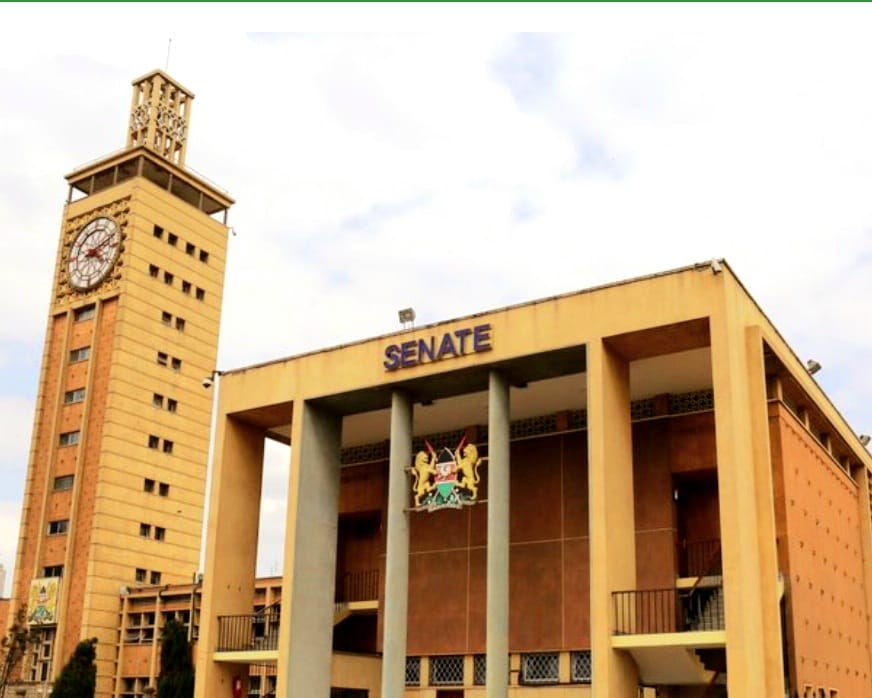
The Senate Standing Committee on Roads, Transportation and Housing is set to investigate recurrent building collapses in Nairobi amid concerns over widespread violations of construction standards, weak enforcement of regulations and possible professional negligence.
Committee Chairperson Senator Hamida Kibwana said the inquiry would examine compliance with approved building plans, the quality of construction works, the effectiveness of regulatory agencies and gaps in the existing legal framework governing construction safety.
In a statement on the floor of the Senate, Kibwana cited several building collapses reported in Nairobi in 2026, including the latest incident along 9th Street in Eastleigh, where an 18-storey building under construction collapsed.
She raised concerns that ground-floor business premises were reportedly occupied by traders and members of the public when the building came down, highlighting the risks posed by unsafe construction practices.
The Senator also cited the collapse of Manzil Towers in South C in January, where construction reportedly exceeded the approved 12 storeys by four additional floors.
Other incidents included the partial collapse of a 22-storey building under construction along School Lane in Westlands and the collapse of a building in Shauri Moyo’s Blue Estate in March during a demolition exercise linked to the Nairobi River Regeneration Project.
“These incidents raise concerns regarding compliance, structural safety and accountability,” Kibwana said.
She pointed to the National Building Inspectorate’s 2025 audit of 396 developments across the country, which found that 87 per cent either failed to meet building standards or lacked the necessary approvals.
The audit also led to the emergency demolition of two buildings due to severe structural defects. It further documented six major building collapses in Nairobi, Mombasa and Kisii in 2025, including two incidents in Parklands, Nairobi.
“The magnitude of these regulatory gaps is starkly illustrated by the 2025 National Building Inspectorate (NBI) audit of 396 developments nationwide,” she told the Senate.
Kibwana warned that building collapses have far-reaching consequences, including loss of life, injuries, permanent disabilities, destruction of livelihoods, psychological trauma and damage to neighbouring properties and public infrastructure.
“The collapse of any building comes with immeasurable losses to the country,” she said.
The planned investigation follows previous engagements between the Senate Committee and the Nairobi City County Government over unregulated developments, encroachment on public spaces and obstruction of roads and drainage systems in residential estates.
Kibwana recalled that the Committee visited parts of Eastleigh on September 29, 2026, before meeting Nairobi Governor Johnson Sakaja on October 13 to discuss the concerns.
During the meeting, Sakaja informed the Committee that the county government had forwarded more than 300 files involving developments suspected of violating construction regulations to the Office of the Director of Public Prosecutions (ODPP).
The Committee plans to engage the ODPP to establish the status of the files and determine whether they have resulted in charges, prosecutions or other enforcement measures. It will also seek explanations for any delays in taking action.
The inquiry will further examine possible professional negligence and the responsibilities of national and county government agencies in preventing unsafe construction.
According to Kibwana, persistent building safety concerns are partly linked to rapid urbanisation and growing demand for housing, which have placed pressure on planning and regulatory institutions.
She cited Kenya National Bureau of Statistics data indicating that 31.2 per cent of the country’s population lives in urban areas, with an annual urbanisation rate of 4.4 per cent.
The Senator noted that construction regulation involves several institutions, including county governments, the National Construction Authority (NCA), the National Environment Management Authority (NEMA) and professional bodies responsible for regulating architects and engineers.
“The Senate must remain steadfast in protecting lives and property and ensuring accountability for unsafe construction,” Kibwana said.
She assured the House that the Committee would prepare and table a comprehensive report outlining its findings, recommendations and proposed legislative interventions.

If you like our work, you can buy us a soda
Buy us a soda 🥤