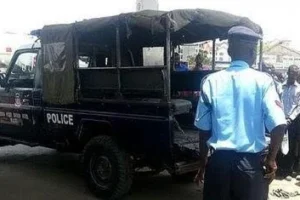
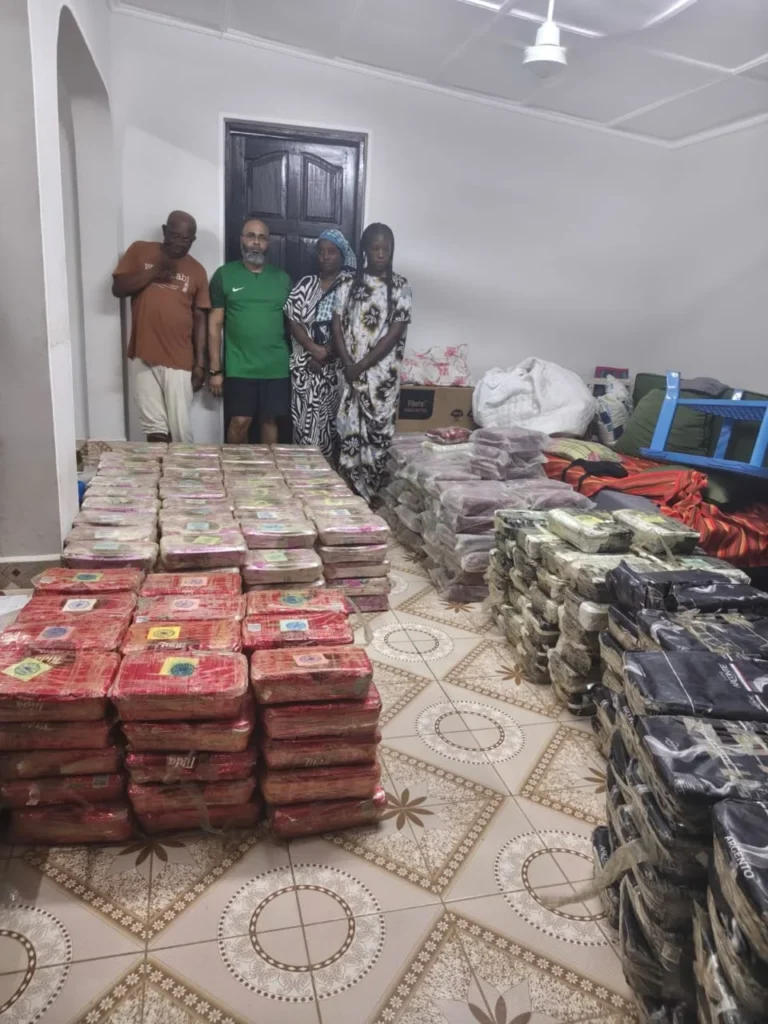
Police arrested two Tanzanian nationals and an Ugandan woman in an anti-narcotics operation in Kwale County that resulted in the recovery of 454 kilogrammes of suspected methamphetamine valued at approximately Sh3.6 billion.
The multi-agency operation, led by the National Anti-Narcotics Bureau (NANB) Coast Region, followed intelligence linking the suspects to a separate seizure of 259 kilogrammes of suspected methamphetamine and cocaine in Tanzania.
The operation was triggered by the arrest of a 45-year-old Tanzanian national, identified as Saleh Khamis, by Tanzanian authorities on November 5, 2026, over alleged involvement in drug trafficking.
Khamis was subsequently handed over to Kenyan police officers at the Lunga Lunga–Horohoro border crossing as investigations into the suspected regional drug trafficking network intensified.
The subsequent operation in Kwale led to the arrest of two other Tanzanian nationals and a Ugandan woman, alongside the recovery of the suspected narcotics.
Police are expected to pursue further investigations to establish the source of the drugs, their intended destination and the possible involvement of other members of the suspected trafficking network.
The source of the drugs was not immediately known. It comes two months after authorities burnt similar drugs worth Sh8 billion in Mombasa.
Kenya destroyed more than one tonne of methamphetamine valued at Sh8.2 billion, in one of the country’s largest drug destruction exercises, as the government intensified its crackdown on narcotics trafficking.
Interior Cabinet Secretary Kipchumba Murkomen oversaw the destruction of the drugs on September 24, 2026, at Bamburi Cement Factory in Mombasa County.
Murkomen said the seizure and destruction demonstrated the scale of the narcotics threat facing Kenya and the importance of intelligence-led, multi-agency cooperation.
He said the government would not provide safe space for the manufacture, trafficking, distribution or sale of illicit drugs and alcohol.
Murkomen said the government had transformed the Anti-Narcotics Unit into the National Anti-Narcotics Investigations Bureau, increasing specialised officers from 200 to 405.
The government is also procuring 20 vehicles for the bureau and strengthening its intelligence, surveillance, forensic and financial investigation capabilities.
Between January and August 2026, Murkomen said security agencies arrested 259 suspects and seized or destroyed 2,896,590 litres of illicit alcohol.
Other seizures included 12,385 pieces of counterfeit alcohol, 27,854 litres of ethanol, 13,879.081 kilogrammes of cannabis, 4.241 kilogrammes of heroin, 4.58 kilogrammes of cocaine and about 10 kilogrammes of methamphetamine.
A further 32,193.83 kilogrammes of cannabis is being held by the Anti-Narcotics Unit pending the conclusion of cases.
Authorities also seized 16 motor vehicles, 10 motorcycles and Sh146,755 in cash between May and July 2026.
According to Murkomen, 21 narcotics cases are currently before the courts, with two convictions secured.
He said Magistrates’ Courts had been designated to handle narcotics possession and trafficking cases at JKIA, Kahawa, Mombasa and Busia.
Murkomen said the narcotics problem remained particularly serious at the Coast, with Kenya serving both as a market and transit point for drugs.
Citing NACADA data, he said one in six Kenyans aged between 15 and 65 — more than 4.7 million people — use at least one drug or substance of abuse.
Mombasa County recorded the highest reported rate nationally at 34.4 per cent, he said.
The government is therefore pursuing amendments to the Narcotic Drugs and Psychotropic Substances (Control) Act and the NACADA Act.
Murkomen said the proposed changes would strengthen the legal, institutional, investigative and prosecutorial framework for tackling drug trafficking, organised criminal networks and substance abuse.
The CS said the government would also pursue property and other assets linked to drug trafficking and illicit alcohol businesses.
He added that the President had directed that recovered assets be redirected towards prevention, treatment and rehabilitation programmes.
Murkomen also warned government officials against colluding with drug traffickers or illicit alcohol networks, saying those found involved would face dismissal and prosecution.
He said the government’s crackdown on illicit alcohol had so far resulted in 3,331 arrests and the seizure of 678,505 litres of illicit alcohol, of which 353,875 litres had been destroyed.
The government is also expanding treatment and rehabilitation services alongside enforcement.
Murkomen said an assessment of 266 rehabilitation facilities had been completed, with 164 accredited. Eleven counties had expressed willingness to establish rehabilitation centres.
The government is also working to expand treatment coverage for substance-use disorders through the Social Health Authority.

If you like our work, you can buy us a soda
Buy us a soda 🥤