
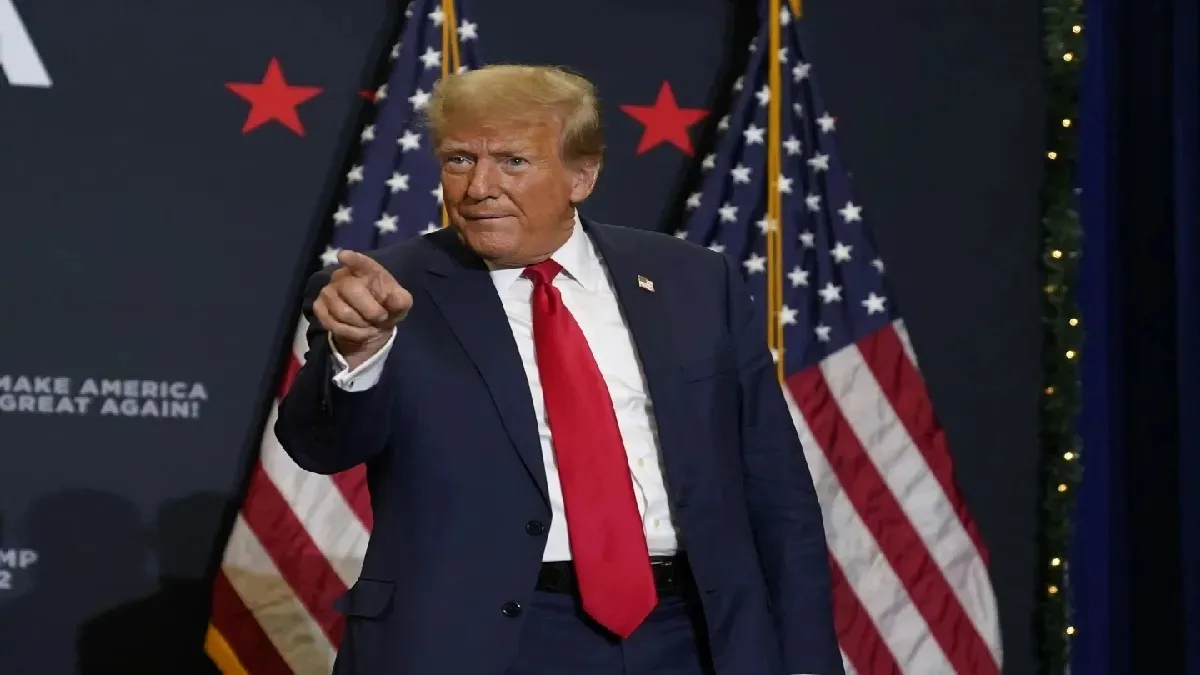
US President Donald Trump has scored a significant legal victory in his ongoing battle with the British Broadcasting Corporation (BBC) after a federal judge in Florida allowed key parts of his $10 billion defamation lawsuit against the broadcaster to proceed.
The ruling, delivered by Judge Jeffrey Kuntz on Tuesday, November 10, represents a major setback for the BBC, which had sought to have the case dismissed before it could advance to trial.
Trump filed the lawsuit over a controversial BBC Panorama documentary that allegedly misrepresented his remarks during a speech delivered shortly before the January 6, 2021, attack on the US Capitol.
The documentary, titled Trump: A Second Chance?, aired on October 28, 2024, just days before Americans headed to the polls in the presidential election that saw Trump defeat Democratic candidate Kamala Harris.
At the centre of the dispute is the broadcaster’s decision to combine two separate portions of Trump’s January 6 speech, making it appear as though he had directly encouraged his supporters to engage in violent action against the US Congress.
During the original speech, Trump told his supporters that they would march towards the Capitol to support lawmakers as they considered the certification of the 2020 presidential election results.
He also urged his supporters to make their voices heard peacefully.
However, nearly 55 minutes later, Trump used the phrase “fight like hell” while addressing the crowd.
The BBC documentary combined the two separate sections, creating an impression that the president had delivered the remarks as one continuous statement.
Trump’s lawyers argued that the editing deliberately distorted his message and presented him as having directly encouraged the violence that followed at the Capitol.
The president subsequently accused the broadcaster of damaging his reputation and attempting to influence the outcome of the 2024 presidential election.
In November 2025, the BBC issued an apology, admitting that the editing had created a misleading impression that Trump had made a direct call for violent action.
BBC chairman Samir Shah also sent a personal apology to the US president.
The broadcaster confirmed that the controversial documentary would not be broadcast again in its edited form.
However, despite acknowledging the editorial mistake, the BBC rejected Trump’s demand for compensation, maintaining that there was no legal basis for a defamation claim.
The corporation also argued that the documentary was not distributed in the United States and questioned whether a Florida court had jurisdiction to hear the case.
Trump subsequently filed his lawsuit in December 2025, seeking $10 billion in damages over allegations of defamation and unfair business practices.
In its latest ruling, Judge Kuntz found that Trump’s allegations were sufficient to allow the defamation claim to proceed, particularly regarding whether the broadcaster knowingly or recklessly published a misleading portrayal of his speech.
The judge questioned the BBC’s explanation that the editing was simply an attempt to shorten a lengthy address.
He observed that combining remarks delivered nearly an hour apart went beyond ordinary editing and could support an inference that the broadcaster knew, or should have known, that the resulting clip was misleading.
The judge also considered Trump’s argument that the documentary damaged his reputation, noting the potential significance of political reporting during an election period.
However, the ruling did not establish that the BBC had committed defamation. Trump will still have to prove his allegations and demonstrate that he suffered actual damages before he can secure compensation.
The court also dismissed Trump’s separate claim under Florida’s unfair trade practices law, meaning the defamation allegations will be the main focus as the proceedings continue.
Reacting to the development, Trump celebrated the decision on his Truth Social platform, describing it as a “huge victory”.
He maintained that he would continue challenging organisations he accuses of misleading the American public.
The BBC, on the other hand, expressed surprise at the court’s decision but said it respected the judicial process and remained confident in its legal position.
The corporation indicated that it would continue defending itself as the case moves to the next stage.
The controversy has already had significant consequences within the BBC, with former Director-General Tim Davie and BBC News chief executive Deborah Turness leaving their positions following mounting criticism over the documentary’s editing.
Their departures intensified scrutiny of the broadcaster’s editorial practices and raised questions about how such a controversial edit was allowed to feature in a major political documentary.
The case has also exposed the wider challenges facing international media organisations when reporting on politically sensitive issues, particularly during election campaigns.
Trump has repeatedly criticised major media organisations over their coverage of his political career, accusing some outlets of publishing misleading reports and presenting him unfairly.
His legal battle with the BBC is among the most significant disputes involving an international broadcaster during his second presidency.
Meanwhile, the BBC’s defence has focused partly on the fact that the Panorama programme was not broadcast in the United States, with the corporation arguing that Trump has not established the required connection between the documentary and alleged harm in Florida.
The legal proceedings are expected to involve further examination of the documentary’s production, editorial decisions and distribution.
Trump is also expected to provide evidence during a deposition as part of the case, with a court order requiring him to appear by December 11, 2026.
A trial has provisionally been scheduled for February 2027 if the lawsuit proceeds to that stage.
For now, the latest decision gives Trump an opportunity to pursue his allegations in court, while placing the BBC under pressure to defend the editorial decisions behind the documentary.
The outcome could have far-reaching implications for political journalism, particularly concerning how broadcasters edit speeches and present statements made by public figures.
Although the BBC has already apologised for the controversial footage, the legal battle is far from over, with the court yet to determine whether the broadcaster is liable for defamation or whether Trump deserves the billions of dollars he is seeking.
FOLLOW NAIROBI NEWS ON FACEBOOK

If you like our work, you can buy us a soda
Buy us a soda 🥤