
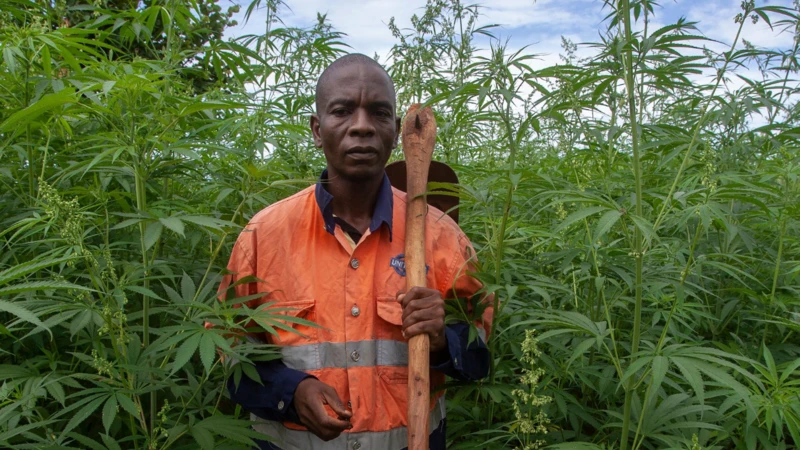
The government of Ghana has taken a major step toward regulating cannabis by launching a licensing system that allows the controlled cultivation of the plant for industrial and medicinal purposes.
The move is seen as an attempt to unlock the crop’s economic and scientific potential while maintaining strict control over its use.
The programme is being overseen by the Narcotics Control Commission (NACOC), the state agency responsible for drug regulation and enforcement.

Authorities say the licensing framework will enable qualified individuals and companies to legally cultivate and manage cannabis under tightly regulated conditions.
A New Phase For Cannabis Regulation
The rollout follows the launch of Ghana’s national cannabis regulatory programme in February 2026 by Interior Minister Muntaka Mohammed‑Mubarak.
The programme operationalises provisions in Ghana’s narcotics laws that permit the cultivation of low-THC cannabis varieties for specific uses.
Under the new rules, only cannabis containing no more than 0.3% tetrahydrocannabinol (THC), the compound responsible for the plant’s psychoactive effects, can be grown legally.
Such varieties are commonly referred to as industrial hemp, which is widely used in sectors such as pharmaceuticals, textiles, food products, and cosmetics.
Officials say the decision aligns Ghana with a growing number of countries that allow limited cannabis cultivation for medical research and industrial production.
Multiple Categories Of Licences
The licensing framework introduces several categories of permits to regulate the emerging industry.
These licences cover activities such as cultivation, processing, research, laboratory testing, storage, transport, import and export, distribution, and even advertising related to cannabis products.
Applications for licences are being processed through a digital platform run by NACOC.
Prospective investors must submit documentation and pay a non-refundable application fee before their applications can be reviewed.
Authorities say the digital system is intended to make the process more transparent and accessible while ensuring regulatory oversight.
Strict Requirements For Applicants
Despite opening the door to the cannabis industry, Ghana’s government has emphasised that the sector will be heavily regulated.
Applicants must meet several strict conditions before receiving approval.
These include implementing strong security measures, establishing traceability systems to track cannabis products from cultivation to distribution, and complying with national quality standards.
The commission has also warned potential applicants against dealing with intermediaries or individuals claiming they can “facilitate” licences, urging them to work directly with the Cannabis Regulations Department to avoid fraud.
Recreational Use Remains Illegal
While the new policy allows cultivation for industrial and medicinal purposes, authorities stress that recreational cannabis use remains illegal in Ghana.
NACOC officials say the licensing programme should not be interpreted as a green light for smoking cannabis or cultivating high-THC varieties.
Instead, the policy is meant to encourage innovation and investment in regulated sectors such as medicine and manufacturing.

Economic Hopes And Industry Potential
Government officials believe the initiative could help Ghana tap into the rapidly growing global cannabis market.
Industrial hemp can be processed into fibres for textiles, biodegradable materials, construction products, and even nutritional supplements.
Medical cannabis, meanwhile, is increasingly being studied and used worldwide to treat conditions such as chronic pain, epilepsy, and certain neurological disorders.
By introducing a structured regulatory framework, authorities hope Ghana can attract investors, create jobs, and expand research while ensuring public safety.
As the licensing programme begins to take shape, analysts say Ghana could emerge as one of the leading African countries exploring the economic benefits of regulated cannabis cultivation, provided strict enforcement and oversight remain in place.
FOLLOW NAIROBI NEWS ON FACEBOOK

If you like our work, you can buy us a soda
Buy us a soda 🥤