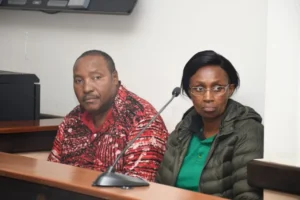

National Treasury Cabinet Secretary John Mbadi has defended the government’s plan to review its current policy on national examination fees, stating that starting in 2026, parents who can afford it will be required to pay for their children’s exams.
Speaking on Friday, May 24, Mbadi said the government is re-evaluating the sustainability of fully subsidizing examination fees for all students, including those in elite private institutions.
“We have to review the cost and ask ourselves why we should pay the examination fee for all students, including those in private schools,” Mbadi said.
“We should be subsidising examinations for those who cannot afford them, especially in public schools.”
Mbadi emphasized that the government’s current budget includes funding for this year’s national examinations, and there should be no cause for alarm.
“There should be no panic, no worry that there is no money for examinations. There will be money for examinations, only that we are changing the system and structure,” he assured.
The CS said the review aims to introduce a fairer structure where parents with financial means will no longer rely on government subsidies.

He questioned why wealthy families, including those of senior government officials, should receive the same benefits as low-income households.
“For example, if my child is doing KCSE today, the government pays for that child. But as a Cabinet Secretary, why should that be the case?” Mbadi asked.
He added that it was unjust for taxpayers some of whom struggle to afford basic needs to fund the examination fees of children from affluent families.
“What I’m saying is that those who can afford it will afford or should afford to pay examination fees,” he said.
Mbadi urged the Ministry of Education to develop a clear system for identifying families who should pay the fees.
He cited private school parents who pay up to Ksh1 million in tuition as obvious candidates for the new cost-sharing arrangement.
He reiterated that the government’s responsibility is to ensure all children have access to basic education, not to subsidize costs for the wealthiest.
“There is no body called the government with its own resources. The government uses the resources of Kenyans,” he said.
In addition to reviewing fee payments, Mbadi also questioned the high cost of printing national exams abroad, arguing that it was unnecessary and wasteful.
“We print passports here. Why would you take examinations out to be printed?” he posed, adding that passports are even more security-sensitive yet are locally produced.
He called on the Kenya National Examination Council (KNEC) to consider using the government printer for exam materials, provided there are adequate security measures in place.
“Even with printing abroad, we still have leakages. So why not secure the exams locally?” he said.
Mbadi’s remarks signal a major policy shift in the funding and administration of national examinations, with a focus on equity, cost-efficiency, and accountability.
The new measures are expected to be implemented beginning in 2026, following a comprehensive review by the Ministry of Education.
Judiciary Denies Warning Gachagua Over Alleged Misinterpretation Of Impeachment Case

If you like our work, you can buy us a soda
Buy us a soda 🥤