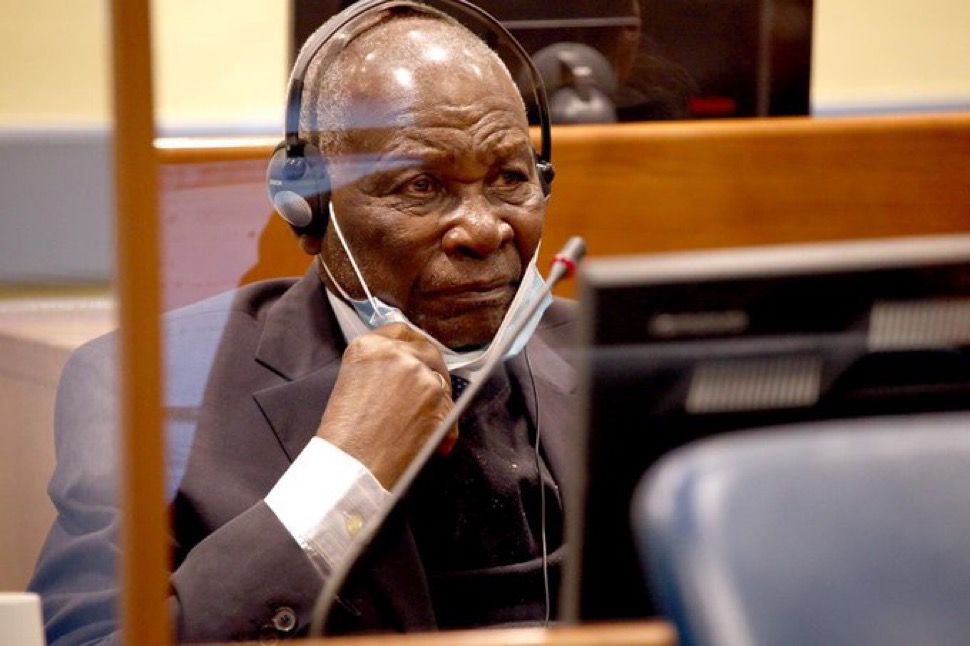
Félicien Kabuga, the Rwandan businessman accused of playing a central role in the 1994 Genocide against the Tutsi, died in detention in The Hague, the International Residual Mechanism for Criminal Tribunals (IRMCT) announced on Saturday May 16, 2026.
Kabuga, who was facing charges of genocide, conspiracy to commit genocide, direct and public incitement to commit genocide, and crimes against humanity including persecution, extermination and murder, died while hospitalized in the Netherlands.
The Medical Officer of the United Nations Detention Unit immediately notified authorities, and Dutch officials have begun standard legal procedures and investigations into the circumstances surrounding his death.
The President of the Mechanism, Judge Graciela Gatti Santana, also ordered a full inquiry into the circumstances of his death, appointing Judge Alphons Orie to lead the investigation.
Authorities had long accused Kabuga, once considered one of the world’s most wanted fugitives, of financing and supporting the 1994 genocide in Rwanda, which killed more than a million Tutsi ethnic group.
Accusers notably accused him of using his wealth and influence to fund extremist militias and of backing the notorious Radio Télévision Libre des Mille Collines (RTLM), which broadcast hate propaganda and incitement during the genocide.
The International Criminal Tribunal for Rwanda (ICTR) originally issued an arrest warrant against him, and after he evaded justice for more than two decades, French authorities arrested him near Paris, France, on May 16, 2020.
On October 26, 2020, the Mechanism transferred him to its The Hague branch, where his trial officially began on September 29, 2022.
However, judges halted proceedings in September 2023 after ruling that Kabuga was no longer fit to stand trial due to serious health concerns and advanced dementia.
The Trial Chamber indefinitely stayed the proceedings and ordered that he remain in detention at the United Nations Detention Unit while discussions continued over his provisional release to a country willing to receive him.
At the time of his death, Kabuga was still awaiting transfer under that provisional release arrangement.
His death closes one of the final major genocide prosecution cases linked to the 1994 genocide against the Tutsi, but without a final judicial verdict on the charges against him.
The IRMCT, which succeeded the ICTR and ICTY, said further updates would be provided following the official inquiry.
Kabuga had also acquired property in Kenya and later sold most of it.
Featured image: UN IRMCT