
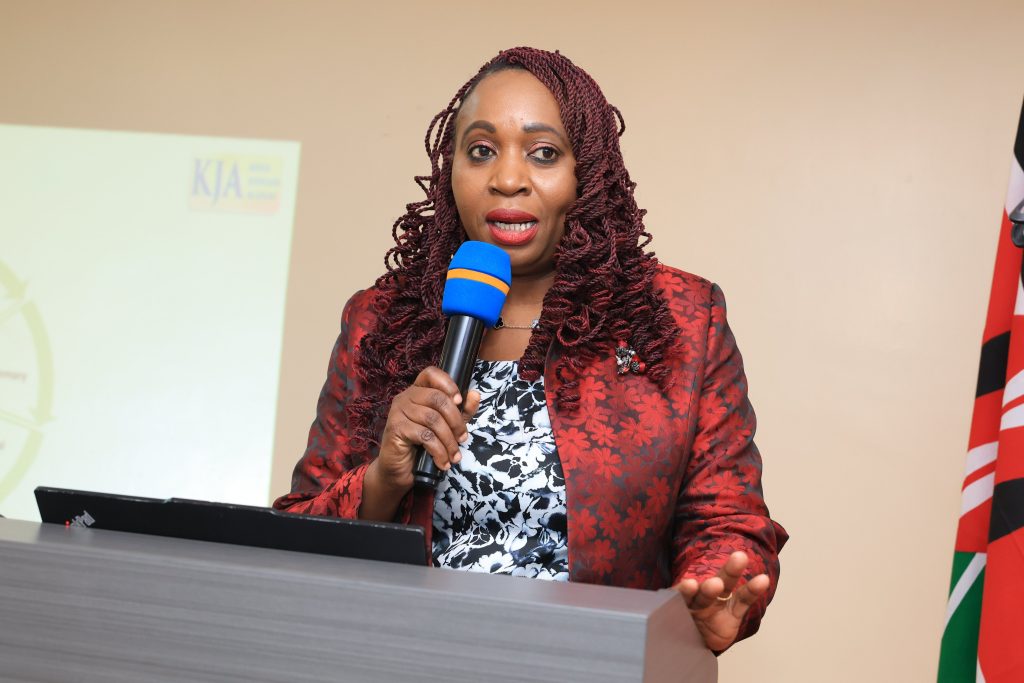
The Alternative Justice Systems (AJS) Secretariat has underscored the critical role of community-led dispute resolution mechanisms in expanding access to justice, saying alternative justice approaches remain a vital complement to formal court processes across Kenya.
Speaking ahead of the AJS Conference 2026, Head of the AJS Secretariat Jemima Aluda said the initiative provides a platform for collaboration among community elders, clan leaders, religious leaders, state agencies, and judicial institutions to ensure justice is accessible and responsive to the needs of ordinary citizens.
“AJS provides us with a platform to look at the different doors of justice available to citizens, including working with community elders, clan leaders, religious leaders, police officers, probation officers, children officers, the Office of the Director of Public Prosecutions, and court-annexed justice practitioners,” Aluda said.
She noted that alternative justice mechanisms allow disputes to be addressed from the grassroots level, including within families and communities, using culturally relevant approaches that promote reconciliation and social cohesion.
“Through alternative justice systems, we are able to examine disputes from the community level, the grassroots level, and the family level, and identify mechanisms that work best for the people involved. It is about justice in a language that people understand,” she said.
According to Aluda, community justice mechanisms often involve dialogue and consensus-building, enabling communities to resolve disputes peacefully while maintaining social harmony.
“One of the languages that people understand is community justice. Through social dialogue, people sit together, discuss the challenges they face, and develop solutions that work for them. This includes peace agreements such as the Wajir Peace Code,” she explained.
She added that family leaders and clan elders continue to play a significant role in resolving disputes before they escalate into larger conflicts.
“At the family level, we have leaders who act as AJS champions and help resolve disputes. We also have clan leaders who bring different communities together to address issues affecting their members,” Aluda said.
The AJS Secretariat also highlighted the role of state institutions in promoting alternative dispute resolution, noting that many cases are settled before reaching the courts.
“Did you know that about 90 percent of matters reported at police stations are resolved at that level? Even when matters proceed to court, parties are often given opportunities to engage in discussions and pursue out-of-court settlements,” she noted.
Aluda invited stakeholders to participate in the upcoming AJS Conference 2026, which will focus on the theme, “Data-Driven Pathways to Justice for People-Centered Justice.”
She said the conference will explore how data can be used to better understand citizens’ experiences in seeking justice and improve justice delivery systems.
“Why data? Data helps us understand the pathways people use to seek justice, the challenges they face, the time it takes, and the social, psychological, and economic impact of those experiences,” she said.
“It is not just about numbers. We want to discuss practical measures that can strengthen people-centered justice and ensure that justice systems respond effectively to the needs of all Kenyans,” Aluda added.
The conference is expected to bring together justice sector stakeholders, policymakers, community leaders, researchers, and development partners to discuss innovative approaches to improving access to justice and strengthening alternative dispute resolution mechanisms nationwide.
Slash net worth: Career achievements, Guns N’ Roses and beyond

If you like our work, you can buy us a soda
Buy us a soda 🥤