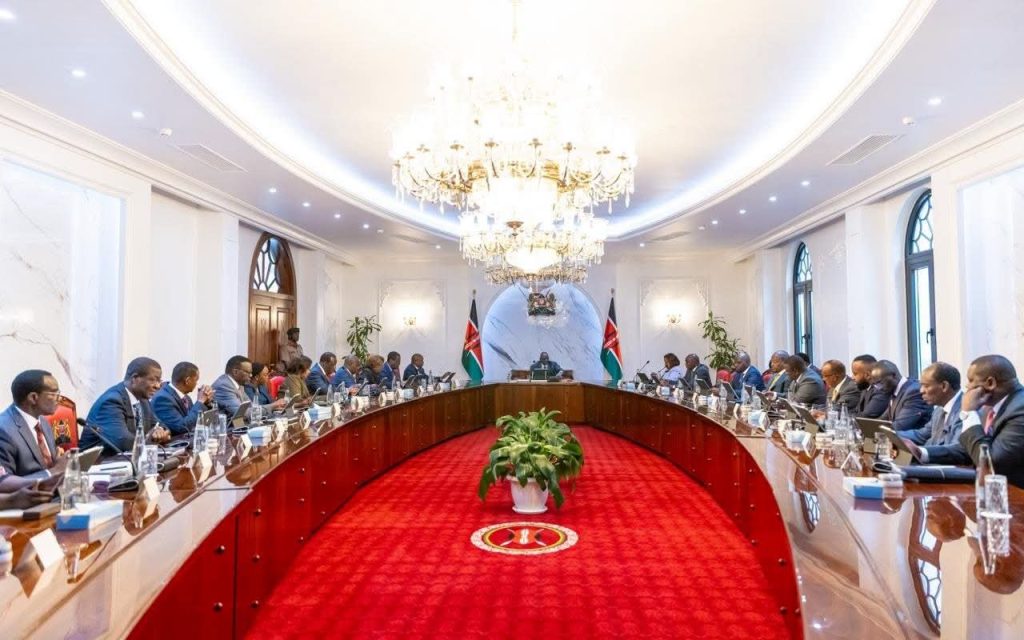
Cabinet endorsed petroleum cooperation agreements with Rwanda and South Sudan, marking a major vote of confidence in Kenya’s Government-to-Government fuel import framework.
The agreements will enable both countries to import bulk refined petroleum products through Kenya’s infrastructure, increasing fuel transit through the Port of Mombasa, the Kenya Pipeline Company
network and the Northern Corridor, boosting regional energy integration and generating additional revenues from transport,
storage and logistics services.
In healthcare, Cabinet endorsed the Kenya-United States Health Cooperation Framework to sustain collaboration in combating HIV, malaria, TB and emerging infectious diseases while strengthening
Kenya’s transition to a more self-reliant health system.
The framework will support disease surveillance, laboratories, digital
health systems, medical supplies and the gradual integration of more
than 13,000 US-supported frontline health workers into Kenya’s public
health workforce. Cabinet also gave the greenlight to the Sh4.5 billion Mother-and-Child Lifeline Initiative, a partnership with Amsons Group to build 10 Level 4 and Level 5 Mother and Child hospitals at Magadi Road (Nairobi), Galmagalla in Fafi (Garissa), Siakago (Embu), Kisumu County Referral Hospital, Kabichbich (West Pokot), Huruma (Uasin Gishu), Tudor (Mombasa), Bahati (Nakuru), Samburu (Kwale) and Chebunyo (Bomet).
Alongside the Sh7.8 billion second phase of the Kenya-Austria Mother and Child – Our Future Project, the Mother and Child Lifeline
Initiative will modernise maternal and neonatal care at Kenyatta National Hospital.
Together, the initiatives will expand specialised healthcare, strengthen the health workforce and improve outcomes for mothers and newborns.
To reinforce protection for vulnerable families, Cabinet adopted the Kenya Children Policy, 2025, approved the Protection Against Domestic Violence (Amendment) Bill, 2026, and endorsed the Report of the Presidential Technical Working Group on Gender-Based
Violence and Femicide to strengthen survivor support, improve
coordination and enhance protection for women, children and
vulnerable families.
On industrialisation and manufacturing, Cabinet endorsed the Sh5.8 billion Leather Value Chain Development Support Project to revive
leather manufacturing, expand value addition, create up to 120,000
jobs and unlock the sector’s estimated Sh120 billion potential.
It also adopted the National Cotton, Textile and Apparels Policy to revitalise cotton farming, expand textile manufacturing, attract private investment and boost Kenya’s competitiveness in regional and
global markets.
To equip young Kenyans with industry-ready skills, the meeting authorised negotiations to modernise welding and mechanical
engineering training in 10 TVET institutions.
Cabinet also established the Kenya Leather Development Authority to strengthen regulation and coordination of the leather sector while adopting a revised MSME Policy to help small businesses grow,
expand access to markets and finance, and create more jobs.
At the continental and global level, Cabinet approved Kenya’s hosting
of the Secretariat of the Alliance of African Multilateral Financial Institutions, reinforcing Nairobi’s position as Africa’s leading financial and diplomatic hub.
Cabinet also authorised negotiations on a long-term Economic Partnership for Shared Development with China to expand trade,
investment and market access for Kenyan exports, while endorsing the ratification of key international agreements on migrant workers, big cat conservation and the Samoa Partnership Agreement, further
strengthening Kenya’s regional leadership and global partnerships. endorses cooperation agreement with Rwanda, South Sudan on fuel importation
Cabinet endorsed petroleum cooperation agreements with Rwanda and South Sudan, marking a major vote of confidence in Kenya’s Government-to-Government fuel import framework.
The agreements will enable both countries to import bulk refined petroleum products through Kenya’s infrastructure, increasing fuel transit through the Port of Mombasa, the Kenya Pipeline Company
network and the Northern Corridor, boosting regional energy integration and generating additional revenues from transport,
storage and logistics services.
In healthcare, Cabinet endorsed the Kenya-United States Health Cooperation Framework to sustain collaboration in combating HIV, malaria, TB and emerging infectious diseases while strengthening
Kenya’s transition to a more self-reliant health system.
The framework will support disease surveillance, laboratories, digital
health systems, medical supplies and the gradual integration of more
than 13,000 US-supported frontline health workers into Kenya’s public
health workforce. Cabinet also gave the greenlight to the Sh4.5 billion Mother-and-Child Lifeline Initiative, a partnership with Amsons Group to build 10 Level 4 and Level 5 Mother and Child hospitals at Magadi Road (Nairobi), Galmagalla in Fafi (Garissa), Siakago (Embu), Kisumu County Referral Hospital, Kabichbich (West Pokot), Huruma (Uasin Gishu), Tudor (Mombasa), Bahati (Nakuru), Samburu (Kwale) and Chebunyo (Bomet).
Alongside the Sh7.8 billion second phase of the Kenya-Austria Mother and Child – Our Future Project, the Mother and Child Lifeline
Initiative will modernise maternal and neonatal care at Kenyatta National Hospital.
Together, the initiatives will expand specialised healthcare, strengthen the health workforce and improve outcomes for mothers and newborns.
To reinforce protection for vulnerable families, Cabinet adopted the Kenya Children Policy, 2025, approved the Protection Against Domestic Violence (Amendment) Bill, 2026, and endorsed the Report of the Presidential Technical Working Group on Gender-Based
Violence and Femicide to strengthen survivor support, improve
coordination and enhance protection for women, children and
vulnerable families.
On industrialisation and manufacturing, Cabinet endorsed the Sh5.8 billion Leather Value Chain Development Support Project to revive
leather manufacturing, expand value addition, create up to 120,000
jobs and unlock the sector’s estimated Sh120 billion potential.
It also adopted the National Cotton, Textile and Apparels Policy to revitalise cotton farming, expand textile manufacturing, attract private investment and boost Kenya’s competitiveness in regional and
global markets.
To equip young Kenyans with industry-ready skills, the meeting authorised negotiations to modernise welding and mechanical
engineering training in 10 TVET institutions.
Cabinet also established the Kenya Leather Development Authority to strengthen regulation and coordination of the leather sector while adopting a revised MSME Policy to help small businesses grow,
expand access to markets and finance, and create more jobs.
At the continental and global level, Cabinet approved Kenya’s hosting
of the Secretariat of the Alliance of African Multilateral Financial Institutions, reinforcing Nairobi’s position as Africa’s leading financial and diplomatic hub.
Cabinet also authorised negotiations on a long-term Economic Partnership for Shared Development with China to expand trade,
investment and market access for Kenyan exports, while endorsing the ratification of key international agreements on migrant workers, big cat conservation and the Samoa Partnership Agreement, further
strengthening Kenya’s regional leadership and global partnerships.
If you like our work, you can buy us a soda
Buy us a soda 🥤