
The Kenya Revenue Authority (KRA) has issued a fresh warning to consumers over counterfeit alcoholic beverages, urging Kenyans to verify drinks before purchasing or consuming them as authorities intensify the fight against illicit alcohol.
The warning comes at a time when multi-agency teams are uncovering suspected counterfeit alcohol operations in different parts of the country, raising concerns over consumer safety, tax evasion and the growing sophistication of the illicit drinks trade.
KRA has reminded consumers that the most reliable way of checking whether an excisable product is genuine is by verifying the official excise stamp using the Soma Label mobile application.
According to the tax authority, the excise stamp is not merely proof that tax has been paid.
It contains security features and encrypted information linked to a track-and-trace system designed to help consumers establish whether a product is legitimate.
“That excise tax stamp does more than sit on a product package. It carries unique encrypted data codes linked to a track and trace system, helping verify the authenticity of excisable goods,” KRA stated.
How Kenyans can check their drinks
Consumers buying alcoholic beverages are encouraged to inspect the KRA excise stamp before opening a bottle.
The Soma Label application allows users to scan the code on an excise stamp and verify information associated with the product.
After scanning, consumers should compare the information generated by the application with the physical bottle.
Key details include the product name, manufacturer or importer, product type, volume and stamp information.
A mismatch between the information displayed by the application and the product in hand should raise suspicion.
Kenyans should also be cautious when an excise stamp appears poorly printed, damaged or otherwise different from what would normally be expected.
KRA’s excise stamps incorporate security features intended to make counterfeiting more difficult, including microtext, fine details and other security elements.
The authority has previously said the newer generation of stamps was introduced with enhanced security features to combat counterfeit products.
However, consumers should not rely solely on how a bottle looks.
Counterfeiters have become increasingly capable of reproducing packaging, labels and even excise stamps, meaning a bottle that looks authentic may still require verification.
Fake stamps can have serious consequences
KRA has previously warned that possessing or dealing in excisable goods carrying counterfeit stamps is an offence.
The authority advises members of the public to buy excisable products from licensed manufacturers and authorised distributors and to report suspicious products or excise stamps.
Under Kenya’s tax laws, offenders dealing in goods bearing counterfeit excise stamps can face seizure and destruction of the products, prosecution and other penalties.
Vehicles used to transport illicit goods may also be subject to forfeiture under applicable laws.
The authority has also urged traders to maintain proper documentation, including invoices, delivery notes and supplier information.
Fresh raids expose scale of counterfeit alcohol trade
The KRA warning comes as enforcement agencies step up operations against illicit alcohol dealers.
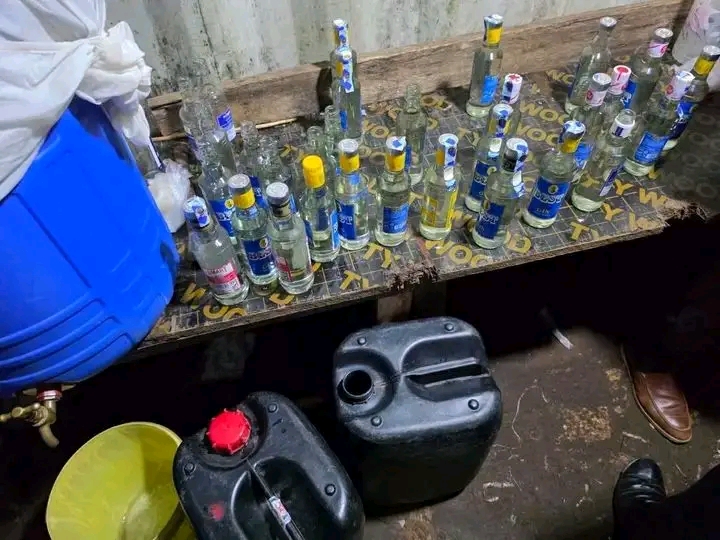
On Thursday, August 27, 2026, a multi-agency operation in Nairobi’s Jericho area resulted in the arrest of three suspects and the seizure of hundreds of suspected counterfeit alcoholic beverages.
The operation brought together officers from the National Authority for the Campaign Against Alcohol and Drug Abuse (NACADA), KRA, the Kenya Bureau of Standards (KEBS) and the National Police Service.
Authorities reportedly recovered 315 assorted counterfeit alcoholic beverages, fake KRA excise stamps, empty bottles and bottle tops believed to have been prepared for refilling.
Investigators also reportedly found individuals mixing and repackaging suspected illicit alcoholic products.
A separate crackdown in Eastleigh on August 26 resulted in the seizure of 868 assorted alcoholic beverages and the arrest of two suspects, according to reports.
The discoveries illustrate why authorities are encouraging consumers to become more vigilant instead of judging a drink by its brand name, bottle design or price alone.
Why counterfeit alcohol is dangerous
The counterfeit alcohol problem goes beyond lost government revenue and trademark violations.
Illicitly manufactured or adulterated alcohol can expose consumers to substances that were never intended for human consumption.
The concern is particularly serious where genuine bottles are emptied and refilled with unknown substances before being resealed and returned to the market.
Health experts have repeatedly warned about the dangers associated with illegally produced alcohol, including the possibility of toxic contaminants such as methanol.
Methanol poisoning can cause severe illness, including visual problems, blindness and death, making the consumption of unidentified alcoholic products potentially life-threatening.
The wider illicit alcohol market has also become a significant economic concern.
A 2025 Euromonitor report commissioned by the Alcoholic Beverages Association of Kenya estimated that illicit alcohol accounted for about 60% of alcohol sold in Kenya.
The report attributed the growth to several factors, including taxation, homemade brews, smuggling and counterfeit products.
The figure refers to illicit alcohol broadly and should not be interpreted to mean that 60% of branded bottles in Kenya are counterfeit.
The category includes traditional brews, smuggled alcohol and counterfeit commercial products.
KRA urges consumers to be vigilant
KRA has maintained that technology remains an important weapon in the fight against counterfeit excisable products.
Through the Excise Goods Management System, the authority uses secure stamps and digital tracking mechanisms to monitor excisable goods.
The Soma Label application gives consumers an additional avenue for checking products themselves.
The tax authority has previously warned that the manufacture, sale or possession of excisable goods without the required genuine excise stamps is illegal.
It has encouraged consumers to report suspicious products rather than risk consuming them.
For consumers, the message is straightforward: do not assume a familiar bottle is genuine simply because its label looks authentic.
Before buying alcohol, check the excise stamp, use Soma Label where possible and ensure the information generated corresponds with the product.
And if a bottle, stamp, price or place of sale raises suspicion, the safest decision is to walk away.
As the latest raids demonstrate, counterfeit alcohol is no longer an isolated problem hidden in obscure premises.
The discovery of fake stamps, bottles and repackaging equipment suggests that criminal networks are actively attempting to imitate legitimate products and penetrate the mainstream market.
For Kenyan consumers, a few seconds spent verifying a bottle could therefore make the difference between buying a legitimate drink and unknowingly consuming a potentially dangerous counterfeit product.
FOLLOW NAIROBI NEWS ON FACEBOOK