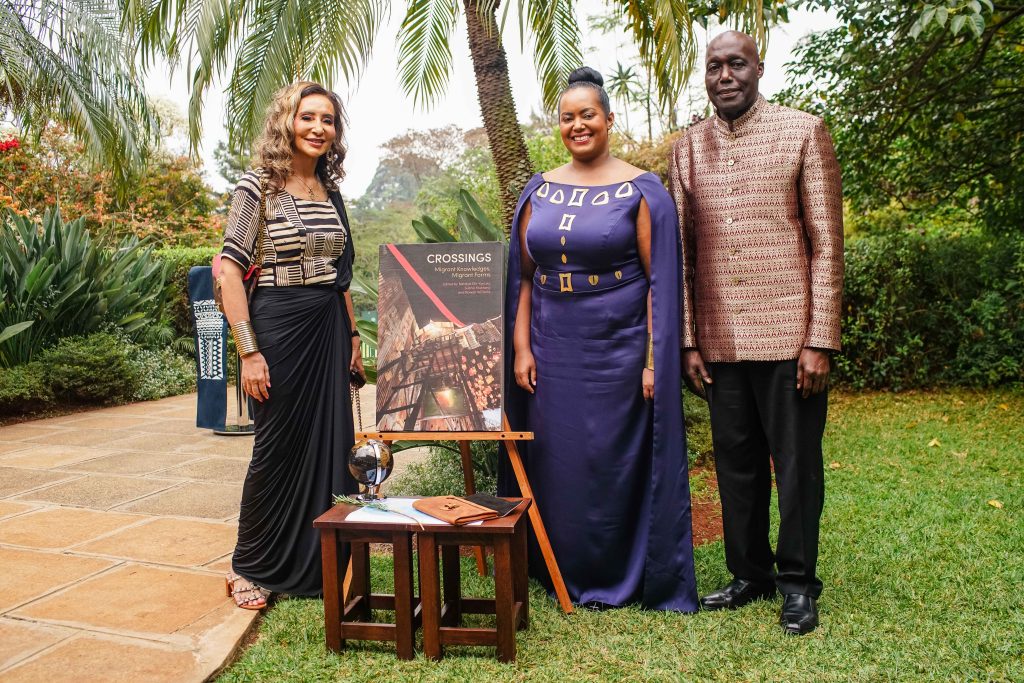
In a stirring evening gathering at the British High Commissioner’s residence in Nairobi, a new global conversation on migration was launched with the unveiling of Crossings: Migrant Knowledges, Migrant Forms a forthcoming volume from punctum books that delves into the shifting relationships between migration, knowledge, and artistic expression.
The launch event, hosted by British High Commissioner Neil Wigan, brought together diplomats, artists, humanitarians, scholars, and migrant voices to engage in urgent dialogue on movement, belonging, and solidarity across borders.
A Book for Our Time
Crossings is co-edited by Natalya Din-Kariuki (University of Warwick), Subha Mukherji (University of Cambridge), and Rowan Williams (former Archbishop of Canterbury).
The volume asks powerful questions: What does the experience of migration do to knowledge? How do migrant experiences reshape forms of expression? And how can we more ethically and imaginatively respond to the dislocations of our time?
The book moves across historical and cultural contexts from the early modern world to contemporary displacement and features contributions from activists, artists, scholars, and migrants with diverse personal and disciplinary backgrounds.
It pushes the boundaries between scholarship and creative practice, and between lived experience and academic inquiry.
A Night of Reflections and Resonance
A highlight of the event was a conversation between co-editor Natalya Din-Kariuki and Irungu Houghton, Executive Director of Amnesty International Kenya.
Their dialogue explored the role of history in shaping migrant experiences, how art becomes a vessel for memory and protest, and the need to think expansively about migration — beyond fixed categories like “refugee” or “expatriate.”
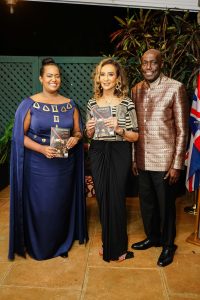
Nairobi Hosts Launch Of ‘The Book Crossings’ To Foster Global Migration Discourse
In her remarks, Din-Kariuki reflected on the significance of launching the book in Nairobi:
“Knowledge is a ‘migrant form’: it often begins in one place and ends up in another, crossing geographical, historical, cultural, and textual borders along the way. It is a pleasure to be reflecting on these questions in my home city of Nairobi, a place which has itself been fundamentally shaped by migrants and all kinds of crossings.”
The evening also featured responses from Kenyan writer Joyce Nyairo, a recorded message from Rowan Williams, and a written reflection by Subha Mukherji.
Williams, addressing the theme of the book, said:
“Displacement, encountering strangers, learning new languages, adjusting to new neighbours, is not an exception in the history of human culture but the norm.”
Mukherji, writing from Cambridge, added:
“When we encounter the strange, we become strangers: it can make us confront our own vulnerabilities, and open up new possibilities of solidarity.”
Migration as Shared Human History
High Commissioner Neil Wigan praised the book and its contributors, remarking:
“Every human being is a migrant from East Africa originally. For both the UK and Kenya, migration is at the heart of our history.”
He emphasized the importance of shared reflection on migrancy and displacement in fostering global empathy and cooperation.
About the Book
Crossings explores how migrant knowledge is formed, shared, and expressed. It positions creative and intellectual practices not as detached observations but as vital responses to global displacement.
The volume challenges traditional academic and artistic boundaries, arguing that humanities-based inquiry is essential in responding to the imaginative and ethical challenges posed by mass migration.
The book is forthcoming from punctum books. More information is available at: https://punctumbooks.com/titles/crossings-migrant-knowledges-migrant-forms
Editor Biographies
- Natalya Din-Kariuki is Associate Professor at the University of Warwick. Her work focuses on early modern literature, transnational encounters, and travel writing.
- Subha Mukherji is Professor at the University of Cambridge, with research spanning Renaissance literature, law, faith, migration, and art.
- Rowan Williams served as Archbishop of Canterbury (2002–2012) and Master of Magdalene College, Cambridge. He is an influential thinker on religion, literature, and ethics.
This Nairobi launch marks the beginning of what the editors hope will be a global dialogue on the ethics and aesthetics of migration — one shaped by listening, imagination, and shared human experience.
TRAFFIC ALERT: Road Closures And Diversions Announced Ahead Of CHAN Tournament In Nairobi

If you like our work, you can buy us a soda
Buy us a soda 🥤