
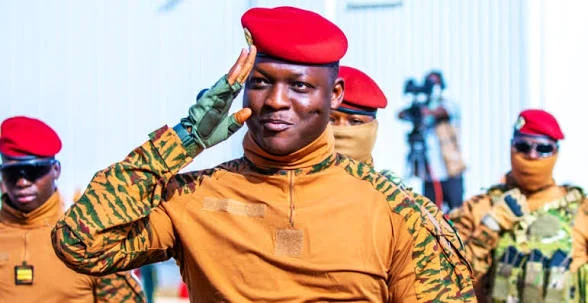
Burkina Faso has taken a major turn in its criminal justice system after the government led by military ruler Captain Ibrahim Traoré reinstated the death penalty for several serious offences, reversing a decision that abolished capital punishment in 2018.
The country’s legislative assembly unanimously approved the revised penal code on Tuesday, October 20, 2026, with all 71 members voting in favour of the legislation, according to reports by international news agencies.
The decision marks a significant shift in the West African nation’s approach to criminal punishment and has reignited debate over whether the death penalty can help tackle insecurity or risks undermining fundamental human rights.
Under the revised law, capital punishment will apply to offences including terrorism, espionage, high treason, the killing of a parent and importing expired or prohibited products that result in death.
The legislation was presented by Justice Minister Edasso Rodrigue Bayala, who represented the government during the parliamentary proceedings.
Authorities have defended the changes as part of efforts to strengthen public order, protect citizens and safeguard national interests amid persistent security challenges.
Why Ibrahim Traoré’s Government Is Taking a Tougher Stance
Burkina Faso has been battling a prolonged insurgency involving armed groups linked to al-Qaeda and the Islamic State.
The violence has killed thousands of people, displaced millions and placed enormous pressure on security agencies and public institutions.
The government has increasingly adopted a hardline approach as it attempts to restore control over territories affected by militant attacks.
Traoré, who came to power following a military coup in September 2022, has made national sovereignty and the fight against insecurity central themes of his administration.
Supporters of tougher criminal penalties may view the reinstatement as a demonstration that the authorities are prepared to impose the harshest punishment for crimes considered a threat to national security.
However, the effectiveness of capital punishment in deterring terrorism and other serious offences remains contested, with human rights organisations arguing that the measure does not address the underlying causes of violence.
Burkina Faso Reverses Its 2018 Decision
The latest development reverses the abolition of the death penalty for ordinary crimes introduced in 2018 under former president Roch Marc Christian Kaboré’s democratically elected administration.
According to Human Rights Watch and Amnesty International, Burkina Faso’s last known execution took place in 1988, meaning the country had gone decades without a recorded judicial execution before the latest legislative change.
The return of capital punishment therefore represents a major departure from the country’s previous direction on criminal justice.
The new penal code also comes amid broader changes to Burkina Faso’s legal and political landscape under military rule, with questions emerging over the independence of institutions, protection of civil liberties and treatment of government critics.
Human Rights Groups Raise Concerns
The decision has attracted criticism from human rights advocates, who warn that reinstating the death penalty could create additional risks in a country where political freedoms have already come under pressure.
Human Rights Watch has argued that capital punishment does not provide a reliable solution to insecurity and could deepen an atmosphere of fear.
The organisation has also raised concerns about restrictions on journalists, activists and civil society groups under the military administration.
Critics fear that, without strong safeguards for fair trials and due process, the harshest criminal penalties could increase the risk of irreversible miscarriages of justice.
Amnesty International has also opposed the return of capital punishment, maintaining its broader position that the death penalty should be abolished rather than expanded.
The government, however, has presented the revised penal code as a measure intended to strengthen public order and improve security.
A Bigger Test for Traoré’s Leadership
The reinstatement comes at a difficult time for Burkina Faso, a landlocked country of approximately 23 million people that continues to confront insecurity, displacement and humanitarian challenges.
Traoré’s government faces pressure to demonstrate that its security strategy can protect civilians and restore stability in areas affected by armed groups.
The new legislation is likely to intensify scrutiny of how the country’s justice system operates, particularly in cases involving terrorism, treason and other offences carrying the death penalty.
It also raises questions about how the government will balance national security objectives with international human rights standards.
For now, the unanimous vote signals strong support for the measure within the country’s current legislature.
However, whether the reinstatement will improve security or deepen concerns about civil liberties remains a subject of debate.
The decision places Burkina Faso among the countries that retain capital punishment in law, despite a broader international movement towards abolition.
As the country continues to battle armed insurgencies, the impact of the revised penal code will depend not only on the penalties it introduces but also on how fairly, transparently and consistently the law is enforced.
FOLLOW NAIROBI NEWS ON FACEBOOK

If you like our work, you can buy us a soda
Buy us a soda 🥤