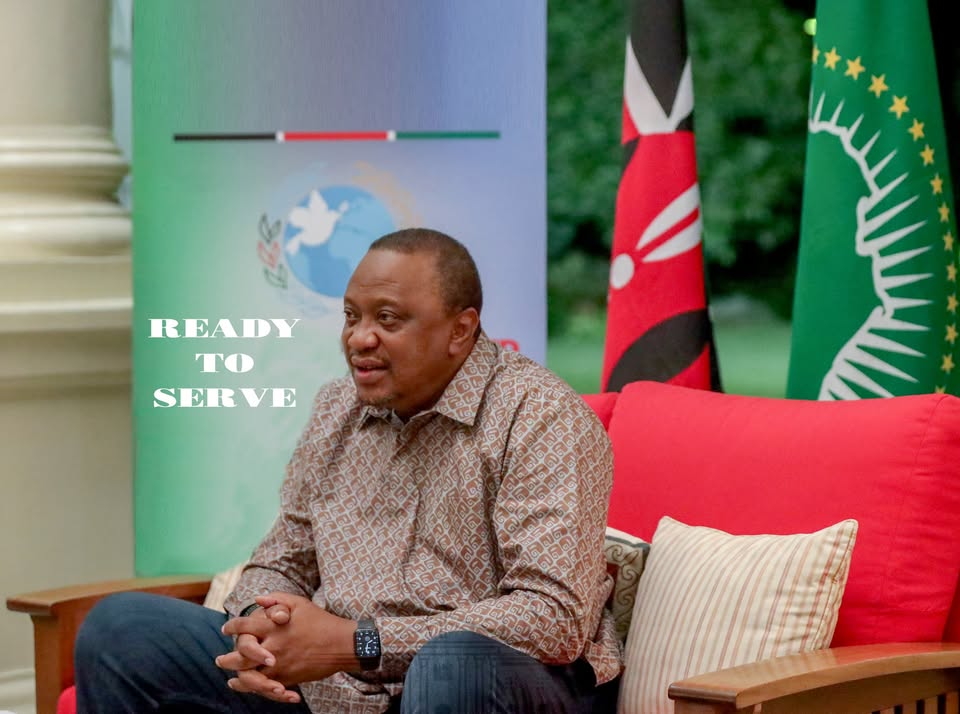
In Swahili, the name ‘Uhuru’ means freedom, a name infused with promise, born in a time of liberation, to a family destined to shape a nation.
This is the story of Uhuru Muigai Kenyatta, the son of Kenya’s founding father, Jomo Kenyatta, a man whose life would mirror the promise, the contradictions, and the struggles of a nation seeking its own identity in the post-colonial world.
The Bloodline of Power
Born on October 26th, 1961, in Nairobi, Uhuru Kenyatta entered the world as part of a powerful legacy. His father, Jomo Kenyatta, would become the first President of an independent Kenya in 1963, while his mother, Mama Ngina Kenyatta, served as First Lady with a quiet but influential presence. As the heir to Kenya’s most prominent political dynasty, Uhuru was born into privilege, yet also into a life of expectations, both from his family and the nation.
Uhuru received his early education at Nairobi’s prestigious St. Mary’s School, where he completed both his O-Levels and A-Levels education in 1978. While not considered overly academic, he stood out in subjects like history and geography, areas that would later shape his worldview. In the early 1980s, he enrolled at Amherst College in Massachusetts, where he studied Political Science and Economics. At Amherst, a renowned liberal arts institution, Uhuru gained deeper insights into global politics and economics, laying the intellectual foundation for his future leadership.
Family
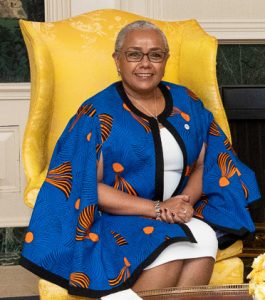
In 1989, Uhuru married Margaret Wanjiru Gakuo, a woman known for her dignity, compassion, and quiet strength. Their union symbolized a new chapter in the Kenyatta legacy. The couple has three children: Jomo Kenyatta Jr., born in April 1989, carries not only his grandfather’s name but the torch of the dynasty. Their second son, Jaba Kenyatta (also known as Muhoho) prefers a life away from public scrutiny. Their daughter, Ngina Kenyatta, named after her grandmother, embodies the generational connection between the family’s past and future. Together, the Kenyattas maintain a balance between tradition and modern identity, navigating the challenges of legacy in an evolving Kenya.
From Business to Politics
Upon returning to Kenya in 1989, Uhuru immersed himself in the family’s business empire, managing interests in agriculture, real estate, and hospitality. But by the early 1990s, Kenya’s second president, Daniel arap Moi, saw political potential in him, a young man of distinguished lineage and charisma. Moi began grooming Uhuru as his political heir, a move that would shape Kenya’s political future.
Uhuru entered politics formally in 1997, contesting the Gatundu South parliamentary seat, the very seat once held by his father. He lost. Critics dismissed him as inexperienced and out of touch. But Moi remained determined. In 1999, Uhuru was appointed chairman of the Kenya Tourism Board, and by 2001, he became Minister of Tourism and Wildlife. Then, in a controversial move in 2002, Moi endorsed Uhuru as his successor in the presidential race, a decision that divided the ruling party and shocked the nation. Uhuru was defeated by Mwai Kibaki but emerged as a key opposition figure, cementing his place in national politics.
Power, Violence, and the ICC
The 2007 general election marked one of the darkest moments in Kenya’s history. Disputed results triggered a wave of ethnic and political violence that left over 1,000 people dead and displaced hundreds of thousands. Uhuru, then a close ally of President Kibaki, was implicated in the violence. In 2010, the International Criminal Court charged him with crimes against humanity, alleging his involvement in funding retaliatory attacks.
Rather than retreat, Uhuru confronted the charges head-on. Many Kenyans viewed the indictment as a political witch hunt, a rallying cry for nationalism. Alongside William Ruto, also indicted by the ICC, he formed the Jubilee Alliance. Their shared adversity fueled political momentum. In 2013, despite the looming court case, Uhuru Kenyatta was elected President of the Republic of Kenya.
The Presidency Begins – 2013 to 2017
Uhuru’s first term as president focused on modernizing Kenya through ambitious infrastructural projects. His administration prioritized road construction, expansion of digital services, and the flagship Standard Gauge Railway (SGR) linking Nairobi to Mombasa, a massive project financed through Chinese loans. These developments transformed Kenya’s landscape and connectivity.
However, his tenure was soon marred by corruption scandals. The Eurobond controversy and the National Youth Service (NYS) scandal raised serious questions about transparency and accountability. Billions went unaccounted for. Yet, Uhuru’s government earned praise for launching Huduma Centres and the eCitizen platform, which significantly improved access to government services.
The 2017 Election Crisis
In 2017, Uhuru faced off once again with Raila Odinga in a fiercely contested presidential election. The Supreme Court made a historic decision by nullifying the initial election results, citing irregularities and illegalities. It was a groundbreaking moment for judicial independence in Africa. In the repeat election, boycotted by the opposition, Uhuru emerged victorious. Though legally re-elected, his legitimacy was questioned by many, creating deep political divisions in the country.
The Handshake and Political Realignment
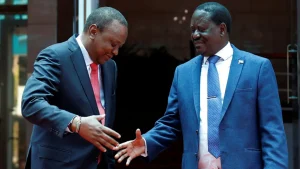
In a stunning political move on March 9th, 2018, Uhuru and Raila Odinga publicly shook hands, signaling an unexpected truce after years of rivalry. The “Handshake” became a symbol of national reconciliation and ushered in a new phase of political cooperation. However, it also sparked fractures within the ruling Jubilee Party, particularly between Uhuru and his Deputy President, William Ruto.
Uhuru turned his attention to constitutional reform through the Building Bridges Initiative (BBI), which aimed to restructure Kenya’s political architecture. The BBI, however, faced strong legal challenges and was ultimately declared unconstitutional — a significant blow to Uhuru’s second-term legacy.
Economic Growth vs. Public Debt
Under Uhuru’s leadership, Kenya witnessed substantial infrastructural development, from highways to ports and power stations. However, this growth came with a mounting debt burden. By 2022, public debt had surpassed KES 10 trillion. Critics pointed to over-borrowing and poor fiscal discipline, warning that Kenya’s economic growth was unsustainable.
Everyday Kenyans began to feel the pinch. The cost of living soared, taxes increased, and unemployment remained high. An economist in the documentary puts it bluntly: “What we saw was growth without sustainability. The debt burden will haunt Kenya for years.”
A Family Empire Under Scrutiny
Throughout his presidency, Uhuru Kenyatta faced persistent scrutiny over his family’s vast business interests. From dairy (Brookside) to banking (NCBA), media, and real estate, the Kenyatta empire spans nearly every major sector of Kenya’s economy. Critics argued that certain policies disproportionately benefited family businesses.
For example, government crackdowns on informal milk vendors were perceived as bolstering Brookside’s market dominance. Banking regulations were seen to favor NCBA. While not illegal, these overlaps created a perception of favoritism and double standards, fueling public resentment.
Final Year, Final Moves
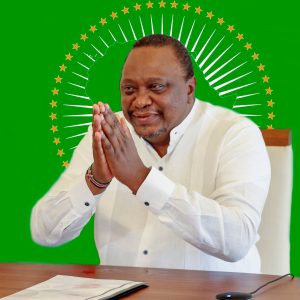
As his presidency drew to a close, Uhuru made a surprising political pivot. Instead of supporting his deputy William Ruto, he backed long-time rival Raila Odinga in the 2022 election. The move stunned observers and alienated many within his own party.
In the end, William Ruto triumphed, defeating Raila and effectively ending the Kenyatta dynasty’s grip on power. It was a remarkable political twist, the apprentice outshining the mentor in a dramatic electoral showdown.
Life After State House
After leaving office in September 2022, Uhuru Kenyatta stepped away from domestic politics, taking up the role of special peace envoy for the Horn of Africa. In this capacity, he contributed to regional peace talks in Ethiopia and the Democratic Republic of Congo.
However, his post-presidency was not entirely serene. In 2023, the Ruto administration launched investigations into the Kenyatta family’s tax affairs. Allegations surfaced that Uhuru was funding anti-government protests, claims he vehemently denied. Despite these challenges, Uhuru remained largely silent, choosing diplomacy over political confrontation.
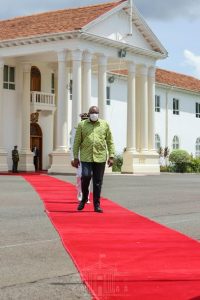
The Private Man – Family and Legacy
Beyond politics, Uhuru Kenyatta has remained a family man. His wife, Margaret Kenyatta, served as First Lady with grace and discretion, leading the “Beyond Zero Campaign,” which aimed to reduce maternal and child mortality. Her quiet activism earned widespread respect.
Their children have largely stayed away from politics. Jomo and Jaba have focused on business, while Ngina Kenyatta has been involved in philanthropic and hospitality ventures. Despite being born into one of Africa’s most powerful families, they have chosen a more private path.
Uhuru Kenyatta’s life is a tapestry of legacy, power, controversy, and evolution. Born into a family that symbolized Kenya’s independence, he inherited both the privilege and pressure of leadership. His journey, from reluctant politician to president, from ICC suspect to peacemaker, mirrors Kenya’s own complex path through the post-colonial era.
In the end, Uhuru Kenyatta remains a symbol — not just of freedom, as his name implies, but of the enduring tensions between tradition and change, power and responsibility, promise and reality.
The Symbol of Freedom — not just a name, but a legacy still unfolding.
Wes Watson net worth and the power of social media transformation

If you like our work, you can buy us a soda
Buy us a soda 🥤