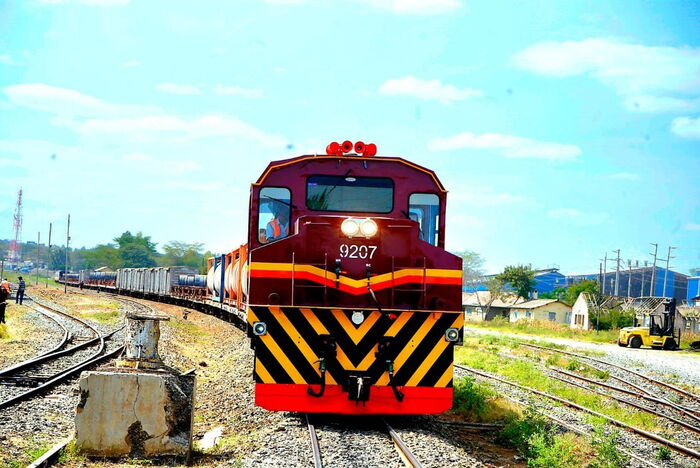
The Kenyan government is in advanced discussions with Etihad Rail, the United Arab Emirates’ national railway operator, to take over freight operations on the Standard Gauge Railway (SGR) under a concession deal.
Transport Cabinet Secretary Davis Chirchir confirmed that the talks are part of a broader strategy to attract private investment for the next phase of SGR expansion, which aims to extend the railway from Naivasha to Kisumu and eventually to Malaba on the Ugandan border.
Under the proposed arrangement, Etihad Rail would provide locomotives and wagons and manage freight services once the extension is complete.
Ownership of the infrastructure would remain with the Kenya Railways Corporation, which would continue to oversee maintenance and engineering.
Chirchir noted that Etihad Rail is targeting to move around 17 million metric tonnes of cargo annually the break-even point necessary to justify its investment and make the venture commercially viable.
To raise the estimated sh516.92 billion (approx. $4 billion) required for the expansion, the government plans to securitise the Railway Development Levy.
This 2% tax on all imports currently generates about sh50 billion ($387 million) annually.
Through securitisation, future revenues from the levy would be converted into an upfront lump sum from investors, enabling Kenya to finance the project without increasing public debt.
“We’re seeking to allow securitisation of this levy and use it to raise funds,” Chirchir said during a public address in Nairobi.
The extension from Naivasha to Kisumu and Malaba is seen as a strategic move to position the SGR as a key transport corridor for regional trade.
The existing SGR line, completed in 2019 at a cost of sh646.15 billion ($5 billion), connects the port of Mombasa to Naivasha via Nairobi.
The government is also pushing for a new operating model that separates infrastructure ownership from operations.
Under this structure, private players like Etihad Rail would manage services, while the state focuses on infrastructure upkeep a model expected to increase efficiency and attract further investment.
If successful, the deal would mark the first time a foreign operator manages SGR freight services in Kenya, representing a shift from the original China-backed model, which relied heavily on Chinese financing and operational control.
In addition to Etihad Rail, the Ministry of Transport has reached out to various international development partners to fund upcoming infrastructure projects.
Chirchir emphasized that diversifying funding sources is essential for sustaining railway development and operations in the long term.
While the concession talks are ongoing, key details such as revenue-sharing arrangements, contract duration, and risk allocation have yet to be disclosed.
EACC Targets Nine Governors In Intensified Anti-Corruption Drive

If you like our work, you can buy us a soda
Buy us a soda 🥤