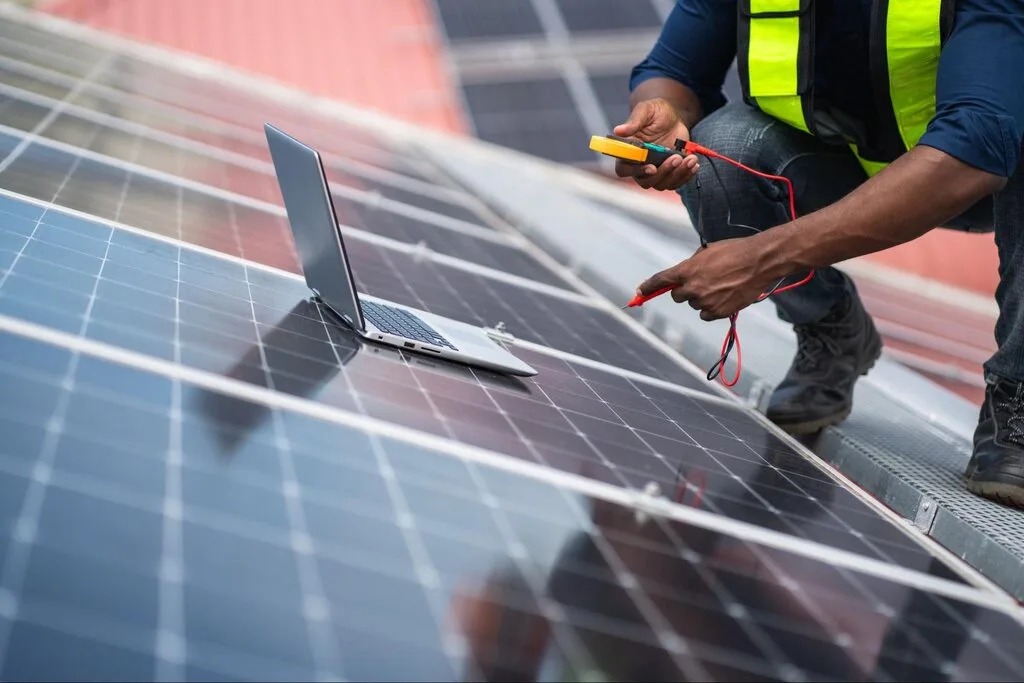
Kenya Power called for a cautious approach in expanding variable renewable energy (VRE) sources such as wind and solar, warning that their intermittent nature could expose the national electricity grid to instability and increase the cost of power for consumers.
The company said wind and solar currently account for about 34 per cent of the energy mix during peak daytime demand of approximately 1,900 megawatts (MW), rising to 36 per cent when demand falls to about 1,200MW.
According to Kenya Power, sudden fluctuations in wind and solar generation can affect the frequency and voltage of electricity supplied through the national grid, forcing the utility to dispatch additional generation sources to maintain system stability.
Kenya Power Managing Director and Chief Executive Officer Dr Eng Joseph Siror said the country needed to carefully consider the costs associated with integrating additional intermittent renewable energy into the grid.
“Global benchmarks point to a limit of 15 per cent of the grid’s total firm capacity limit for VRE. Our current system under the take-or-pay model of power purchase has led to an increase in VREs to over 20 per cent against a recommended average of 15 per cent,” Siror said.
He said the intermittent nature of wind and solar meant Kenya Power was sometimes forced to dispatch and pay for additional generators even when renewable sources were producing electricity.
“Given the intermittent nature of wind and solar, we have no option but to dispatch and pay for generators, increasing the overall cost of power,” he said.
Kenya Power said it currently deploys additional generation plants at extra cost whenever wind and solar production suddenly drops or rises, in order to prevent instability or possible collapse of the grid.
The company said battery storage could help address some of the challenges associated with variable renewable energy, although storage systems would also require reliable sources of electricity to charge them when renewable generation falls.
Siror argued that the cost of variable renewable energy should therefore be assessed alongside the additional generation required to stabilise the grid.
“The true cost of VREs is its own cost and the additional power that we pay for to stabilise the grid,” he said.
He recommended increased investment in geothermal and hydroelectric generation, which he said offer greater stability and can help the electricity system recover when intermittent renewable sources are unavailable.
Kenya Leads Region in Variable Renewable Energy
Kenya currently has the highest dependence on variable renewable energy among countries in the Eastern Africa Power Pool, according to Kenya Power.
VRE accounts for about 10.4 per cent in Egypt, 5.3 per cent in Ethiopia, four per cent in Uganda and 1.2 per cent in Tanzania, compared with Kenya’s significantly higher proportion.
Kenya Power said the country’s baseload generation currently comprises geothermal, hydroelectric power, electricity imports and thermal generation, which together account for about 80 per cent of the grid’s energy mix.
The utility is advocating for increased baseload generation to provide a more stable supply and cushion the grid against fluctuations from intermittent renewable sources.
Among the projects expected to add baseload capacity are KenGen’s Olkaria I expansion with 61MW, Olkaria VII with 80MW, Globeleq Menengai with 35MW, OrPower 22 Menengai with 35MW, 200MW of electricity imports from Ethiopia, the 100MW Paka Silali project by the Geothermal Development Company and the 28MW Nabuyole project.
Kenya Power also said plans to raise the level of the Masinga Dam by 1.5 metres are expected to increase annual electricity generation by about 83 gigawatt-hours (GWh).
Other baseload projects in the pipeline include a proposed 300MW LNG power plant, the 700MW High Grand Falls project and the 90MW Karura Falls project.
The utility said balancing variable renewable energy with stable baseload sources would be critical in maintaining grid reliability while controlling the overall cost of electricity paid by consumers.

If you like our work, you can buy us a soda
Buy us a soda 🥤