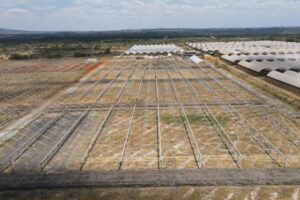

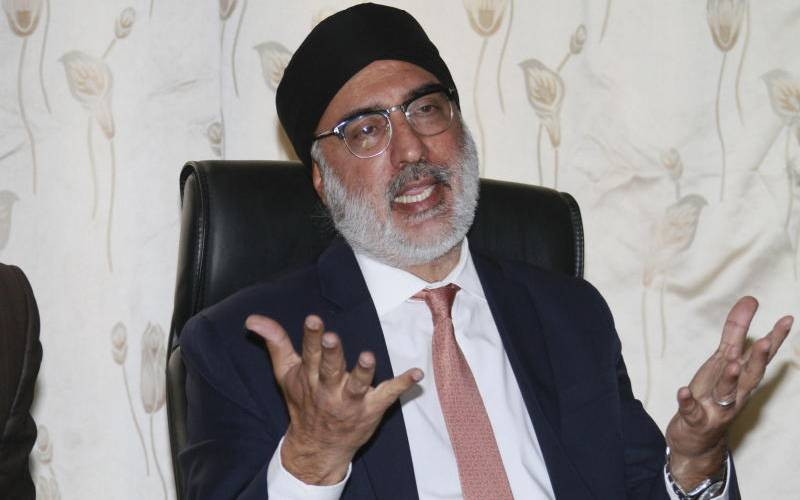
Police have reportedly raided warehouses linked to businessman Jaswant Singh Rai in Nairobi’s Industrial Area, Webuye and Nakuru as authorities intensify investigations into suspected illegal sugar imports and distribution.
The searches have turned the spotlight on Rai’s extensive business interests in Kenya’s sugar industry, with the businessman and his family controlling several major milling companies and consumer brands.
According to reports surrounding the operation, police teams targeted premises believed to be connected to businesses associated with Rai as they searched for sugar suspected to have entered or been distributed in the country illegally.
The raids come at a time when the government has increased scrutiny of Kenya’s sugar supply chain, particularly the movement of imported sugar and the possibility of products entering the market without meeting the required regulatory, tax or quality-control requirements.
Rai family’s dominance in sugar industry
Jaswant Rai is one of the most prominent figures in Kenya’s sugar sector and chairs the Rai Group, a conglomerate with interests spanning sugar, edible oils, timber, cement, real estate and other sectors.
His family’s sugar interests include West Kenya Sugar Company, the producer of the popular Kabras Sugar brand, as well as Sukari Industries, Olepito and Naitiri.
Recent reporting indicates that the four Rai-linked mills account for a substantial proportion of Kenya’s sugar production and sales.
NTV reported in July 2026 that the four companies accounted for more than 45 per cent of total sugar sales, following the expansion of the group’s milling operations.
The addition of Naitiri to the group’s portfolio further strengthened its position in the market.
Earlier Sugar Directorate data showed that West Kenya, Sukari Industries and Olepito alone accounted for about 45 per cent of sugar sales in 2020.
West Kenya is particularly significant because it produces Kabras Sugar, one of the best-known locally produced sugar brands.
The company has previously recorded strong production growth, with regulator data showing that its market share had risen substantially as it overtook other millers.
Focus turns to suspected smuggled sugar
The latest warehouse searches place the spotlight not only on the scale of Rai’s business empire but also on the wider challenge of illegal sugar entering Kenya’s market.
Authorities have for years struggled with concerns surrounding the importation, taxation, standards and distribution of sugar.
The issue is particularly sensitive because imported sugar competes directly with locally produced sugar, affecting millers and thousands of farmers who depend on the crop.
The government has also been implementing significant reforms in the sector.
Kenya ended its long-running COMESA sugar safeguard regime in November 2025, opening the domestic market to greater competition from sugar produced within the regional trading bloc.
At the same time, general requirements relating to standards, taxation and import controls remain applicable.
This has made the monitoring of sugar imports increasingly important as authorities seek to balance consumer needs, regional trade and protection of local producers.
Why the raids are significant
The reported searches are significant because of the size of the Rai family’s footprint in the sugar industry.
Unlike smaller traders who may have limited influence over the supply chain, Rai-linked companies operate at several stages of the sugar business, particularly milling and distribution.
The family has steadily expanded its presence as several state-owned sugar companies struggled with financial difficulties and outdated machinery.
In 2025, the government leased several struggling state-owned mills to private operators as part of efforts to revive the sector.
West Kenya Sugar was selected to operate Nzoia Sugar Company under a 30-year concession.
The arrangement has attracted scrutiny because it gives an already significant private player an even larger presence in Western Kenya.
An Auditor-General’s report cited in May 2026 raised questions about the documentation and valuation surrounding the transfer of Nzoia Sugar’s assets to West Kenya Sugar.
The report said auditors had not been provided with certain documents, including a formal handover document and evidence of independent asset valuation.
Those concerns are separate from the current police operation and do not establish wrongdoing by Rai or his companies, but they illustrate why the group’s growing influence in the sugar industry has attracted considerable public attention.
A long-running battle over Kenya’s sugar market
Kenya’s sugar sector has historically been characterised by a struggle between struggling state-owned factories and more efficient private millers.
Companies such as West Kenya Sugar and Sukari Industries expanded their production while several public factories faced financial problems, delayed payments to farmers and operational challenges.
The shift dramatically changed the balance of power within the industry.
A 2023 analysis by Citizen Digital noted that private millers gradually captured a large share of the domestic market as several state-owned factories declined.
The report also highlighted the longstanding controversy surrounding sugar imports and the political and economic interests surrounding the sector.
For farmers in Western Kenya, the stakes are particularly high.
Sugarcane provides livelihoods for thousands of households, while the mills provide employment and markets for agricultural produce.
Any major investigation involving sugar therefore has implications extending beyond the companies directly involved.

Rai Group rejects some recent claims
The scrutiny comes against the backdrop of other recent attention surrounding the Rai Group.
In July 2026, the company dismissed claims circulating on social media that it was shutting down its Kenyan operations and moving out of the country.
The group described the claims as misinformation and said it remained committed to its Kenyan operations and stakeholders, including farmers and employees.
Rai has also remained a prominent figure in Kenya’s business community despite periods of intense public scrutiny.
Recent reporting has described his interests as extending beyond sugar to cement, edible oils, timber, horticulture and real estate.
What happens next?
The immediate focus will be on what investigators recover from the warehouses and whether authorities establish that any sugar found there was unlawfully imported, improperly documented or otherwise in breach of Kenyan regulations.
A police raid or search, on its own, does not prove that the owner of a property or a company has committed an offence.
Any allegations will ultimately have to be supported by evidence and, where applicable, tested through the legal process.
The investigation nevertheless places renewed attention on one of Kenya’s most powerful sugar businesses at a time when the government is attempting to reform the industry, revive struggling mills and protect local cane farmers.
For consumers, farmers and competing millers, the outcome could be closely watched because the case touches on a much broader question: who controls Kenya’s lucrative sugar supply chain, and how effectively are authorities policing the movement of sugar into the domestic market?
FOLLOW NAIROBI NEWS ON FACEBOOK
If you like our work, you can buy us a soda
Buy us a soda 🥤