A dramatic legal battle has erupted involving former Machakos Senator Johnson Muthama after a Kenyan court was told that Christiana Wahu, 36, is not his biological daughter, sending shockwaves across legal and political circles.
Fresh revelations presented before the court indicate that official records from the Civil Registration Bureau contradict long-held claims about Wahu’s paternity.
According to government documentation, Wahu’s biological father is listed as James Ndichu Githinji, not Muthama.
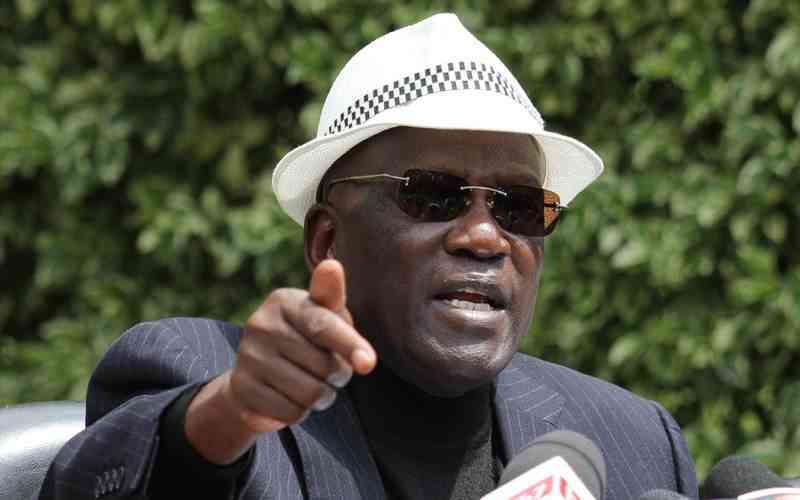
The matter took a decisive turn when a representative from the Ministry of Interior, Milkah Nyende, testified that the birth certificate linking Wahu to Muthama was fraudulent.
“James Ndichu Githinji is recorded as the father in our official systems… The purported birth entry is fake,” Nyende told the court, casting serious doubt on the authenticity of the documents previously used to support Wahu’s claims.
Court filings reveal that the disputed birth certificate was allegedly issued in Thika in 1998, nearly a decade after Wahu’s birth on Christmas Day in 1989 in Mombasa.
Authorities now believe that the document may have been forged, raising deeper concerns about manipulation of civil records.
At the center of the controversy is Wahu’s mother, Nina Maria Wanjiku Straulino, who is accused of altering key details in the birth records.
The court heard that the changes may have falsely attributed paternity to Muthama, a move that has now triggered a full-scale legal challenge.
Muthama, a prominent figure in Kenyan politics, has moved to formally remove his name from Wahu’s official documents. In his defense, he maintains that his past involvement in Wahu’s life was purely out of goodwill, including offering financial support such as school fees.
However, he insists that such gestures should not be misconstrued as proof of biological parenthood.
“This was an act of kindness, not an admission of paternity,” his legal team argued, emphasizing that generosity should not be weaponized in legal disputes over identity.
The unfolding case has sparked widespread debate about the integrity of civil registration systems in Kenya, as well as the emotional and legal complexities surrounding disputed parentage.
Legal experts note that if the court upholds the findings, it could set a significant precedent for how similar disputes are handled, particularly those involving forged documents and long-standing assumptions of identity.

For Wahu, the case represents more than just a legal battle, it is a deeply personal crisis that could redefine her identity and family history.
For Muthama, it is a fight to clear his name and correct what he describes as a long-standing misrepresentation.
As the court proceedings continue, the case is expected to draw even greater public attention, with many Kenyans closely watching how the justice system navigates the sensitive intersection of family, law, and truth.
FOLLOW NAIROBI NEWS ON FACEBOOK