Cadel Evans’ net worth originates from his cycling career. He is an Australian former professional racing cyclist who is the most accomplished cyclists in Australia’s history. Most importantly, he became the first Australian to win the Tour de France, in 2011. He is also a four-time Olympian and winner of prestigious races including La Flèche Wallonne, Tour de Romandie, and Tirreno-Adriatico.
Cadel Evans net worth
The estimated Cadel Evans net worth is $8 million, according to Celebrity Net Worth. He has achieved financial success through winning cycling championships, and contracts and sponsorships with cycling teams including Saeco, Mapei-Quick-Step, Team Telekom, Davitamon-Lotto, and BMC Racing Team.
His post-retirement income has also been supported by ambassadorial roles, sponsorships, cycling-related appearances, and his continuing association with the Cadel Evans Great Ocean Road Race.
Cycling career highlights
Cadel Evans began his international career in 1995 as a scholarship holder in the Australian Institute of Sport’s mountain bike program. Physiological testing revealed that he had exceptionally large lung capacity and an unusually high ability to absorb oxygen, contributing to his nickname, “The Lung”.
His early career was highly successful, with bronze medals at the 1995 Junior World Mountain Bike and Road Time Trial Championships, silver medals at the 1997 and 1999 Under-23 World Championships, and overall victories in the UCI Mountain Bike World Cup cross-country competition in 1998 and 1999.
He also represented Australia at the 1996 and 2000 Olympics in mountain biking.
He switched his focus from mountain biking to professional road cycling in 2001, joining Saeco before riding for Mapei-Quick-Step and T-Mobile.
His early road successes included overall victories in the Tour of Austria in 2001 and 2004, the 2002 Commonwealth Games time trial title, and a stage victory at the 2002 Tour Down Under.
After joining Davitamon-Lotto in 2005, he finished eighth in the Tour de France, becoming the first Australian since Phil Anderson to place in the race’s top 10.
In 2006, he won the Tour de Romandie and finished fifth in the Tour de France, later moving to fourth following Floyd Landis’ disqualification.
Cadel Evans became a leading contender in the Tour de France during the late 2000s. He finished second in the 2007 Tour de France, won the individual time trial on stage 13, and claimed the overall UCI ProTour classification that year.
In 2008, he again finished second in the Tour de France after wearing the yellow jersey for several stages.
He also represented Australia at the 2008 Beijing Olympics, finishing fifth in the time trial.
In 2009, he won the UCI Road World Championship road race in Mendrisio, Switzerland, becoming the first Australian male to win the prestigious world road race title.
He also finished third overall in the Vuelta a España and became one of the few cyclists to have worn the leaders’ jerseys in all three Grand Tours: the Giro d’Italia, Tour de France and Vuelta a España.
The defining achievement of his career came in 2011, when he won the Tour de France, becoming the first Australian to win the race.
His victory came after years of podium finishes and near misses, with him taking control of the general classification during the final individual time trial. The victory also made him the oldest winner of the Tour’s overall classification in the post-war era at the time.
Earlier that season, he had won both Tirreno-Adriatico and the Tour de Romandie.
He later added another major result by winning the overall classification at the 2012 Critérium International, although illness, fatigue and declining form affected his performances in subsequent seasons.
In 2013, Cadel Evans finished third overall in the Giro d’Italia, maintaining his position near the front of the race for much of the event despite difficult weather conditions.
He struggled in the Tour de France that year, finishing 39th, and announced his retirement in 2014, with his final professional season ending in 2015.
Post-retirement
After retiring from competitive cycling, Cadel Evans remained involved in the sport. He became a Global Ambassador for BMC Racing Team and has remained closely associated with the Cadel Evans Great Ocean Road Race, an event established in his honour.
He also competed in the Masters category of the Cape Epic mountain bike race in 2017, winning his category with former teammate George Hincapie.
Cadel Evans also became a prominent ambassador for cycling and youth initiatives, supporting organizations including Orygen Youth Health.
In addition, he has demonstrated a commitment to philanthropy. After receiving The Sydney Morning Herald’s 2007 Sports Performer of the Year award, he pledged his A$50,000 prize to charitable causes including the Amy Gillett Foundation and Ian Thorpe’s Fountain for Youth.
Recognitions
- Sport Australia Hall of Fame inductee (2020)
- Outstanding Contribution to Sport Award – VicSport (2017)
- Member (AM) in the General Division of the Order of Australia (2013)
- Four-time winner of the Sir Hubert Opperman Trophy (2006, 2007, 2009, 2011)
- The Sydney Morning Herald 2007 Sports Performer of the Year
- Australian Sports Awards Male Athlete of the Year (2007)
- Fairfax Sports Performer of the Year (2007)
- People’s Choice Cyclists of the Year – Cycling Australia (2007, 2009)
- Australian Male Road Cyclist of the Year – Cycling Australia (2006, 2007, 2008, 2009, 2010 and 2011)
- Australian Cyclist of the Year – Cycling Australia (2006, 2007, 2009 and 2011)
- Australian Sports Medal (2000)
- Victorian Governor’s Award (2000)
- Victorian Sports Awards Male Athlete of the Year (2000, 2007, 2008 and 2010)
- Australian Male Mountain Bike Cyclist of the Year – Cycling Australia (1997, 1998, 1999)
Summary of Cadel Evans net worth
In summary, Cadel Evans’ net worth can be attributed mainly to decades of earnings from elite professional cycling, race victories and bonuses, sponsorship and endorsement opportunities, and his continued commercial and ambassadorial involvement in cycling after retirement.
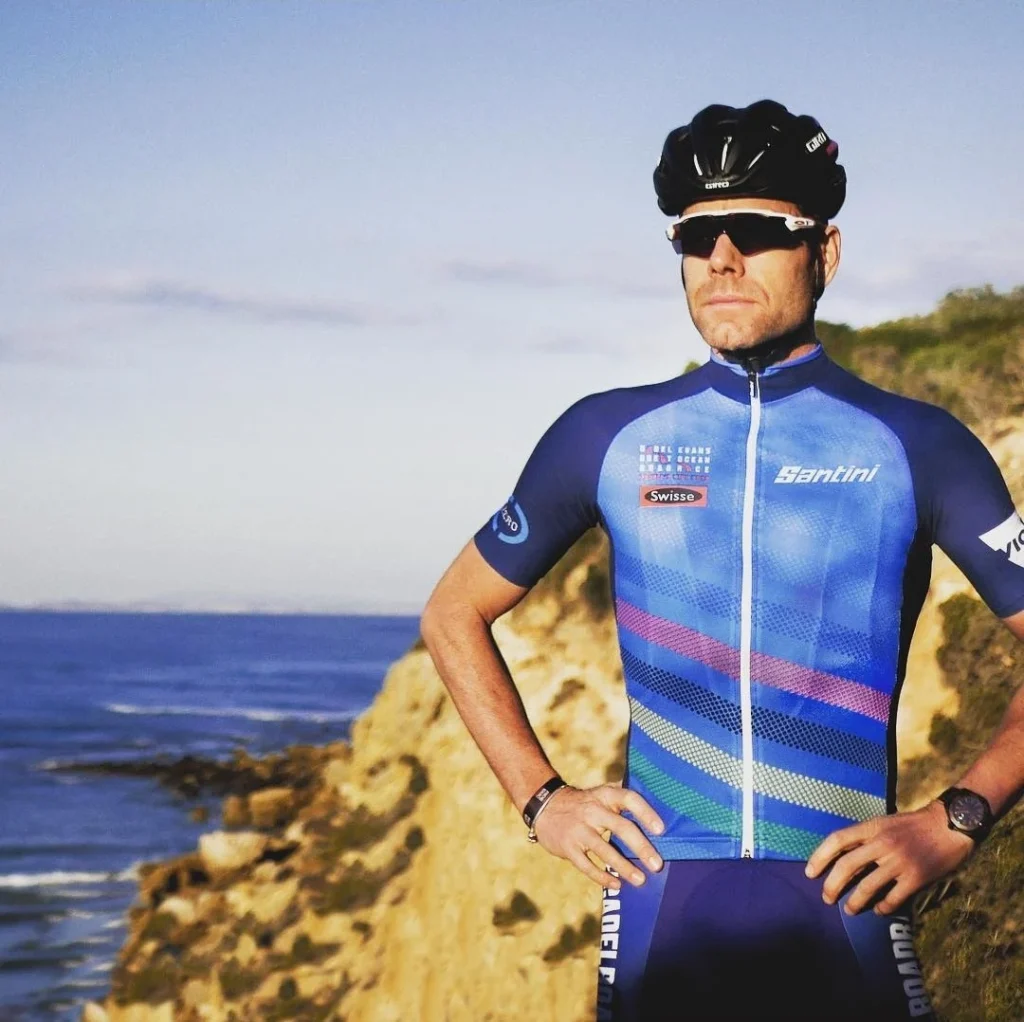
Featured image: Cadel Evans on Instagram

If you like our work, you can buy us a soda
Buy us a soda 🥤