The Teso community has officially launched a political pressure group dubbed Operation Unite (OU) with a bold mission: to front a single formidable candidate to challenge H.E. Dr. Paul Otuoma in the 2027 Busia gubernatorial race.
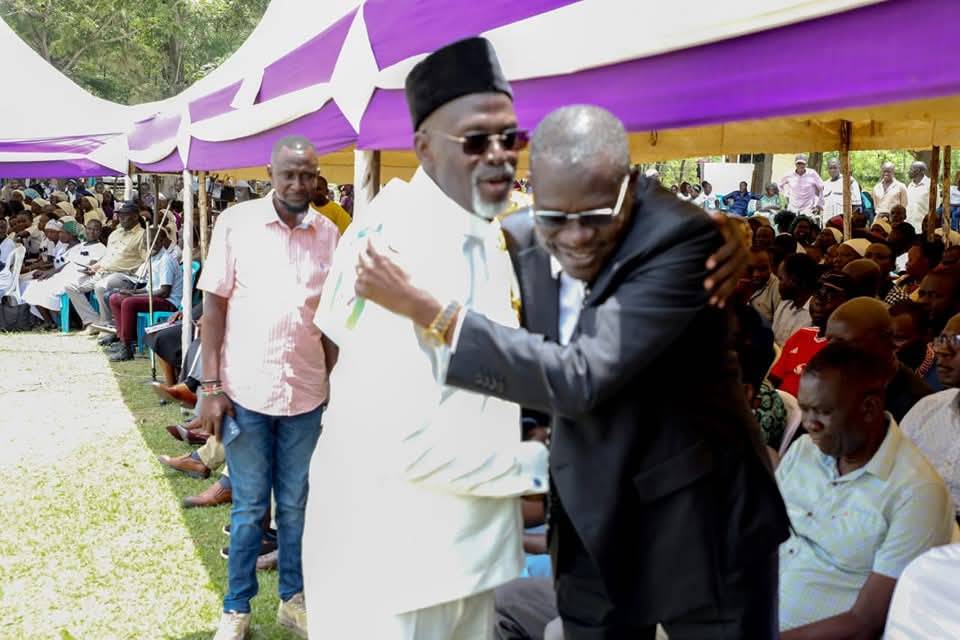
The call for unity was made loud and clear during the burial of Mama Jane Amase Odikor (Mukade) in Kooli village, Amagoro, where former Angurai East MCA Joab Oteba declared the initiative as the only viable route to secure county leadership for the Teso people.
“We have two strong sons, Eng. Vincent Esyepet Sidai and Arthur Amug Osiya. Unless they unite, it will be a waste of time,” Oteba warned, echoing the sentiments of a community weary of internal divisions and political exclusion. From Changara to Osieko, the message is clear: the Teso must speak with one voice.
Oteba lamented the discrimination of Teso professionals and staff within the current county government, stating, “There’s no praise and worship for our people anymore. We must unite to claim our space.” He also stressed the need for cultural leadership, including the respected Emormor, to be part of the political consensus process.
In a significant move, Oteba called upon the UDA party to help broker an agreement between Sidai and Osiya, noting that unity is not only a community aspiration but also a political necessity.
Witnesses to the launch included Osiya’s aide Ken Babu, local artist Kiteh Ekirapa, Malaba Ward leaders Frankline Omukaga and Frank Wangula, and former MCA Ishmael Orodi—a strong indication that Operation Unite is gaining ground across the Teso political landscape.
🔍 The Political Math Behind Operation Unite
Busia County has 7 constituencies, but only 2 are in Teso region:
- Teso South (~44,369 votes)
- Teso North (~33,349 votes)
That’s a combined total of approximately 77,718 votes, accounting for about 35% of the county’s vote share.
Luos, meanwhile, constitute about 10% of Busia’s electorate, mostly concentrated in Funyula and parts of Budalang’i.
The remaining Luhya-dominated constituencies—Matayos, Nambale, Butula, Funyula, and Budalang’i—make up the remaining 65% of the vote, but they are often fragmented by intra-Luhya rivalries.
Historically, Busia’s gubernatorial races have been close:
- In 2017, Sospeter Ojaamong beat Otuoma by a mere 10,000 votes.
- In 2022, Otuoma beat Sakwa Bunyasi by 66,000 votes, after garnering 45,000 votes from the Iteso.
- Hon. Mogiria captured another 14,000 Iteso votes, making a combined 59,000 Teso votes, which largely explains Otuoma’s margin of victory.
Lesson: As long as the Iteso vote together and avoid internal divisions, they are a decisive voting bloc. Combine that with smart alliances and you have a real path to victory.
🧠 Scenarios That Can Deliver Victory in 2027
✅ 1. Teso Unity + Coalition with 2–3 Luhya Constituencies
If Sidai and Osiya unite under Operation Unite and then form a coalition with strong allies in Funyula, Butula, or Matayos, a winning majority is possible. A shared ticket with a deputy from a Luhya region could balance the ethnic equation and appeal countywide.
➡️ Result: Very high chance of defeating Otuoma with an inclusive agenda.
⚖️ 2. Teso Unity + Luhya Vote Split
Even without formal alliances, if the Luhya zones produce multiple gubernatorial candidates, the Luhya vote could split, allowing a unified Teso candidate to win with a plurality.
➡️ Result: Strong win scenario, especially if voter turnout in Teso is high.
⚠️ 3. Teso Split + Strategic Alliance
If unity proves elusive and Sidai or Osiya run separately, the one who strategically aligns with a strong Luhya figure from Funyula or Butula may still emerge competitively, especially by fielding a shared manifesto and CEC lineup.
➡️ Result: Competitive race; possible win if the alliance energises undecided voters.
❌ 4. Teso Split + Luhya Unity Behind Otuoma
This is the worst-case scenario Operation Unite seeks to avoid. A fragmented Teso vote guarantees that Otuoma wins, especially if the Luhya constituencies remain loyal to him.
➡️ Result: Definite loss for both Sidai and Osiya.
🤝 5. Teso Governor + Funyula Deputy Governor Ticket
Choosing a running mate from Funyula, a Luhya area often overlooked in county leadership, could create a powerful Teso-Luhya handshake narrative and expand support across both regions.
➡️ Result: High win potential, with regional balance and a strong development message.
🧠 6. Youth + Anti-Incumbency Movement
If either Sidai or Osiya runs a campaign that appeals to Gen Z voters, unemployed youth, boda boda operators, and civil society, they can harness growing frustration with the current administration.
➡️ Result: Surprise upset possible, especially in low-turnout environments.
📉 7. High Teso Turnout + Low Luhya Turnout
If Teso registers a 90 %+ voter turnout, and disillusionment or fatigue reduces participation in Matayos, Butula or Nambale, the numbers could favour a Teso candidate, particularly in a crowded field.
➡️ Result: Narrow but winnable race.
📥 8. Party Realignment or Independence
If either Sidai or Osiya leaves ODM or UDA and runs as a third-force candidate—riding a wave of anti-party sentiment—they could tap into disenchanted voters across all communities.
➡️ Result: Could shift the ground if well-timed and well-funded.
💼 9. Public Power-Sharing Blueprint
Releasing a pre-election county government framework, with guaranteed CEC positions and policy agendas for all regions, can build early trust across constituencies.
➡️ Result: Builds credibility and could sway swing voters.
📌 Conclusion
Operation Unite is more than just a political slogan. It is a community-wide effort to correct historic imbalances, elevate competent leadership, and put Teso back at the centre of county governance.
But the message from the ground is clear:
“Only one of them can be on the ballot.”
“Unity is not an option—it is the only path to victory.”
If Sidai and Osiya can rise above personal ambition, embrace a shared vision, and strategically negotiate with Luhya allies, 2027 may just be the year that Teso ascends to the helm of Busia County leadership.