Professor Paul Kithure Kindiki’s journey from a drought-prone village in Tharaka Nithi to Kenya’s Deputy Presidency is one of resilience, scholarship, and political evolution. Sworn in as Kenya’s third Deputy President on November 1, 2024, following the impeachment of Rigathi Gachagua, Kindiki has emerged as a formidable presence in national politics. His story blends legal intellect, deep-rooted faith, and a lifelong pursuit of excellence—set against a backdrop of poverty, controversy, and political ambition.
Humble Beginnings
Born on July 17, 1972, in Irunduni village, Mukothima ward, Tharaka Nithi County, Paul Kithure Kindiki was raised in a deeply Christian household shaped by hardship, faith, and educational conviction. His father, Reverend Daniel Kindiki, was the sole survivor among 14 siblings—his life marked by early tragedy and the perseverance that would later define the family. His mother, Anne Kindiki, was a Methodist cleric and housewife, equally devout and instrumental in community and spiritual life. The couple’s Christian values became the foundation of the Kindiki household, which prioritized faith, discipline, and education, despite economic hardship that sometimes reduced them to one meal a day. Kithure’s upbringing in this academically gifted, faith-led family shaped his worldview and fortified his pursuit of legal and political excellence.
The Scholar Emerges
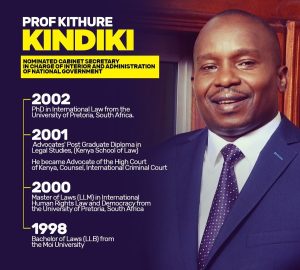
Kindiki began his education in local primary schools in Tharaka Nithi in 1978 and completed in 1986 before enrolling at St. Patrick’s High School in 1987, Meru, where he completed his O- and A-levels in 1992. With a deep interest in justice and public service, he joined Moi University in 1993, earning a Bachelor of Laws (LL.B.) degree and graduated in 1998. He later joined the University of Pretoria in South Africa, obtaining a Master’s in International Human Rights Law and Democracy, and subsequently a PhD in International Law. After returning to Kenya, he completed his Graduate Diploma in Law at the Kenya School of Law, qualifying for the Bar.
Academic Foundations
Kindiki began his legal academic journey as a lecturer at Moi University from 2000 to 2003 and later at the University of Nairobi between 2003 and 2005. He served as Head of the Department of Public Law and Associate Dean, becoming a respected voice in constitutional law and human rights. During his academic tenure, he also collaborated with international organizations such as the United Nations and the International Commission of Jurists, contributing significantly to Kenya’s democratic and constitutional discourse.
Family and Personal Life
In his personal life, Kindiki married Dr. Joyce Gatiiria Njagi Kithure in 2001. A Senior Lecturer in Environmental Chemistry at the University of Nairobi, Joyce holds a BSc, MSc, and PhD in the same field, earning her doctorate in 2013. Since 2014, she has balanced a demanding academic career with raising their family, maintaining a low profile despite Kindiki’s rising political prominence. They are parents to three daughters: Imani Kindiki, Neema Kindiki, and Mwende Kindiki. Prof. Kindiki has openly credited Joyce as “the foundation providing support I have always required,” praising her sacrifices during his demanding academic and political life.
Entering the Political Arena
Kindiki’s political visibility rose sharply in 2012 when he joined the legal team defending then Deputy Prime Minister William Ruto at the International Criminal Court. His eloquence and strategic approach in the high-stakes case not only earned him national recognition but also forged a close bond with Ruto—an alliance that would prove pivotal in shaping his future in politics.
In 2013, Kindiki was elected Senator for Tharaka Nithi County on a Jubilee Party ticket. His sharp legal mind and calm appearance quickly propelled him to the position of Senate Majority Leader. He played a key role in steering legislative debates and strengthening parliamentary democracy. Re-elected in 2017, he was appointed Deputy Speaker of the Senate, a position he held until May 2020, when he was controversially removed due to his perceived disloyalty to the ruling administration at the time.
Security and Tragedy
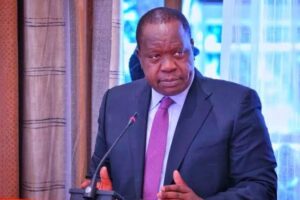
Following William Ruto’s presidential win in 2022, Kindiki was appointed Cabinet Secretary for Interior and Coordination of National Government. In this critical role, he led reforms in visa processing, border control, and national security. His most defining moment came during the 2023 Shakahola Cult Massacre in Kilifi County, where more than 400 lives were lost. His decisive actions—declaring the site a crime scene, ordering mass grave excavations, and introducing a bill to regulate religious institutions—earned him praise for firm yet compassionate leadership in crisis.
Deputy Presidency and Rising Tensions
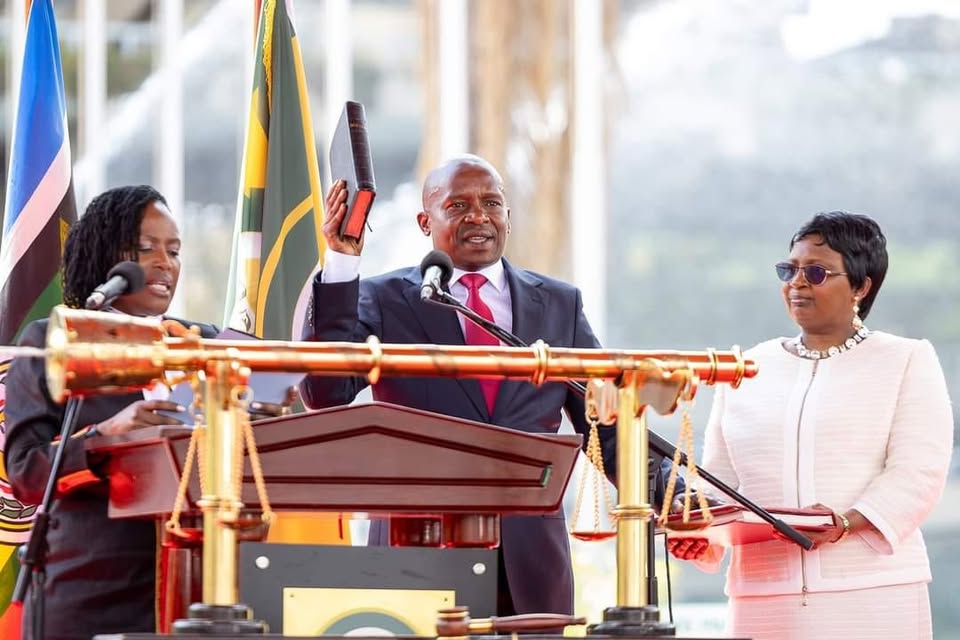
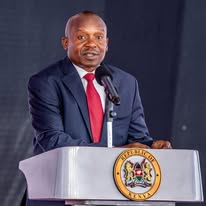
Following the impeachment of Rigathi Gachagua in 2024, President Ruto nominated Kindiki as Deputy President. The nomination faced a temporary setback when a High Court ruling blocked the appointment over procedural issues. However, the injunction was lifted, and on November 1, 2024, Kindiki was officially sworn in as Kenya’s Deputy President. His elevation to the second-highest office marked a turning point in his political career and solidified his standing as a key figure in national leadership.
Political Challenges and Criticism
Throughout his political career, Kindiki has positioned himself as a constitutional purist and staunch defender of devolution. He has played a central role in legislative efforts aimed at strengthening county governments, youth employment initiatives, and security sector reforms. His background in law has enabled him to advocate for policy changes grounded in constitutional principles and national cohesion.
However, Kindiki’s rise has not been without internal strife, particularly within the politically strategic Mount Kenya region. His growing influence led to tensions with his predecessor, Rigathi Gachagua, who accused Kindiki of transforming the Deputy President’s official residence into a political campaign base. Allegations also emerged that Kindiki was distributing cash handouts to visiting delegations—claims that sparked controversy and deepened regional divides. Additionally, his economic initiatives, such as the boda boda support program and small-scale trader funding, attracted mixed reactions. While some applauded him for empowering ordinary Kenyans, others criticized the initiatives as unsustainable populist measures amid growing budgetary constraints.
Scandals and Allegations
Controversies have also cast a shadow over Kindiki’s otherwise disciplined image. In 2021, a former employee of his law firm won a Sh 2.2 million court case for pregnancy-related discrimination. Although Kindiki denied direct involvement in the dismissal, the court found the firm culpable, raising questions about his firm’s adherence to gender equality and labor rights. Earlier, in 2018, his name surfaced in a parliamentary report that linked him to Sh 500,000 allegedly received from a law firm entangled in the NYS corruption scandal. Although he was never formally charged, the allegation remained a lingering blemish on his public record.
The Second Lady
Following his appointment as Deputy President, Kindiki’s wife, Joyce, took on the role of Kenya’s Second Lady. True to her nature, she embraced the role with quiet dignity, continuing to contribute intellectually through her academic work while maintaining a background presence in state affairs. Her low-key but scholarly appearance has been seen as a refreshing contrast in Kenya’s often high-profile political families.
Legacy in the Making
As Interior CS, Kindiki’s handling of the Shakahola Cult tragedy became one of the defining moments of his public service. The tragedy exposed the dark underbelly of religious extremism in Kenya, and Kindiki’s swift response including declaring the site a crime scene and coordinating mass grave excavations was widely applauded. He also spearheaded the push for legislation to curb the exploitation of religious freedom, advocating for the registration and monitoring of religious institutions.
Kindiki’s legacy is still being shaped. To his supporters, he is a disciplined scholar and loyal public servant committed to constitutionalism and national order. To his critics, he is a cautious political operator who has yet to prove himself beyond academia and courtroom advocacy. His rise from the son of a farm laborer to a top constitutional scholar, and now Deputy President, is undeniably inspiring. However, whether he can navigate the political and ethical tests ahead to become a serious presidential contender in 2027 remains uncertain.
From Irunduni to State House
Professor Paul Kithure Kindiki exemplifies the duality of modern Kenyan leadership: brilliance tempered by controversy, and humility shaped by hardship. Born of a reverent farm labourer and a devoted churchwoman, raised in poverty yet surrounded by scholars, he stands today as a symbol of what is possible yet not without a shadow of what must still be confronted. The next chapter in his political journey could well define not just his legacy, but the direction of Kenya’s political and moral compass.
US, Kenya And Others Seek ‘Expanded Force’ To Fight Haiti’s Gangs