
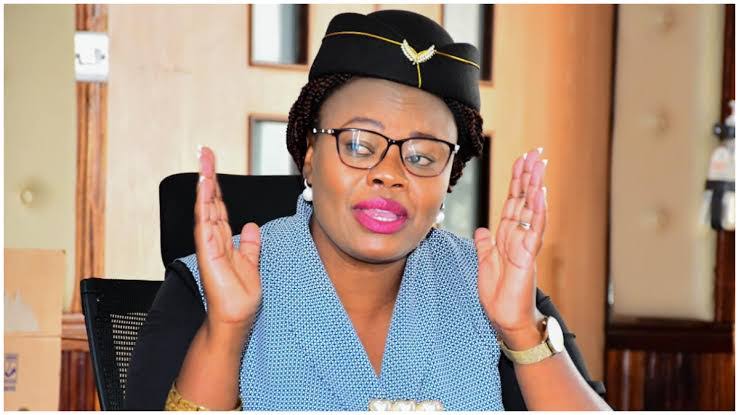
Gathoni Wamuchomba has stirred fresh debate after making bold claims about her past success in the media industry, revealing that she once earned up to Sh50 million per month during her time on radio.
Speaking during a recent public engagement on April 21, 2026, Wamuchomba confidently reflected on her career journey, declaring that she has always been a winner in every field she ventures into.
“I never lose. When I was on radio, I used to make the highest money ever made on radio in the history of this country,” she said.
“During the Yes and No Referendum, I used to make Sh50 million a month. I never had any free moment; all my airspace was bought in advance.”
Her remarks appear to reference the heated political periods in Kenya’s past referendums, particularly the highly contested constitutional campaigns where both the “Yes” and “No” sides invested heavily in media to influence public opinion.
During such periods, radio has historically played a crucial role in reaching grassroots audiences across the country.
Wamuchomba’s claims highlight just how lucrative the media industry can become during politically charged seasons.
Political players, lobby groups, and corporate sponsors often scramble to secure airtime, leading to a surge in advertising revenue for influential presenters and stations.
Before joining active politics, Wamuchomba was a well-known voice in Kenya’s vernacular radio scene, where she built a strong following.
Her ability to connect with listeners and tackle social and political issues made her a powerful media personality, attracting high-paying clients eager to tap into her audience.
Her transition from media to politics has been marked by a reputation for outspokenness and confidence, traits that were evident in her recent statement.
By emphasizing her financial success and dominance in the radio space, she seemed to underscore her belief in her capability as a leader and influencer.
However, her remarks have also sparked mixed reactions among Kenyans.
While some admire her confidence and entrepreneurial success, others have questioned the scale of the figures she cited, with critics calling for more transparency and context regarding such earnings.
The mention of the “Yes and No Referendum” also brings back memories of Kenya’s politically intense periods, such as the 2005 and 2010 constitutional referendums, where media houses and personalities played a pivotal role in shaping public discourse.
Despite the debate, Wamuchomba’s statement reinforces a broader reality: in Kenya, media and politics are deeply intertwined.
Those who master communication platforms, especially radio, often wield significant influence, both socially and financially.
As conversations continue online and offline, one thing is clear, Wamuchomba’s remarks have once again placed her at the center of national attention, proving that her voice still carries weight long after leaving the radio booth.
FOLLOW NAIROBI NEWS ON FACEBOOK

If you like our work, you can buy us a soda
Buy us a soda 🥤