
Schapelle Corby net worth stems from entrepreneurship. She is an Australian woman who served nine years of a 20-year sentence in Kerobokan Prison in Bali, Indonesia after being convicted of smuggling 4.2 kilograms of cannabis into Bali in 2004, when the drugs were discovered in her bodyboard bag upon arrival at Denpasar Airport from Brisbane.
Schapelle Corby net worth
The estimated Schapelle Corby net worth is undisclosed. Nonetheless, her income comes from her epoxy art clock business, book sales, cameo personalised services and other ventures.
Occupation overview
After leaving school in Year 11, Schapelle Corby enrolled in a part-time beauty therapy course at a technical and further education institute, completing two of the four modules before entering the workforce.
She worked in her family’s fish and chip shop and later at a Coles supermarket. During this period, she met a Japanese man, referred to in media reports as Kimi Tanaka, who was visiting Australia on a working holiday.
The relationship developed into marriage in June 1998 in Omaezaki, Shizuoka, Japan. While living in Japan, she worked at a traditional inn and regularly traveled between Australia and Japan, often visiting family members.
Arrest and conviction
Her life changed dramatically on 8 October 2004 when she arrived in Bali after traveling from Brisbane via Sydney. At Ngurah Rai International Airport, Indonesian customs officers discovered 4.2 kilograms of cannabis concealed in her unlocked bodyboard bag.
She consistently maintained that she had no knowledge of the drugs and denied any involvement in their transportation.
The customs inspection, which later became a central point of controversy, was not supported by preserved CCTV footage. She argued throughout the proceedings that communication difficulties and procedural issues affected the handling of her case.
The trial attracted enormous media attention across Australia and New Zealand, culminating in a live broadcast of the verdict.
On 27 May 2005, Schapelle Corby was convicted of drug smuggling and sentenced to 20 years in prison, along with a substantial fine.
Over the following years, her legal team pursued multiple appeals. They argued that the evidence was insufficient and seeked either acquittal or a reduced sentence.
While Bali’s High Court briefly reduced her sentence to 15 years, Indonesia’s Supreme Court later reinstated the original 20-year term.
Further appeals, including extraordinary reviews based on claims about potential airport CCTV evidence and questions regarding ownership of the drugs, were ultimately unsuccessful.
During her imprisonment in Bali’s Kerobokan Prison, her case remained a high-profile international issue. Supporters campaigned on her behalf, while Indonesian authorities periodically reviewed her sentence.
In 2012, then-Indonesian President granted her clemency. Her sentence was reduced by five years on humanitarian grounds linked to concerns about her mental health.
Additional sentence remissions awarded during Indonesian national holidays and other occasions further shortened her incarceration period.
Parole and release
After serving approximately nine years in prison, Schapelle Corby was granted parole in February 2014, subject to strict conditions requiring her to remain in Bali, report regularly to correctional authorities, and comply with monitoring requirements.
She completed her parole period on 27 May 2017 and was subsequently deported to Australia.
Her release and return generated widespread international media coverage. It marked the conclusion of one of the most publicized legal cases involving an Australian citizen overseas.
Although she never admitted responsibility for the drugs found in her luggage, her parole conditions did not require such an admission, and she completed all legal obligations imposed by Indonesian authorities.
Book
Outside the courtroom, she became the subject of extensive media and publishing interest. In 2006, she released her autobiography, My Story, which sold more than 100,000 copies.
The book was later republished internationally in 2008 under the title No More Tomorrows and translated into several languages.
An updated and expanded edition was released in 2019. However, proceeds from the book became the subject of legal disputes, with Australian authorities seeking to prevent profits derived from a crime-related publication.
Significant funds connected to the book’s sales were frozen pending legal proceedings.
Business
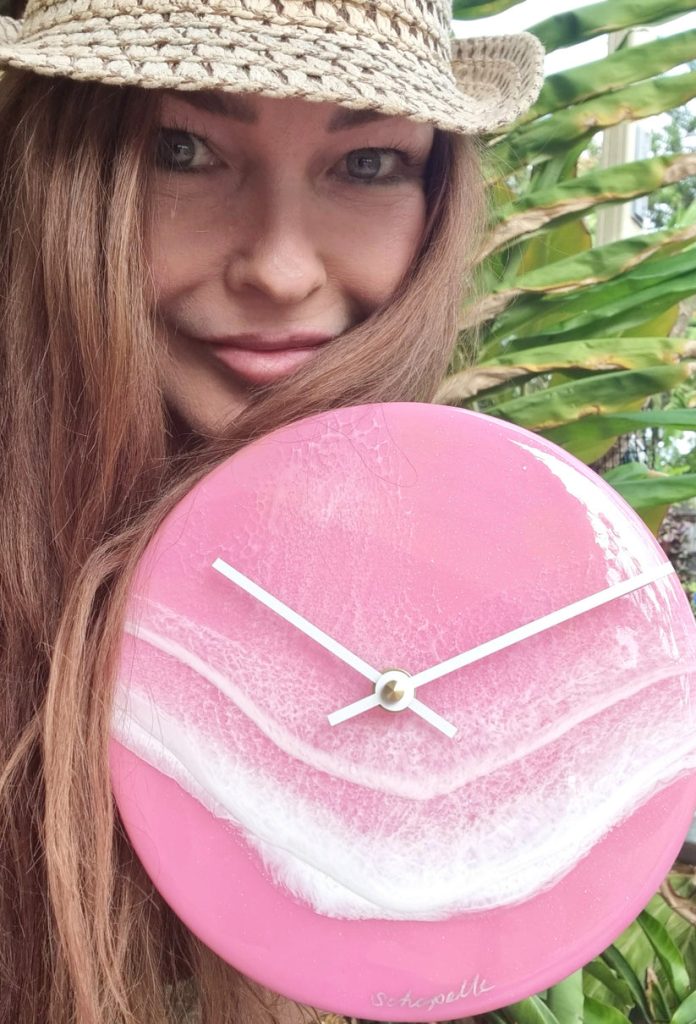
Schapelle Corby runs the business Schapelle’s Epoxy Art. She makes and sells customised epoxy resin wall clocks.
Conclusion on Schapelle Corby net worth
Overall, Schapelle Corby’s wealth has primarily been derived from her epoxy resin clock business, book publishing and media-related activities connected to her high-profile case.
While legal restrictions and asset-freezing orders affected access to some earnings, her public profile, publishing ventures and epoxy clock business have remained the principal sources associated with her net worth.
Featured image: Schapelle Corby on schapelles-epoxy-art.com