

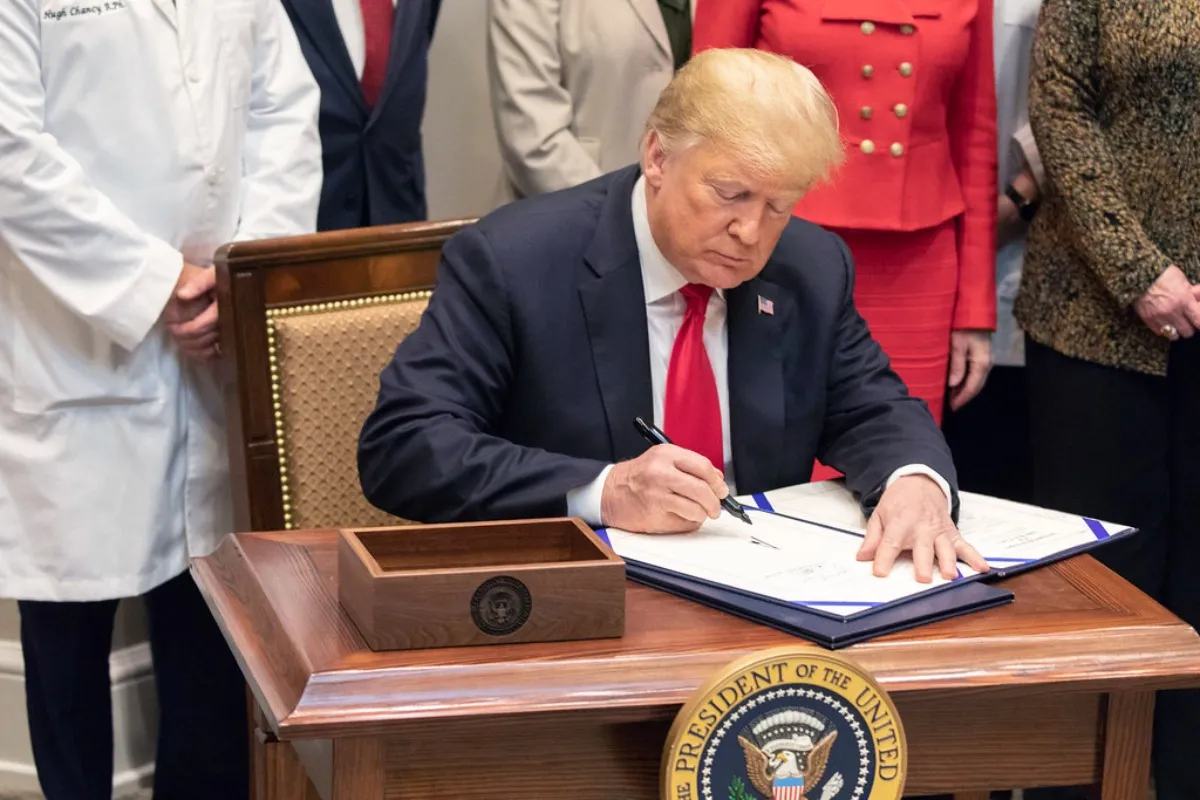
U.S. President Donald Trump has announced that a peace agreement between the United States and Iran could be signed within hours, raising hopes of an end to months of conflict that have rattled global markets and heightened fears of a wider regional war.
According to reports from international media outlets, Trump said negotiations aimed at ending the hostilities had reached an advanced stage.
The proposed agreement is expected to address several contentious issues, including Iran’s nuclear programme and the reopening of the strategically important Strait of Hormuz.
“We’re very close to a deal,” Trump reportedly said, urging all parties involved not to jeopardize the progress made so far.
The development comes after more than three months of heightened military tensions involving the United States, Iran, and various regional actors.
The conflict has disrupted oil supplies, unsettled financial markets, and sparked concern among world leaders over the possibility of a broader Middle East war.
One of the most significant aspects of the proposed deal is the potential reopening of the Strait of Hormuz, a narrow waterway through which a substantial portion of the world’s oil supply passes.
Analysts say restoring normal shipping operations through the strait could ease pressure on global energy prices and improve economic stability worldwide.
However, despite Trump’s optimism, officials in Tehran have appeared more cautious.
Iranian media outlets close to the country’s conservative establishment reported that Iran had not yet made a final decision regarding the memorandum of understanding being discussed with Washington.
“The Islamic Republic of Iran has not yet taken or announced its final decision,” Iran’s Fars News Agency quoted a source familiar with the negotiations as saying.
The uncertainty highlights the deep divisions within Iran over the proposed agreement.
Hardline factions have criticised the deal, arguing that it may not adequately protect Iran’s strategic interests or guarantee meaningful sanctions relief.
Some conservatives fear that concessions on nuclear activities and maritime control could weaken Tehran’s negotiating position in the long term.
The fragile diplomatic efforts have also faced fresh complications following renewed violence in Lebanon.
Israeli strikes targeting Hezbollah positions in Beirut threatened to derail the peace process, prompting Trump to publicly call for restraint.
He reportedly criticised the timing of the attacks, warning that additional military action could undermine the progress achieved through weeks of intensive negotiations.
“Let’s not blow it,” Trump said as he appealed for calm across the region.
Qatar and Pakistan have emerged as key mediators in the negotiations, with diplomatic sources indicating that representatives have been working behind the scenes to bridge remaining differences between Washington and Tehran.
The crisis has also reignited debate over Trump’s foreign policy approach.
Supporters argue that his administration’s combination of military pressure and direct diplomacy has pushed Iran back to the negotiating table.
Critics, however, caution that previous announcements of imminent breakthroughs have failed to produce lasting agreements.
For ordinary citizens around the world, the outcome of the talks carries significant implications.
A successful agreement could reduce tensions in one of the world’s most volatile regions, stabilise oil markets, and lessen the threat of a wider international conflict.

Failure, on the other hand, could lead to renewed hostilities and prolonged economic uncertainty.
As diplomats race against time to finalise the framework of the proposed accord, the international community remains watchful.
Whether the current negotiations culminate in a historic peace deal or become another missed opportunity in decades of strained U.S.-Iran relations may become clear in the coming days.
For now, cautious optimism prevails, even as uncertainty continues to cast a shadow over the Middle East.
FOLLOW NAIROBI NEWS ON FACEBOOK