
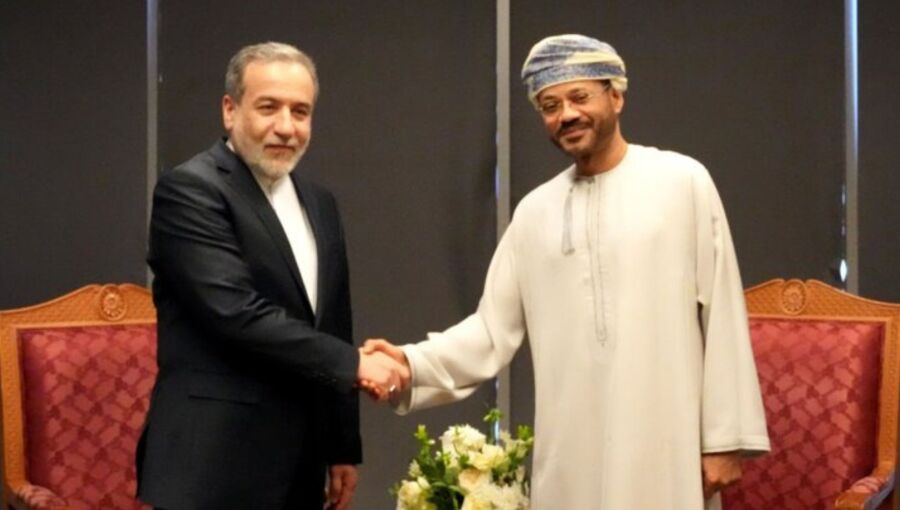
Iran and the United States began indirect negotiations in Oman on Saturday, aiming to revive stalled discussions over Tehran’s rapidly advancing nuclear program.
The talks come as U.S. President Donald Trump has warned of potential military action if no agreement is reached.
Leading the Iranian delegation is Foreign Minister Abbas Araqchi, while Steve Witkoff, Trump’s Middle East envoy, is heading the American team.
This marks the first formal engagement between Iran and the Trump administration since his first term (2017–2021).
“Indirect talks between Iran and the United States with the mediation of the Omani foreign minister have started,” Iranian Foreign Ministry spokesperson Esmail Baghaei confirmed on X (formerly Twitter).
The delegations are meeting in separate rooms, exchanging messages through Oman’s foreign minister.
According to a source quoted by Reuters, the discussions are initially focused on reducing regional tensions, arranging prisoner swaps, and exploring limited sanctions relief in exchange for constraints on Iran’s nuclear program.
However, Baghaei disputed this characterization without providing further clarification.
Oman has historically played a mediating role between Iran and Western countries, notably helping to secure the release of foreign and dual-national detainees held in Iran.
Iran is approaching the talks cautiously, doubting they will produce a meaningful outcome and remaining wary of Trump, who has repeatedly threatened military action over Iran’s uranium enrichment efforts.
While Iran maintains that its nuclear activities are peaceful, Western powers and Israel suspect it is covertly seeking the capability to develop nuclear weapons.
Despite both sides expressing hope for some progress, the gap between them remains wide after more than two decades of disagreement.
At this stage, Iran has insisted on indirect talks, resisting Trump’s push for direct engagement.
Ahead of the talks, Araqchi met with Omani Foreign Minister Badr al-Busaidi in Muscat to outline Iran’s core positions.
Iranian state media reported that these points would be relayed to the U.S. side.
Speaking to Iranian state TV after the talks began, Baghaei tempered expectations, saying, “We really don’t expect this round of talks to be long.”
He emphasized that the initial stage is primarily for both sides to present their fundamental positions through the Omani intermediary.
As of Saturday evening, there had been no official comment from the U.S. delegation.
Any signs of progress in these discussions could help ease tensions in a region still reeling from the ongoing conflicts in Gaza and Lebanon, crossfire between Iran and Israel, Houthi attacks on Red Sea vessels, and the collapse of the Syrian government.
Tanzania’s Top Opposition Party Disqualified From Polls, Election Commission Says

If you like our work, you can buy us a soda
Buy us a soda 🥤